
What's PLANERGY?

Modern Spend Management and Accounts Payable software.

Helping organizations spend smarter and more efficiently by automating purchasing and invoice processing.

We saved more than $1 million on our spend in the first year and just recently identified an opportunity to save about $10,000 every month on recurring expenses with PLANERGY.

King Ocean Logo

Cristian Maradiaga

King Ocean

Download a free copy of "Preparing Your AP Department For The Future", to learn:

  • How to transition from paper and excel to eInvoicing.
  • How AP can improve relationships with your key suppliers.
  • How to capture early payment discounts and avoid late payment penalties.
  • How better management in AP can give you better flexibility for cash flow management.

A Guide To The Procurement Act 2023 For Multi-Academy Trusts

KEY TAKEAWAYS

  • The Procurement Act 2023 came into force on 24 February 2025, replacing the Public Contracts Regulations 2015.
  • Schools and academy trusts undertaking above-threshold procurements are classified as contracting authorities and must comply with the new regulations.
  • Below-threshold contract provisions do not apply to schools, giving them flexibility for smaller purchases.
  • The Act introduces the Competitive Flexible Procedure (CFP), replacing restrictive procurement methods with more adaptable approaches.
  • A new central digital platform makes publishing notices and finding suppliers easier.
  • Free training through the Government Commercial College helps procurement staff prepare for compliance.
  • Dedicated procure-to-pay software can automate compliance checks and approval workflows.

Understanding the New Procurement Landscape

The Procurement Act 2023 represented the most significant change to public procurement law in the UK in over a decade. After receiving Royal Assent on October 26, 2023, the Act officially went into effect on February 24, 2025.

This legislation emerged from the UK’s departure from the European Union. Prior to Brexit, procurement regulations were derived from EU directives, specifically the Public Contracts Regulations 2015.

The government recognized an opportunity to create a procurement framework better suited to the UK’s needs while remaining compliant with international obligations under the World Trade Organization’s Agreement on Government Procurement.

The reforms place value for money, public benefit, transparency, and integrity at the heart of procurement. For schools and trusts, these changes mean new procedures, enhanced transparency requirements, and opportunities for more strategic purchasing.
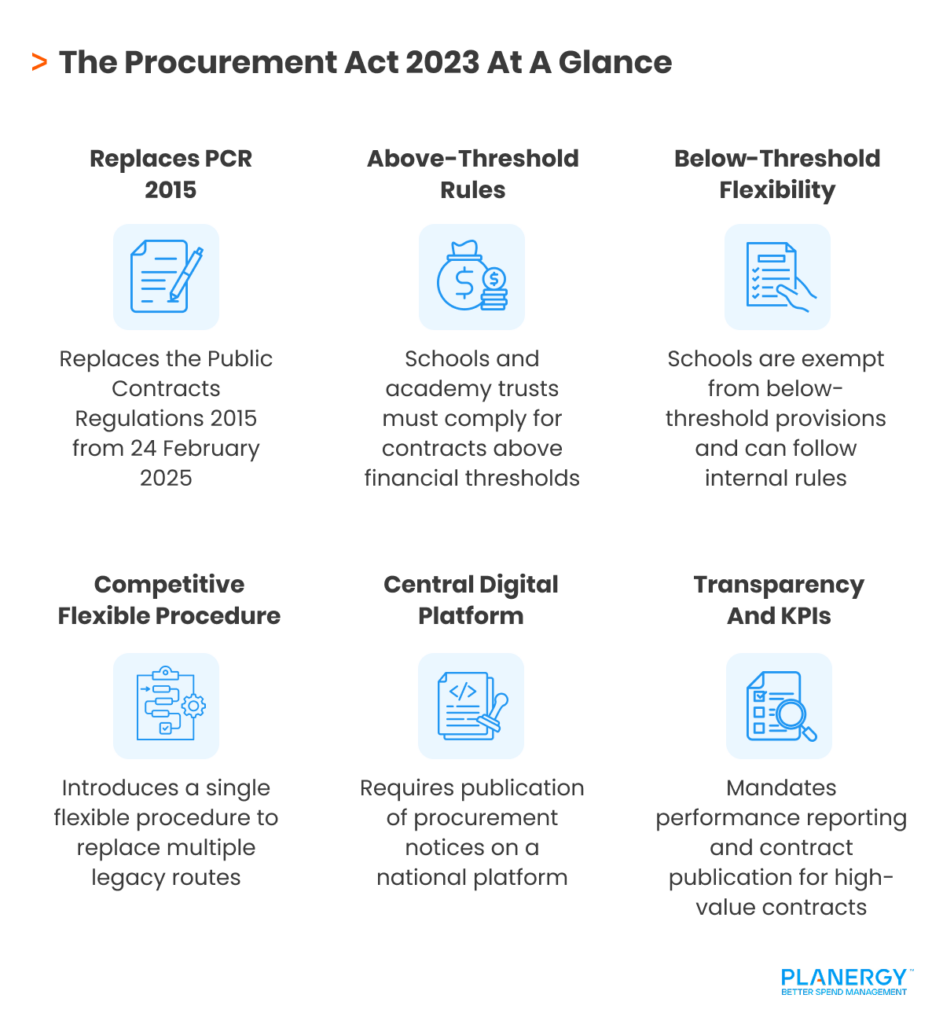
Procurement Act 2023 At A Glance

What Contracting Authorities Need to Know

Schools and academy trusts undertaking above-threshold procurement are classified as contracting authorities under the Act. This means they must follow the new regulations when purchasing goods, works, or services above certain financial thresholds.

The good news is that below-threshold contract provisions within the Procurement Act 2023 do not apply to schools. This gives educational institutions greater flexibility when managing smaller purchases without extensive regulatory burden.

Threshold values are reviewed every two years to align with currency fluctuations. From 1 January 2026, updated thresholds will come into effect, with most values slightly decreasing. This means more contracts may fall within the regulated regime over time.
Understanding Procurement Threshold Values

Knowing the exact threshold amounts is essential for determining whether a contract falls under the full requirements of the Procurement Act 2023.

Schools and multi-academy trusts are classified as sub-central contracting authorities, which means specific thresholds apply to their procurements.

Current Threshold Amounts (From January 1, 2026)

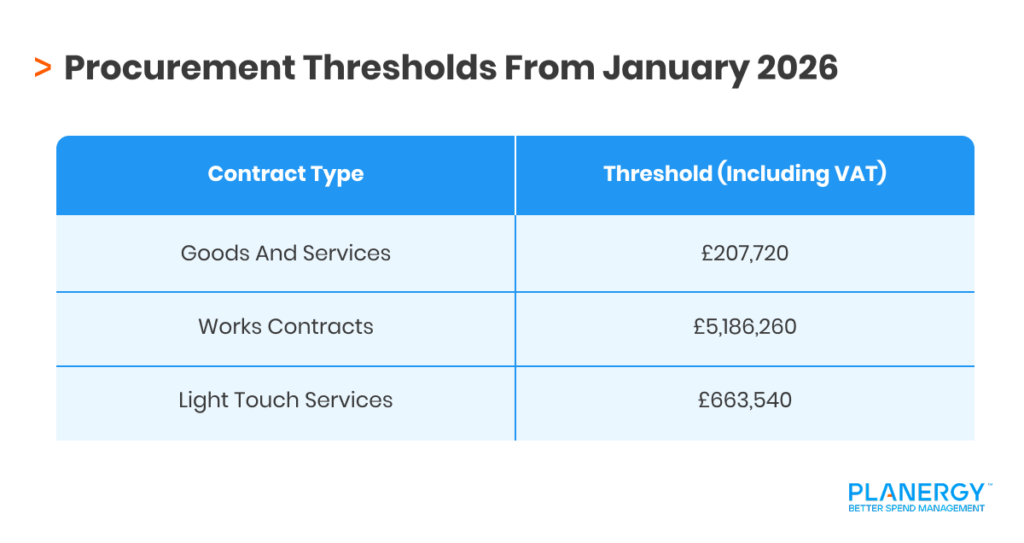
Procurement Thresholds From January 2026

The following thresholds apply to procurements commenced on or after 1 January 2026:

  • Goods and Services: £207,720
  • Works Contracts: £5,186,260
  • Light Touch Regime Services (including some education and catering services): £663,540

For procurements started before 1 January 2026, slightly higher thresholds apply. The previous goods and services threshold for sub-central authorities was £213,477.

How to Calculate Contract Value

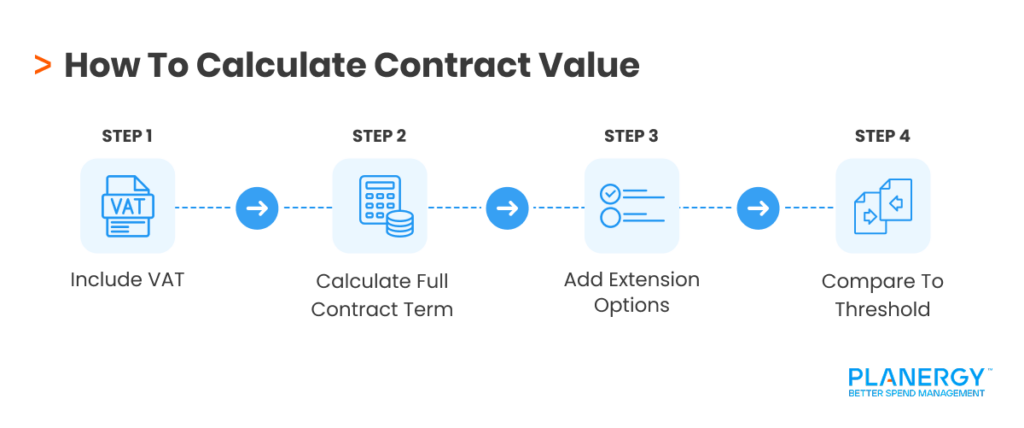
When determining whether your procurement reaches the threshold, you must include VAT in your calculation. This is a change from earlier regulations and catches some buyers off guard.

For example, a contract for services with a value of £175,000 net of VAT would actually be valued at £210,000 once VAT is included. This would put it above the goods and services threshold, requiring compliance with the full procurement regime.

You should also consider the total value over the contract’s lifetime, including any extension options.

How To Calculate Contract Value

A three-year contract worth £70,000 per year with an option to extend for two additional years would be valued at £350,000 (five years total), not £210,000.

What This Means for Your Purchasing Decisions

If your contract value falls below the relevant threshold, you have more flexibility in your procurement approach. Schools are exempt from the Act’s below-threshold provisions, meaning you can follow your internal financial regulations for smaller purchases.

However, if your contract exceeds the threshold, you must comply with all requirements of the Procurement Act 2023. This includes:

  • Publishing notices on the central digital platform
  • Following the Competitive Flexible Procedure
  • Meeting transparency requirements
  • Observing standstill periods before awarding contracts

Given that thresholds have decreased and inflation has increased contract values, procurement teams should audit their spending patterns. Contracts that previously fell below the threshold may now require formal tendering processes.

How the Act Changes Public Sector Purchasing

The Procurement Act 2023 introduces several notable changes aimed at enhancing efficiency and flexibility in how public bodies purchase goods and services.

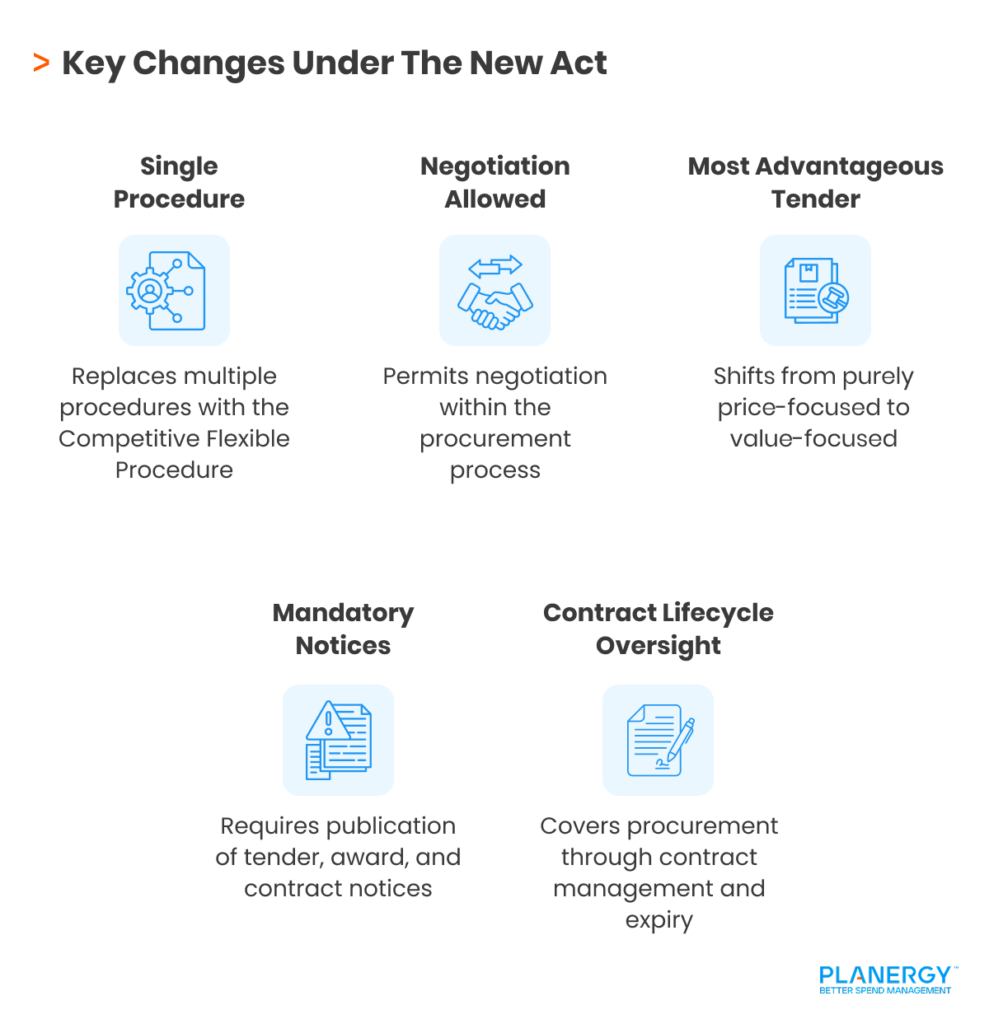
Key Changes Under The New Act

Simplified Procedures

The Act replaces multiple procurement procedures with a single Competitive Flexible Procedure (CFP).

Previously, schools mainly used the Restricted Procedure under the Public Contracts Regulations 2015. The new CFP incorporates the ability to conduct negotiations, something not available under the previous main procedure.

This flexibility enables contracting authorities to adapt their approach based on specific needs rather than being locked into rigid processes.

Enhanced Transparency Requirements

One of the core principles embedded in the Act is transparency. Contracting authorities must now publish various notices throughout the procurement lifecycle, including:

  • Tender Notices
  • Contract Award Notices
  • Contract Details Notices
  • Pipeline Notices (for planned procurements)

This shift toward “transparency by default” ensures all stakeholders have access to relevant information. For contracts valued at over £5 million, authorities must publish at least three key performance indicators (KPIs) and a copy of the contract itself.

The Central Digital Platform

As part of the Act, a central digital platform enhances the existing Find a Tender service. This platform makes it easier for suppliers to find and bid for contracts while helping schools meet their transparency responsibilities.

Schools need to register and become familiar with this platform to ensure compliance when publishing notices.

Assessing Most Advantageous Tender

Under the previous regulations, award criteria assessed the Most Economically Advantageous Tender (MEAT). The new Act shifts this to assessing the Most Advantageous Tender (MAT).

This change reflects a broader view of value that includes social value factors, sustainability, and long-term outcomes beyond just price.

Specific Implications for Academy Trusts and MATs

Multi-academy trusts face unique considerations under the new procurement regime. Understanding these specific provisions helps ensure compliance while maximizing the benefits of the reformed system.

Exemptions for Educational Institutions

The Act recognizes the unique context of schools and trusts. Key exemptions include:

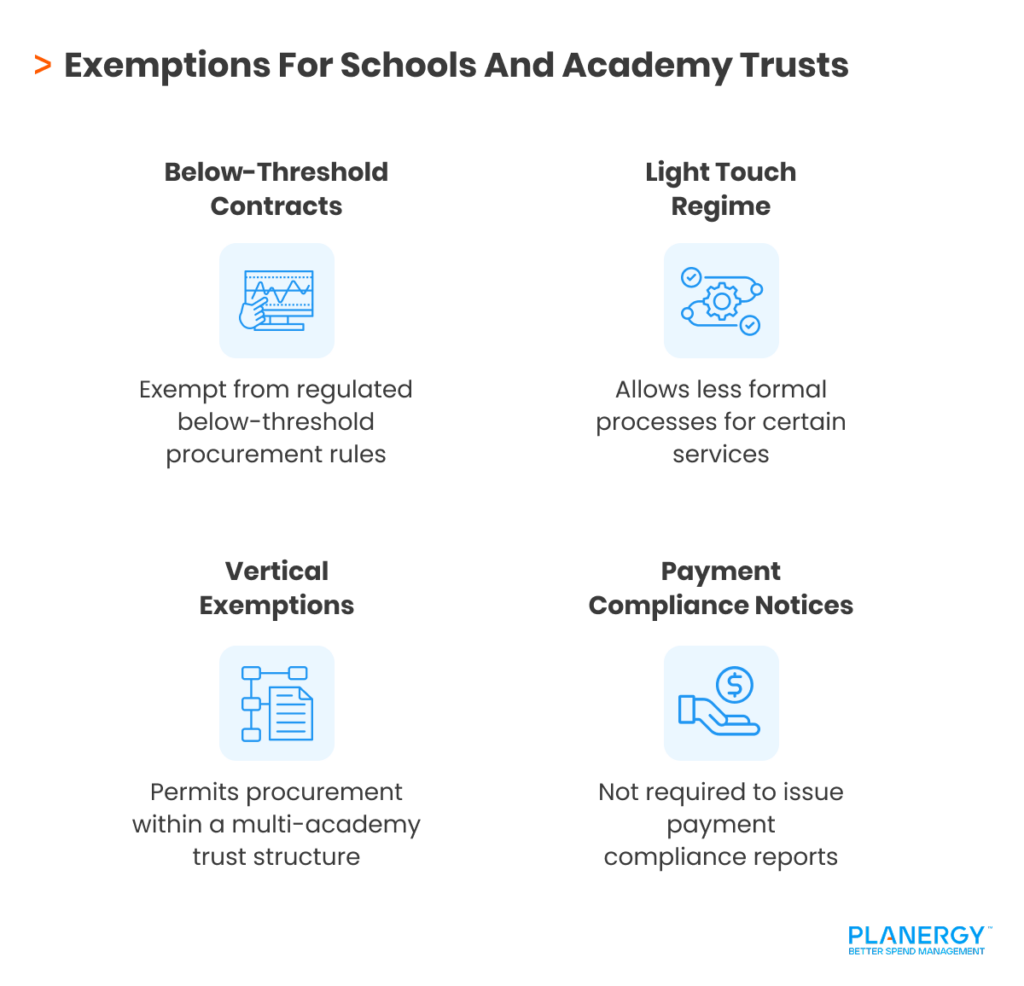
Exemptions For Schools And Academy Trusts

  • Below-Threshold Contracts
    Schools and academies are exempt from rules governing below-threshold procurements, allowing them to operate under internal financial regulations for smaller contracts.
  • Light Touch Regime
    This remains in place for certain services, such as school catering, allowing less formal procurement processes.
  • Vertical Exemptions
    These allow procurement within a multi-academy trust without going through standard rules.
  • Payment Compliance Notices
    Schools are exempt from issuing these notices, which require reporting on compliance with payment terms.

The Full Contract Lifecycle

One of the biggest changes is that the Act now covers the full contracting lifecycle, from procurement through to contract management and expiry. For high-value contracts, supplier performance must be assessed annually against published KPIs.

Suppliers that repeatedly fail to meet KPIs could be excluded from future procurements and placed on a central debarment list. This creates both opportunities and responsibilities for trusts in managing their supply chain relationships.

The reforms proposed within the new Procurement Act 2023 are important because they will improve our procurement regulations, so that every pound goes further for our communities and public services.

The Act aims to place value for money, public benefit, transparency, and integrity at the heart of our procurement system.

Centralized Procurement Models

Many multi-academy trusts are evaluating whether a centralized procurement model would be beneficial. A centralized approach can lead to:

  • Improved efficiencies across the trust.
  • Standardization of practices.
  • Better negotiation power with suppliers.
  • Consistent compliance with regulations.
  • Reduced duplication of effort.

The Academy Trust Handbook 2025 confirms that trusts should refer to the Buying for Schools guidance to obtain value for money and apply relevant procurement regulations.

Getting Your Trust Ready for Compliance

With the regulations now in effect, schools and trusts should take proactive steps to adapt their procurement practices.

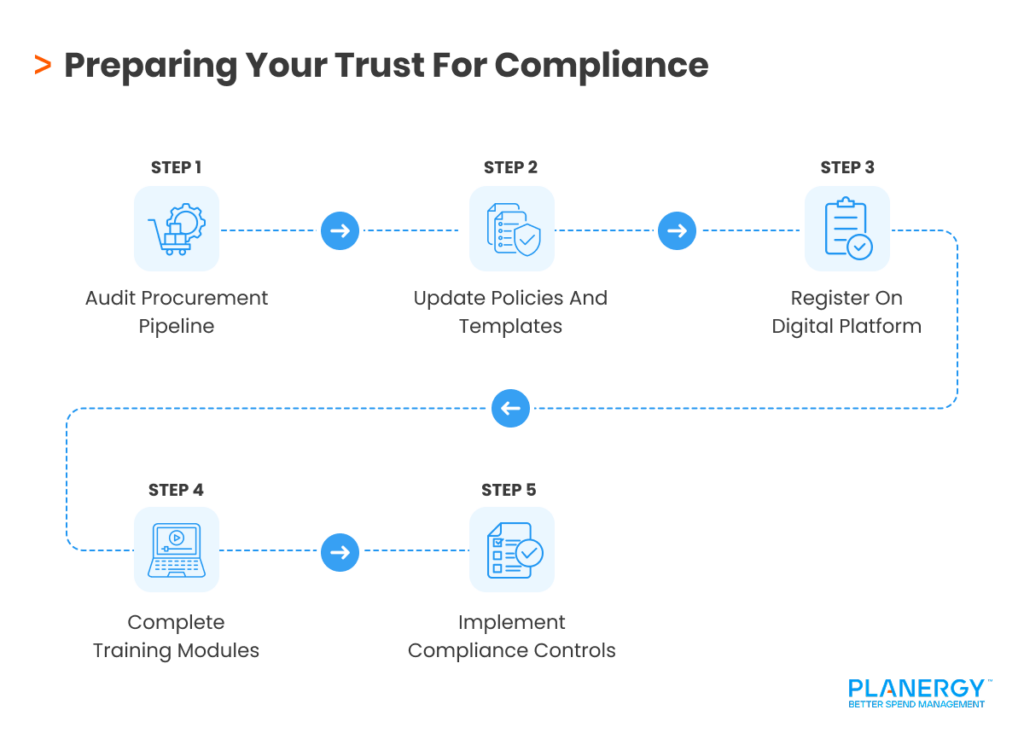
Preparing Your Trust For Compliance

Review Your Procurement Pipeline

Audit upcoming projects to identify contracts that fall within the regulated regime. Consider whether any procurements that were previously below the threshold now require formal tendering due to decreased threshold values.

If you started a procurement under the Public Contracts Regulations 2015, different guidance applies. Only procurements commenced after 24 February 2025 fall under the new Act.

Update Internal Governance

Your trust’s financial framework should incorporate the new procurement rules and thresholds. This includes:

  • Updating template documents and tools
  • Revising approval workflows to reflect new requirements
  • Ensuring procurement policies align with the National Procurement Policy Statement
  • Establishing clear record-keeping procedures

The National Procurement Policy Statement sets out the government’s strategic priorities for public procurement. These include driving economic growth, strengthening supply chains, and giving SMEs a fair chance at public contracts.

Strengthen Record-Keeping

Adequate record-keeping throughout procurement processes is now more critical than ever. With disagreements over performance-related issues potentially more likely under the new KPI requirements, documentation provides essential protection.

Records should demonstrate compliance with transparency requirements and support your decision-making process at every stage.

Using Technology to Simplify Procurement Compliance

Dedicated procure-to-pay software can significantly ease the burden of compliance with the new regulations. Rather than relying on manual processes and spreadsheets, automation helps ensure consistent adherence to procurement rules.

Automated Approval Workflows

Modern procurement software enables you to build approval hierarchies that reflect your trust’s structure and spending limits. Requests route automatically to the right approvers based on:

  • Purchase value
  • Department or school
  • Budget allocation
  • Category of spend

This ensures accountability while speeding up the procurement process.

Compliance Warnings and Controls

Software can enforce procurement policies automatically with rule-based checks and alerts. For example, the system can display a pop-up warning if three quotes are not attached to an order above a certain value.

These automated controls help prevent non-compliant purchases before they happen rather than discovering problems after the fact.

Spend Visibility and Reporting

With all procurement data in one place, trusts gain real-time visibility across all schools and departments. This supports:

  • Budget monitoring against thresholds
  • Identification of savings opportunities
  • Evidence for audits and compliance checks
  • Strategic procurement planning

Supplier Management

Centralized vendor data makes it easier to manage contracts, track performance against KPIs, and ensure you are working with compliant suppliers. This becomes especially important under the new Act’s focus on supplier performance monitoring.

Training and Resources Available to Schools

The Cabinet Office and Department for Education have provided extensive free training resources to support schools through this transition.

Knowledge Drops

The official Knowledge Drops provide a high-level overview of the changes to procurement regulations. They take approximately one hour to complete and are suitable for anyone involved in buying for their school or trust.

Supporting factsheets accompany the Knowledge Drops, covering exemptions and the general regime applicable to contracting authorities.

E-Learning Modules

The Cabinet Office has released comprehensive e-learning modules through the Government Commercial College. These 10 one-hour modules cover:

  • Key regulation changes
  • Transparency requirements
  • The Competitive Flexible Procedure
  • Contract management
  • Supplier assessment

Staff who complete the course and achieve certification receive a certificate and e-badge evidencing attainment at the Practitioner level.

Get Help Buying for Schools

The Department for Education’s free supported buying service continues to provide advice and guidance to schools and trusts.

If you buy through DfE-approved frameworks, there is no additional burden as the compliance work has been done for you.

Next Steps for Your Procurement Team

The Procurement Act 2023 creates both challenges and opportunities for schools and multi-academy trusts.

Taking action now will help ensure your school or trust is well-positioned for success under the new regime.

Immediate Actions

  • Complete the free Knowledge Drops and e-learning modules
  • Register with the Government Commercial College
  • Review your pipeline of upcoming procurements
  • Update your trust’s procurement policies and templates
  • Register for the central digital platform

Longer-Term Considerations

  • Evaluate whether a centralized procurement model would benefit your trust
  • Invest in procure-to-pay software to automate compliance
  • Build stronger relationships with key suppliers
  • Establish robust contract management procedures
  • Join school business professional networks to share best practices

The Act encourages a more strategic approach to procurement, moving beyond compliance to prioritize value for money and long-term outcomes.

With the right preparation, tools, and training, your trust can embrace these changes as an opportunity to improve procurement practices across the organization.

What’s your goal today?

1. Use PLANERGY to manage purchasing and accounts payable

We’ve helped save billions of dollars for our clients through better spend management, process automation in purchasing and finance, and reducing financial risks. To discover how we can help grow your business:

2. Download our guide “Preparing Your AP Department For The Future”

Download a free copy of our guide to future proofing your accounts payable department. You’ll also be subscribed to our email newsletter and notified about new articles or if have something interesting to share.

3. Learn best practices for purchasing, finance, and more

Browse hundreds of articles, containing an amazing number of useful tools, techniques, and best practices. Many readers tell us they would have paid consultants for the advice in these articles.

Business is Our Business

Stay up-to-date with news sent straight to your inbox

PLANERGY LOGO

Sign up with your email to receive updates from our blog