We saved more than $1 million on our spend in the first year and just recently identified an opportunity to save about $10,000 every month on recurring expenses with PLANERGY.
Manual invoice processing drains finance teams’ time with repetitive admin work that adds little strategic value.
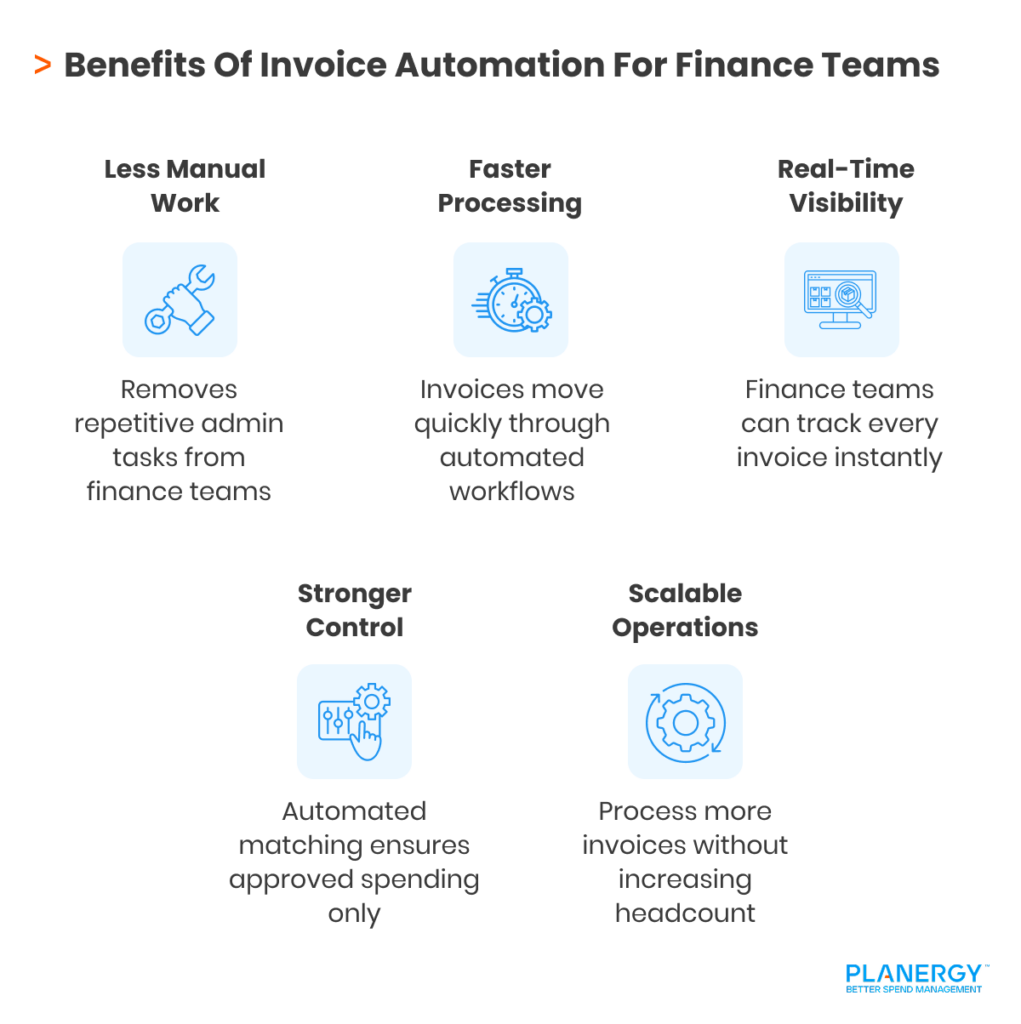
Invoice Automation removes much of that burden, helping organizations process more without adding headcount.
For growing organizations, this means a leaner finance function, faster processing, and better visibility over spending.
The real value of Invoice Automation is not the technology itself. It is the removal of avoidable manual work.
Finance teams are under constant pressure to do more with less.
Budgets are tight. Expectations are rising. Workloads continue to grow. Yet in many organizations, experienced finance staff are still spending far too much time on tasks that should not require their attention in the first place.
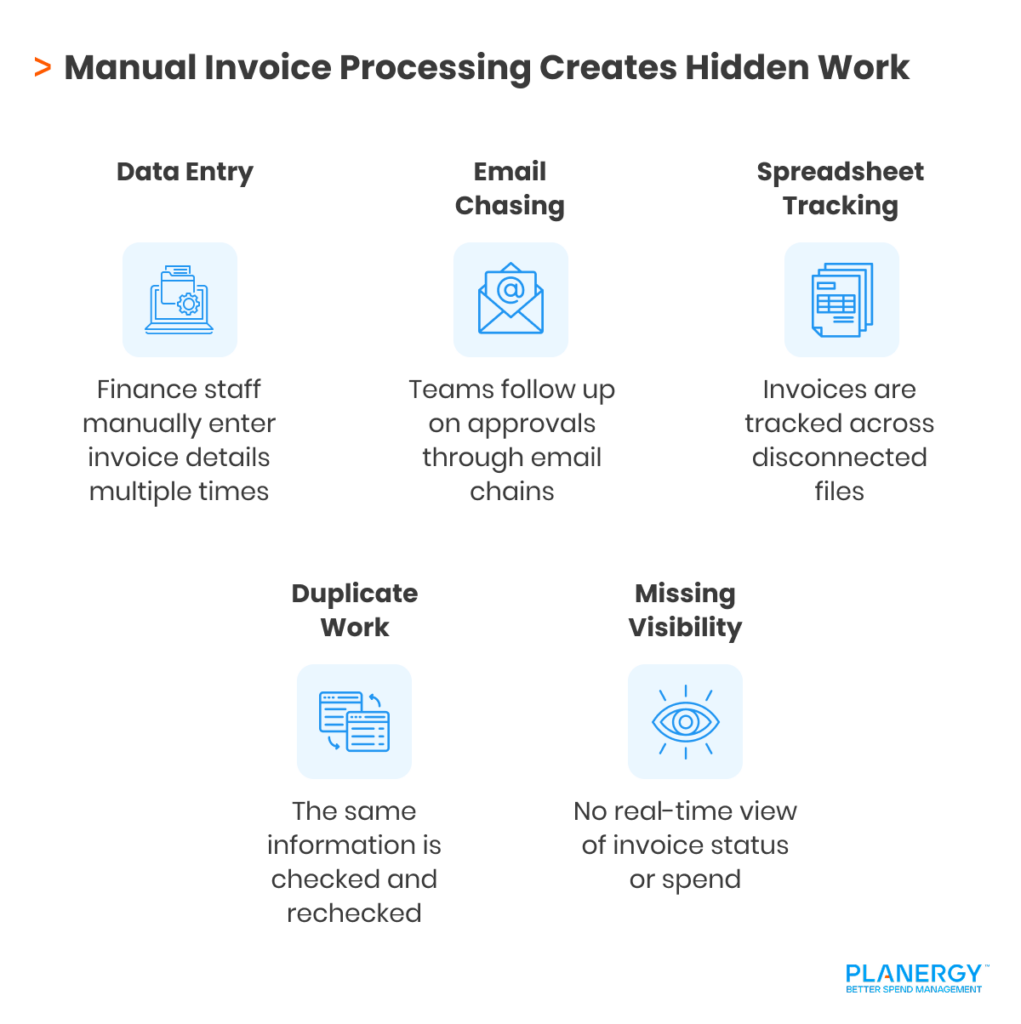
Entering invoice details, often more than once. Forwarding emails. Chasing approvals. Updating spreadsheets. Following up on missing information. Repeating the same low-value tasks over and over again.
Growth brings opportunity, but it also brings more suppliers, more purchasing activity, and more invoices to process.
That is exactly why Invoice Automation has become so important.
The real story is not simply that Invoice Automation speeds up processing. It is that it eliminates manual work that has been holding finance teams back for years. Invoice data is captured automatically, approvals move faster, and finance teams gain clearer visibility over spending.
For CFOs, finance directors, and finance leaders, that matters because manual work is expensive. The question is no longer whether Invoice Automation matters. It is how long an organization can afford to operate without it.
Invoice Automation eliminates manual work.
Manual Invoice Processing Is Creating Unnecessary Work for Finance Teams
Many organizations still rely on manual invoice processing built around inboxes, spreadsheets, and constant intervention.
Invoices arrive by email or post. Finance teams download attachments and enter data manually. Someone checks whether the purchase order exists. Someone follows up to find out who placed the order or approved it. Someone updates a spreadsheet. Someone checks again.
At first glance, this may seem manageable. But as organizations grow, these manual processes quickly become a serious operational burden.
None of this is unusual. In many businesses, it is simply the accepted way of working.
But accepted does not mean efficient.
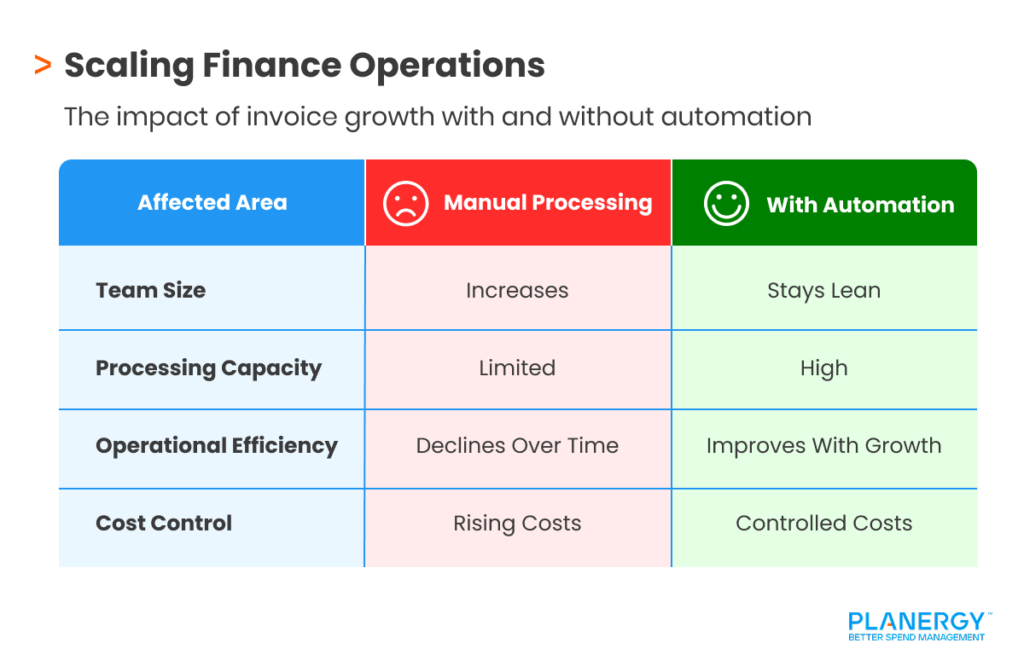
For finance leaders, the problem is simple. Manual processes do not scale well. As invoice volumes increase, the finance team must either work longer hours or the organization must hire more staff. Neither option is sustainable.
The Cost of Manual Work Is Bigger Than It Looks
Manual invoice processing often appears manageable when looked at one invoice at a time.
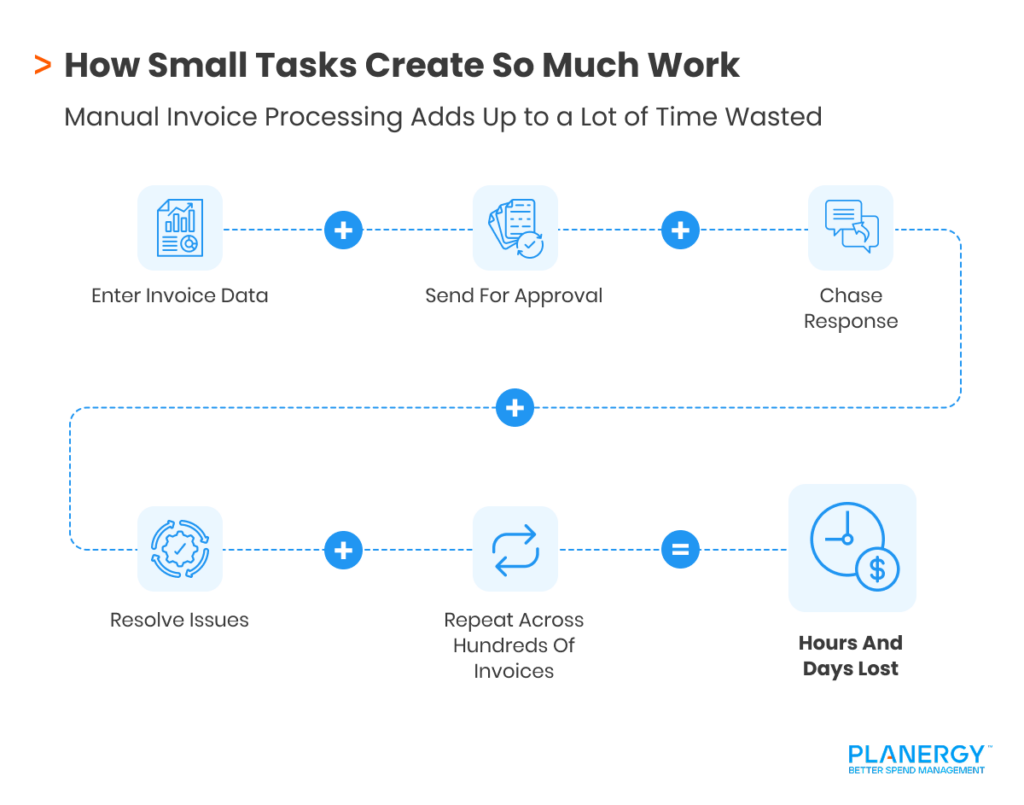
A few minutes to enter data. A few more to send it on. Another few to chase approvals. Maybe another touchpoint to resolve an issue.
Each individual task may only take a few minutes. But across hundreds or thousands of invoices, those minutes quickly turn into hours and days of lost time.
For organizations trying to operate efficiently, that is not just an admin issue. It is a real cost issue.
Because when manual work grows, the usual answer is more people.
For organizations operating under financial pressure, that is not a sustainable model.
AP Invoice Automation Is Removing the Manual Work Teams Should No Longer Be Doing
This is why the conversation about Invoice Automation matters so much.
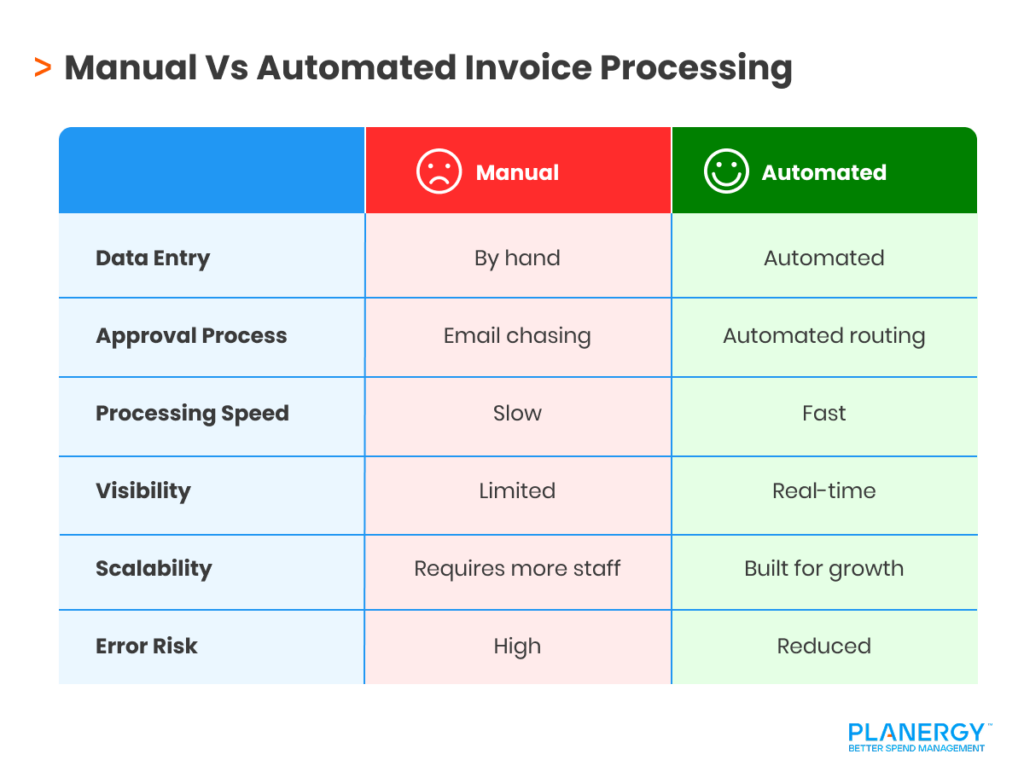
Its value is not just that it digitises or improves workflow. Its value is that it removes much of the work that manual invoice processing has required for far too long.
Less data entry
Less paperwork matching
Less chasing colleagues
Less time spent finding approvers
Less duplication
Less risk of errors and fraud
Once that work is removed, the effect on financial operations can be significant and immediate.
Cash flow improves. Delays are reduced. Visibility improves. Accountability improves.
Growth Multiplies the Problem
Growing organizations face increasing operational complexity across finance and procurement. Expansion brings new suppliers, new purchasing activity, and more invoices to process.
But growth should not automatically mean more paperwork, more repetitive tasks, and more pressure on the finance team.
That is exactly what happens when processes remain too manual.
A modern finance function should be able to support a larger organization without increasing administration at the same rate. It should become more efficient as the business matures, not more burdened.
Invoice Automation supports that shift.
It helps organizations grow while keeping the finance function controlled, efficient, and proportionate.
For finance leaders trying to build a scalable operating model, that is a major advantage.
Organizations Are Moving to Invoice Automation at Pace
Across sectors, finance leaders are recognising the same problem.
Manual invoice processing is slow. It consumes staff time and prevents organizations from scaling efficiently.
That is why more organizations are turning to Invoice Automation. Automation allows finance teams to process far more invoices without growing the team.
For businesses that want to run leaner, more efficient finance operations, the shift to automation is becoming essential.
If an organization can process more invoices, support more activity, and maintain better control without expanding the finance team, that is a significant operational advantage.
It creates a leaner function.
It protects capacity.
It reduces dependence on manual effort.
It gives finance teams more room to focus on analysis, planning, and strategic support.
In other words, it helps finance function more like finance, and less like administration.
That is why the move to Invoice Automation is accelerating.
Not because it is fashionable. Because it solves a real and expensive problem.
What Invoice Processing Automation Actually Means
When finance leaders first hear the term invoice processing automation, it can sound more complex than it really is.
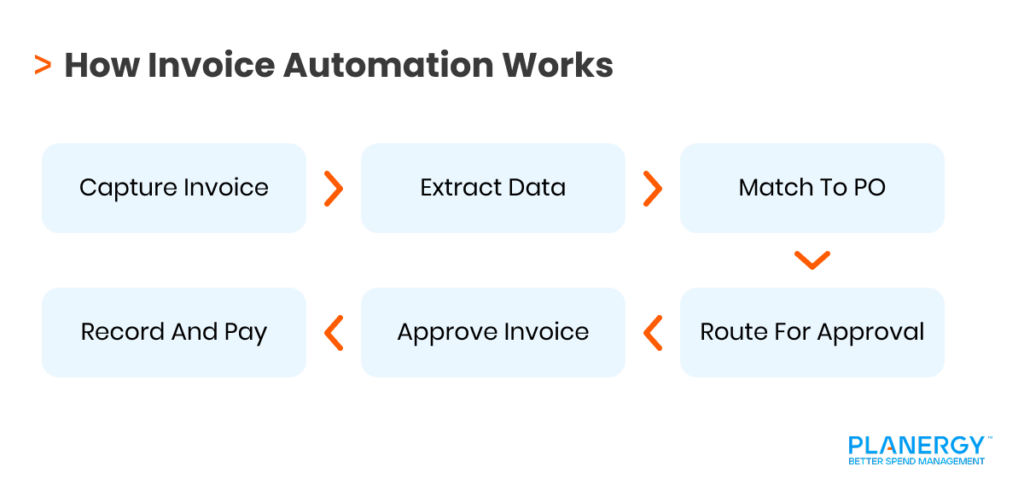
In practice, it is quite simple. It means replacing manual invoice handling with software that captures invoice data automatically and routes it through the accounts payable process with minimal manual intervention.
Instead of staff entering invoice details by hand, chasing approvals, and tracking invoices across spreadsheets and email threads, the system handles those steps automatically.
This transforms invoice processing from a slow administrative task into a faster, more controlled digital workflow.
Automation also improves how invoices move through the organization.
Instead of relying on email chains, invoices follow a structured approval workflow inside the system. The platform automatically sends invoices to the correct approvers based on rules such as department, cost centre, location, or purchase order.
Approvers receive notifications and can review invoices directly in the system.
Finance teams can see the status of every invoice in real time.
This visibility removes the need to chase approvals manually and speeds up the entire process.
Built-In Matching and Financial Control
Modern Invoice Automation systems also strengthen financial control.
Invoices can be automatically matched against purchase orders and delivery confirmations. This helps ensure that payment is only made for approved purchases.
The system also records every action taken on an invoice, creating a complete digital audit trail.
For finance leaders responsible for budget management, compliance, and control, these features provide confidence that spending remains transparent and accountable.
A Finance Function Designed to Scale
The real value of automation lies in scalability.
As organizations grow and purchasing activity increases, invoice volumes inevitably rise.
With manual processes, this growth usually means hiring more administrative staff.
With automation, the same finance team can process far more invoices.
This enables growth without expanding finance headcount and, in some cases, reduces the need to add more administrative roles over time. For finance leaders focused on efficiency and long-term sustainability, that is a powerful advantage.
Why Automation Matters for Growing Organizations
Growth is positive. It is often necessary. But it also brings more purchasing activity, more suppliers, and more invoices moving through the finance function.
For many finance teams, the workload is already heavy. Skilled staff spend hours each week manually entering invoice data, chasing approvals through email chains, and tracking invoices across spreadsheets.
Apart from slowing everything down, this kind of work also wastes the time of experienced finance professionals who should be focusing on budgeting, forecasting, analysis, and strategic decision-making.
Growth Brings More Invoices and More Pressure
As organizations expand, financial activity increases. More departments buy more goods and services. More suppliers are added. More invoices arrive.
For finance teams, this added activity shows up as rising invoice volumes. If those invoices are still processed manually, the pressure on the team can increase dramatically.
Scaling Finance Without Scaling Headcount
As invoice volumes grow, many organizations respond by hiring more administrative staff. Over time, this creates a finance function that depends heavily on manual work and rising headcount.
Automation removes much of the manual work that forces organizations to expand finance teams. By capturing invoice data automatically and routing approvals through structured workflows, finance teams can process far more invoices with the same people.
For CFOs working within tight budgets, this allows organizations to scale their finance operations while keeping teams lean and efficient.
The Automation Gap Is Growing
The shift towards automation is accelerating.
More finance leaders are recognising that manual invoice processing is too slow, too resource-heavy, and too costly to support a modern finance function.
Teams that automate their finance operations are better positioned to operate efficiently and maintain healthier cash flow.
They process invoices faster. They operate with leaner teams. They maintain stronger financial visibility. Those that delay automation are increasingly falling behind.
What to Look for in an Automation Provider
As more organizations adopt Invoice Automation, choosing the right platform is essential for long-term efficiency and scalability.
Not all providers offer the same level of flexibility, control, or support. The right solution should not only automate invoice processing, but also fit the way your organization works, scale with your growth, and make life easier for finance teams and approvers alike.
A Platform Built for the Way Organizations Actually Work
A good automation platform should fit the way your organization operates.
The system should support structured approval workflows, purchasing controls, and clear visibility over invoices and spending.
Reliable, responsive support also matters. Providers that understand finance and procurement can help organizations run leaner and more efficient operations.
Capable, Friendly Support That Is Always There
Support should not disappear after implementation. Look for a provider that offers access to real people who know the product well, understand your setup, and respond quickly when issues arise.
Support that stays with you.
Support from real people who know the product inside and out.
Support that answers when you need it.
Support that makes your life easier.
Good support matters for the long term.
True Cloud Capabilities
A modern solution should be truly cloud-based, not a legacy system hosted online. Look for a platform that gives users real-time access, regular updates, and the flexibility to work efficiently across multiple teams, sites, and locations.
True cloud capability helps future-proof the finance function and makes it easier to scale as organizational needs change.
Mobile, Tablet and Desktop Capable
Approvals and finance tasks do not always happen at a desk. Look for a solution that works well across mobile, tablet, and desktop, so approvers and budget holders can review and act quickly wherever they are.
Strong cross-device usability helps prevent delays and keeps processes moving.
Why Invoice Processing Automation Is Now Essential
The case for Invoice Automation is no longer just about modernization.
Automation removes the manual work that slows finance teams and replaces it with faster, more controlled workflows.
That is why the headline matters.
For finance leaders, Invoice Automation is now a core capability for running an efficient, scalable organisation.
Solutions like PLANERGY are already helping organizations modernise their finance processes, run leaner teams, and unlock significant efficiency gains.
What’s your goal today?
1. Use PLANERGY to manage purchasing and accounts payable
We’ve helped save billions of dollars for our clients through better spend management, process automation in purchasing and finance, and reducing financial risks. To discover how we can help grow your business:
2. Download our guide “Preparing Your AP Department For The Future”
Download a free copy of our guide to future proofing your accounts payable department. You’ll also be subscribed to our email newsletter and notified about new articles or if have something interesting to share.
3. Learn best practices for purchasing, finance, and more
Browse hundreds of articles, containing an amazing number of useful tools, techniques, and best practices. Many readers tell us they would have paid consultants for the advice in these articles.
What’s your goal today?
1. Use PLANERGY to manage purchasing and accounts payable
We’ve helped save billions of dollars for our clients through better spend management, process automation in purchasing and finance, and reducing financial risks. To discover how we can help grow your business:
2. Download our guide “Preparing Your AP Department For The Future”
Download a free copy of our guide to future proofing your accounts payable department. You’ll also be subscribed to our email newsletter and notified about new articles or if have something interesting to share.
3. Learn best practices for purchasing, finance, and more
Browse hundreds of articles, containing an amazing number of useful tools, techniques, and best practices. Many readers tell us they would have paid consultants for the advice in these articles.
We use cookies to personalise content and ads, to provide social media features and to analyse our traffic. We also share information about your use of our site with our social media, advertising and analytics partners who may combine it with other information that you’ve provided to them or that they’ve collected from your use of their services.
The technical storage or access is strictly necessary for the legitimate purpose of enabling the use of a specific service explicitly requested by the subscriber or user, or for the sole purpose of carrying out the transmission of a communication over an electronic communications network.
Preferences
The technical storage or access is necessary for the legitimate purpose of storing preferences that are not requested by the subscriber or user.
Statistics
The technical storage or access that is used exclusively for statistical purposes.The technical storage or access that is used exclusively for anonymous statistical purposes. Without a subpoena, voluntary compliance on the part of your Internet Service Provider, or additional records from a third party, information stored or retrieved for this purpose alone cannot usually be used to identify you.
Marketing
The technical storage or access is required to create user profiles to send advertising, or to track the user on a website or across several websites for similar marketing purposes.