
What's PLANERGY?

Modern Spend Management and Accounts Payable software.

Helping organizations spend smarter and more efficiently by automating purchasing and invoice processing.

We saved more than $1 million on our spend in the first year and just recently identified an opportunity to save about $10,000 every month on recurring expenses with PLANERGY.

King Ocean Logo

Cristian Maradiaga

King Ocean

Download a free copy of "Preparing Your AP Department For The Future", to learn:

  • How to transition from paper and excel to eInvoicing.
  • How AP can improve relationships with your key suppliers.
  • How to capture early payment discounts and avoid late payment penalties.
  • How better management in AP can give you better flexibility for cash flow management.

User Adoption Strategies

KEY TAKEAWAYS

  • User adoption strategies determine whether your software investment succeeds or becomes expensive shelf-ware.

  • Planning for adoption before purchase, not after launch, prevents costly implementation failures.
  • Different user types require tailored approaches, from hands-on support for resisters to advanced features for power users.
  • Measuring the right metrics, like task completion and efficiency gains, shows real adoption beyond simple login counts.
  • Partnering with vendors who prioritize implementation support and ongoing training dramatically increases adoption success.

You just invested in new procurement software. Your team is excited about the possibilities. But six months later, half your users are still working in spreadsheets.

Sound familiar?

This scenario plays out in procurement departments every day. The difference between success and failure comes down to one thing: your user adoption strategy.

What User Adoption Really Means for Your Team

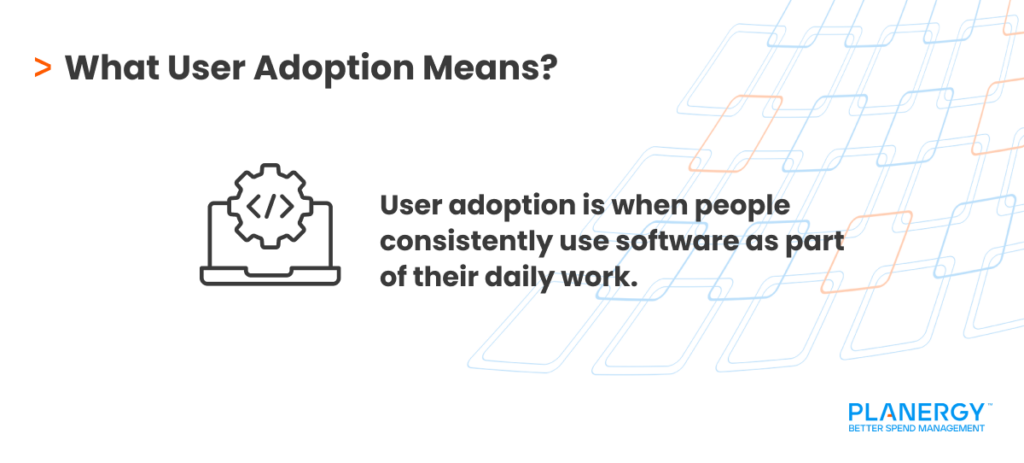
User adoption is the process of getting people to actively use new software in their daily work. It’s not just about signing in once. It’s about making the tool part of how your team operates.
What User Adoption Means

A user adoption strategy is your roadmap for getting there. It outlines how you’ll introduce the software, train your team, and support them as they learn. Without this plan, even the best procure-to-pay software will sit unused.
Why Failed Rollouts Cost More Than Money

When software implementations fail, the financial hit is obvious. You’ve paid for licenses nobody uses. But the real cost runs deeper.

Your team loses trust in new technology. They resist future changes. Productivity drops as people work around the system instead of with it. And that initial problem you tried to solve? It’s still there.

The numbers tell the story. Research shows that 70% of digital transformations fail due to poor user adoption. That’s why having a solid change management plan matters before you launch anything new.

Understanding Your User Base

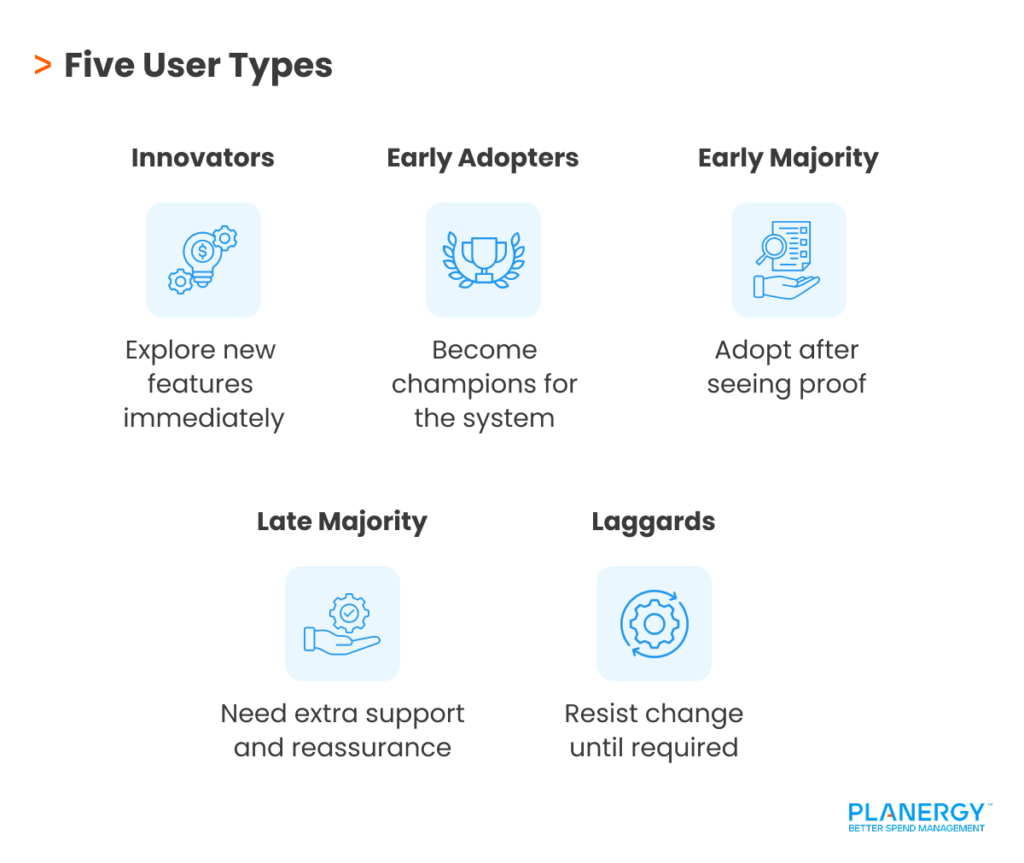
Not everyone adopts new technology at the same pace. According to Everett Rogers’ Diffusion of Innovations theory, your team includes five types of adopters.

Types Of Software Users

Innovators jump in first. They want to test new features and explore what’s possible. These are your early experimenters who aren’t afraid of bugs or rough edges.

Early adopters come next. These are your power users who see the value quickly and help others get on board. They become natural champions for the new system.

The early majority needs to see proof that the system works before committing. They want to know if their colleagues find it useful. This group represents a significant portion of your team.

The late majority adopts new tools reluctantly. They need extra support and clear evidence of benefits. They’ll come around, but only after seeing others succeed.

Laggards resist change until they have no choice. They prefer the old way of doing things and need the most patient guidance.

Knowing these groups helps you tailor your approach. Your innovators need freedom to explore. Your laggards need patient, hands-on support. Planning for all five types ensures no one gets left behind.

Why User Adoption Makes or Breaks SaaS Success

For SaaS companies and the procurement teams that buy from them, product adoption determines everything.

Low adoption means high churn. When users don’t engage, they cancel subscriptions. This kills customer lifetime value and makes growth impossible.

Strong adoption creates the opposite effect. Active users discover more functionalities. They integrate the software into their workflows. They become advocates who help others succeed.

In procurement specifically, adoption affects your entire supply chain. When your team uses procure-to-pay software consistently, you gain spend visibility, faster approvals, and better supplier relationships.

Building Your Strategy from Day One

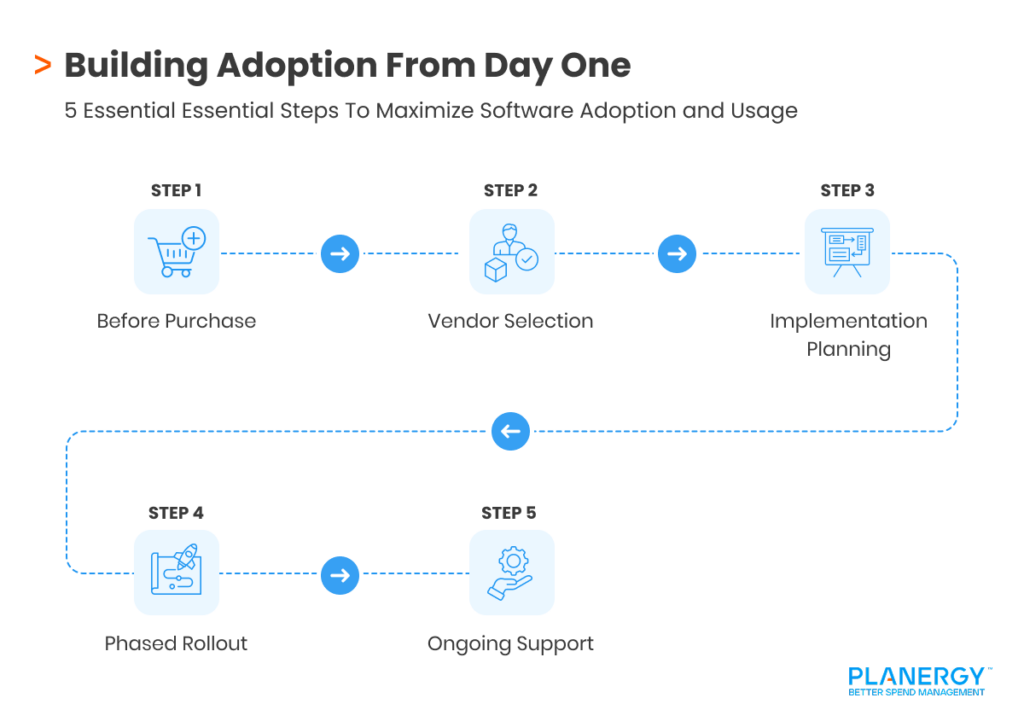
Start before the purchase decision. Involve end users in the selection process. Let them test different options. Their buy-in begins when they have a voice in choosing the tool.

Building Adoption From Day One

Partner with vendors who prioritize implementation support. The right partner guides your rollout with proven frameworks. They’ve seen what works and what doesn’t.

Create a software implementation plan that includes specific milestones. Don’t try to launch everything at once. Phase your rollout to let users build confidence gradually.

Identify champions in each department. These early adopters become your internal support team. They answer questions, share tips, and demonstrate value to skeptical colleagues.

Making Onboarding Work for Everyone

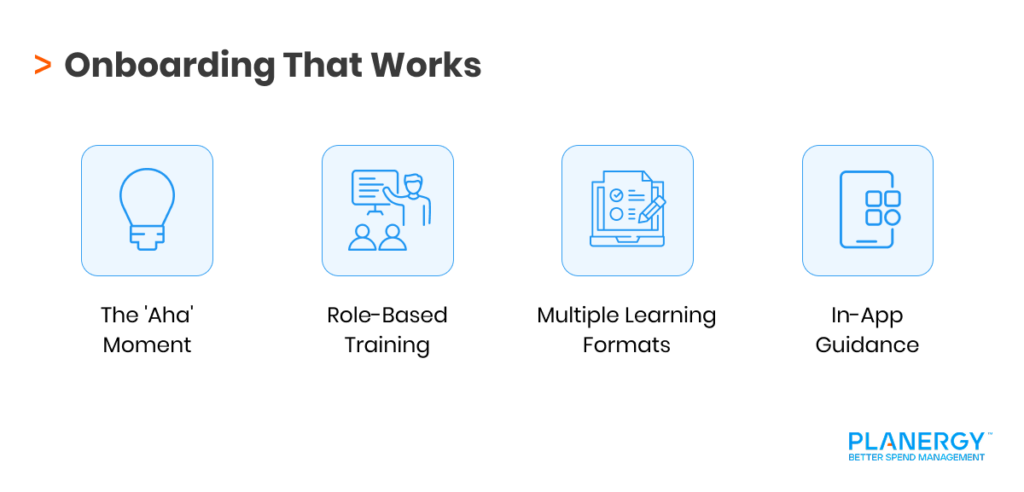
Your user onboarding experience sets the tone for everything that follows. Make it simple, practical, and relevant to actual work.

Effective User Onboarding Elements

Start with the aha moment. Show users the one thing that makes their job easier right away. For procurement teams, this might be automating purchase order approvals or finding spend data instantly.

Use multiple formats. Some people learn from tutorials. Others prefer hands-on practice. Offer step-by-step walkthroughs, video guides, and live webinars.

Create an onboarding flow that matches user roles. Your AP clerk needs different training than your procurement director. Customize the user journey based on what each person actually does.

Build in-app guidance with tooltips and checklists. Help appears exactly when and where users need it. This reduces friction points and keeps people moving forward.

Tailoring Approaches for Different Skill Levels

Procurement touches everyone, from C-suite executives to warehouse staff. Your user adoption strategies must work across this range of tech literacy.

For less technical users, simplify everything. Focus on core workflows they’ll use daily. Provide templates and presets that reduce decision-making. Offer on-demand support through multiple channels.

Advanced users want efficiency. Give them keyboard shortcuts, bulk actions, and customization options. Let them automate repetitive tasks.

The key is designing for the middle. If your average user can navigate the system easily, you’ll see higher user adoption rates overall. When procurement software requires a computer science degree to operate, adoption fails.

This is where ease of use becomes non-negotiable. Look for intuitive interfaces. Test navigation with actual end users before committing. Check if the vendor offers different permission levels so you can control what each user sees.

Tracking What Actually Matters

You can’t improve what you don’t measure. Software metrics give you the data you need to make smart decisions about your user adoption process.

Metrics That Show Real Adoption

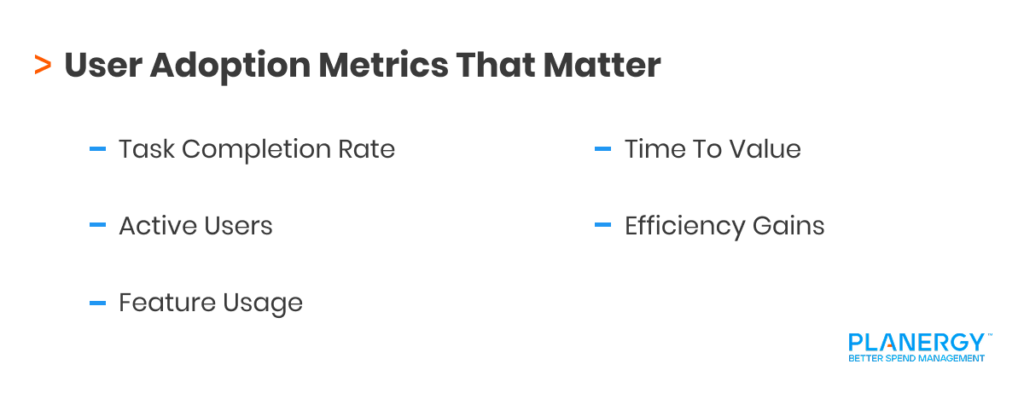
Start with activation. How many new users complete key actions in their first week? This tells you if your onboarding process works.

Monitor active users daily and monthly. Are people logging in regularly? Declining numbers signal problems you need to address.

Track feature adoption. Which functionalities get used most? Which ones confuse people? This data helps you prioritize training and simplify workflows.

Watch your customer journey from first login to full adoption. Where do users get stuck? Those friction points need immediate attention.

Measure time-to-value. How long until users accomplish meaningful work? Faster times indicate successful user adoption.

Setting Up Your Metrics Dashboard

Choose KPIs that connect to business outcomes. In procurement, this means tracking metrics like:

  • Purchase orders processed through the system versus outside it
  • Approval cycle times before and after implementation
  • Percentage of suppliers using the portal
  • Contract compliance rates
  • Spend under management

Use your Net Promoter Score (NPS) to gauge user satisfaction. Ask users how likely they’d recommend the system to colleagues. Follow up with those who give low scores to understand pain points.

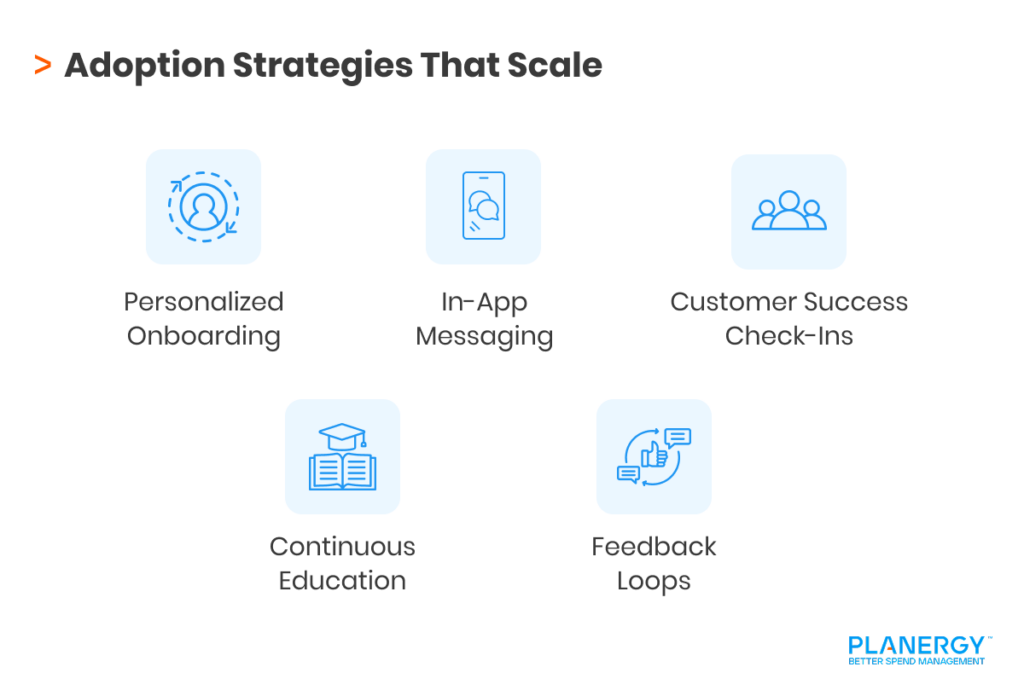
Set up a feedback loop. Regular surveys, user feedback sessions, and support ticket analysis reveal what’s working and what needs work.

Create milestones that celebrate progress. When your team hits 80% adoption, recognize the achievement. This builds momentum for reaching higher goals.

Strategies That Drive Real Results

The best user adoption strategies combine multiple approaches:

Strategies That Improve Adoption Long Term

Personalized onboarding gets users productive faster. Map the onboarding experience to individual roles and use cases. Show people exactly what they need to know.

In-app messaging delivers help at the right time. Instead of making users search for answers, provide contextual guidance when they encounter new features.

Customer success teams proactively reach out. They don’t wait for users to struggle. Regular check-ins catch issues early and reinforce good habits.

Gamification works for some teams. Progress bars, achievement badges, and leaderboards can motivate engagement. But use this carefully based on your company culture.

Continuous education keeps users growing. As you add new features, provide webinars and updated tutorials. Make learning ongoing, not just a launch event.

Optimizing the User Experience

User experience directly impacts adoption success. Complicated workflows kill engagement.

Simplify your processes first. Before implementing software, map your current workflows. Remove unnecessary steps. The cleaner your process, the easier it is to use any tool supporting it.

Reduce cognitive load. Don’t ask users to remember complex procedures. Build logic into the system. Use defaults that make sense. Guide people toward correct actions.

Test with real users before launch. Watch people use the system without intervention. You’ll discover usability issues you’d never find through internal testing alone.

A/B testing helps optimize your approach. Try different onboarding flows. Test various in-app messaging strategies. Use data-driven decisions to improve adoption rates.

Keeping Users Engaged Long-Term

Initial adoption is just the beginning. Retention requires ongoing effort.

Communicate updates clearly. When you add new features, explain how they solve real problems. Don’t assume users will discover improvements on their own.

Create a community. Let power users share tips with others. Build forums or chat channels where people help each other. Peer learning often works better than formal training.

Respond to user feedback visibly. When users suggest improvements and you implement them, tell everyone. This shows you’re listening and builds trust.

Address customer churn warning signs early. If a user stops logging in, reach out within days, not months. Often small obstacles prevent people from using tools they actually value.

Dealing with Resistance

Change always meets pushback. Dealing with employee pushback requires empathy and strategy.

Listen to objections without being defensive. Often resistance signals legitimate concerns. The system might not fit someone’s specific workflow. Their worries about job security might be real.

Acknowledge the learning curve. Moving from familiar tools to new software takes effort. Validate that feeling while showing the payoff.

Provide extra support for reluctant adopters. Pair them with champions. Offer one-on-one training. Give them more time to adjust than you think they need.

Show quick wins. When someone completes their first task successfully, celebrate it. Small victories build confidence for bigger changes.

Choosing Technology That Users Will Actually Use

Your choice of software determines your adoption success. Powerful features mean nothing if people won’t use them.

Prioritize intuitive design. Can someone accomplish basic tasks without training? If not, adoption will struggle.

User Adoption Strategies Overview

Look for flexible deployment. Cloud-based SaaS solutions update automatically and work from anywhere. This removes technical barriers that discourage use.

Check integration capabilities. Your new tool should connect with existing systems. When users must switch between multiple platforms constantly, they’ll find workarounds.

Evaluate the vendor’s customer experience approach. Do they provide ongoing support? Are resources available when users need help? Review case studies showing how they’ve helped other companies succeed.

Test mobile functionality. Your team works from various locations. If the software only works well on desktop, you’ll see lower adoption from field users.

Working with the Right Implementation Partner

Even great software fails without proper implementation support. The right partner makes the difference.

Look for vendors who take implementation seriously. They should offer structured onboarding, dedicated support, and proven methodologies.

Check if they assign a customer success team. You need experts who understand your industry and can guide you through challenges.

Ask about their training resources. Do they provide multiple learning formats? Can they customize training for your specific workflows?

Review their software implementation checklist. A detailed plan shows they’ve thought through every step needed for successful user adoption.

Understand their support model. What happens after launch? How quickly do they respond to issues? What ongoing resources do they provide?

The best partners bring experience from similar implementations. They know the common pitfalls in procurement software rollouts. They’ve developed solutions to problems you haven’t encountered yet.

Creating Your Implementation Timeline

Rushing implementation kills adoption. Give your user adoption process the time it needs.

Start with a pilot group. Choose users who represent different roles and technical abilities. Their feedback helps you refine training before company-wide launch.

Build in buffer time. Things always take longer than expected. It’s better to delay launch slightly than push out software before users are ready.

Plan for multiple touchpoints. Users need repeated exposure to new concepts. Schedule training sessions, follow-up workshops, and refresher courses.

Set realistic milestones. Don’t expect 100% adoption overnight. Aim for steady progress: 25% after month one, 50% by month two, 75% by month three.

Measuring Success Beyond Login Counts

True adoption goes deeper than active users logging in. Look at behavior that indicates real engagement.

Track task completion rates. Are users finishing critical workflows? This matters more than simple logins.

Measure quality of use. Are people using features correctly? Or are they creating workarounds that defeat the system’s purpose?

Monitor efficiency gains. Compare time to complete tasks before and after implementation. Successful user adoption should show productivity improvements.

Check data quality. When users embrace software fully, they input accurate, complete information. Poor data quality signals adoption problems.

Survey customer satisfaction regularly. Net Promoter Score gives you a quantifiable metric. But also ask open-ended questions about what’s working and what isn’t.

Maintaining Momentum After Launch

The first three months determine long-term success. Don’t disappear after go-live.

Schedule regular check-ins with all user groups. Ask what’s working. Address concerns immediately. Show continued commitment to their success.

Share success stories. When someone discovers a time-saving trick, tell the whole team. When a department hits an adoption milestone, celebrate publicly.

Provide ongoing education. As users master basics, introduce advanced features. Keep them growing with the software.

Update your change management plan based on real results. Your initial strategy will need adjustments. Use metrics and user feedback to guide improvements.

The Path to Successful Software Implementation

Successful software implementation combines technology, process, and people. Technology provides capabilities. Process defines workflows. But people determine whether it all works.

Your user adoption strategy brings these elements together. It acknowledges that change is hard while providing support that makes it manageable.

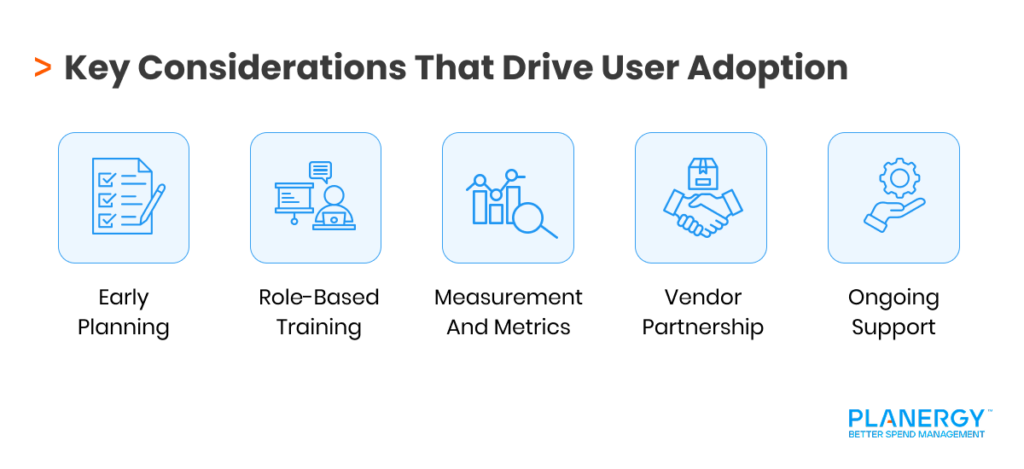
Start planning before you buy. Include users in decisions. Choose vendors who prioritize adoption. Build comprehensive training. Measure what matters. Respond to feedback quickly.

When you invest in user adoption from the beginning, you transform software from an expensive tool nobody uses into a system that revolutionizes how your procurement team operates.

The companies that get this right see dramatic improvements. Faster processing times. Better compliance. Stronger supplier relationships. Lower costs. Higher job satisfaction.

Those benefits don’t come from the software alone. They come from getting your entire team to embrace it.

That’s what effective user adoption strategies deliver.

What’s your goal today?

1. Use PLANERGY to manage purchasing and accounts payable

We’ve helped save billions of dollars for our clients through better spend management, process automation in purchasing and finance, and reducing financial risks. To discover how we can help grow your business:

2. Download our guide “Preparing Your AP Department For The Future”

Download a free copy of our guide to future proofing your accounts payable department. You’ll also be subscribed to our email newsletter and notified about new articles or if have something interesting to share.

3. Learn best practices for purchasing, finance, and more

Browse hundreds of articles, containing an amazing number of useful tools, techniques, and best practices. Many readers tell us they would have paid consultants for the advice in these articles.

Business is Our Business

Stay up-to-date with news sent straight to your inbox

PLANERGY LOGO

Sign up with your email to receive updates from our blog