We saved more than $1 million on our spend in the first year and just recently identified an opportunity to save about $10,000 every month on recurring expenses with PLANERGY.
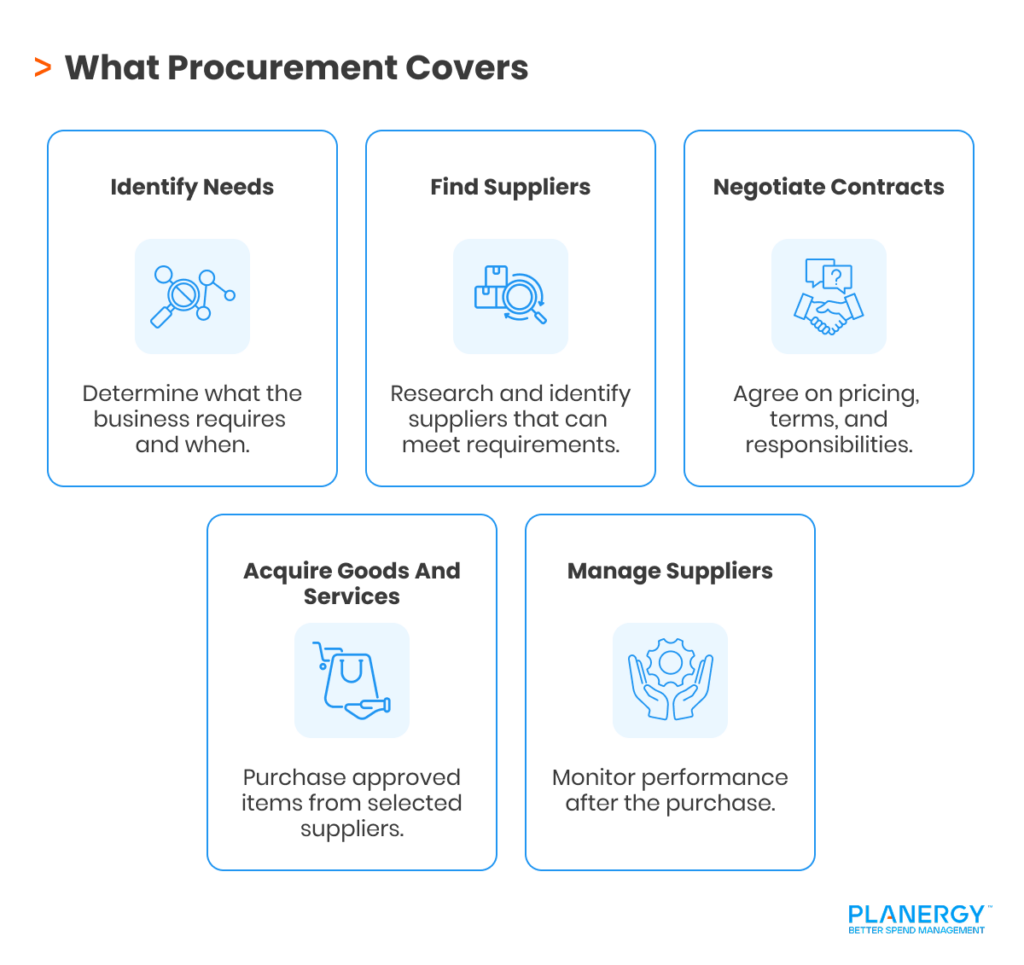
Procurement is the complete process of identifying needs, finding suppliers, negotiating contracts, and acquiring goods and services for your business.
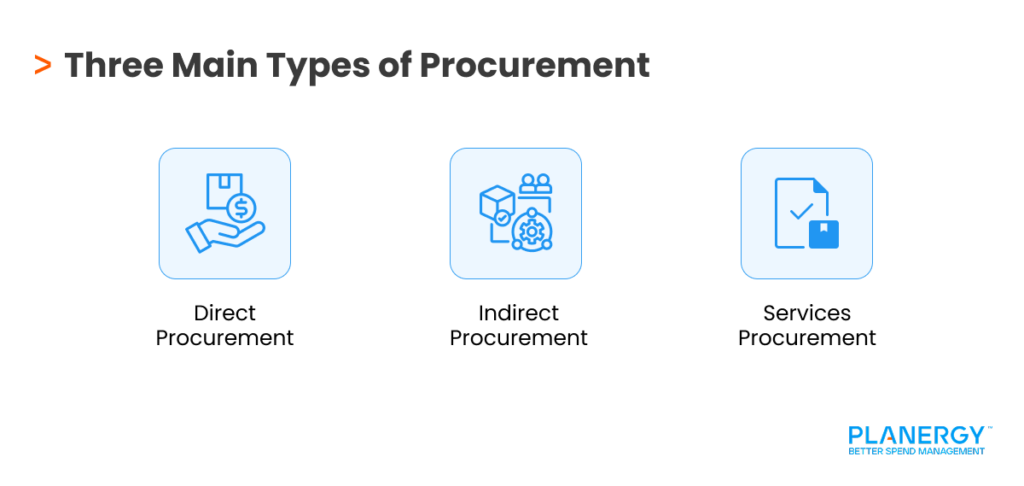
The three main types of procurement are direct (raw materials for products), indirect (operational supplies), and services (professional expertise).
A structured procurement process delivers cost savings, better supplier relationships, reduced risk, and improved quality control.
Strategic sourcing goes beyond transactions to build long-term partnerships that create value and support business goals.
AI and automation are transforming procurement by streamlining workflows, improving decision-making, and freeing teams for strategic work.
Understanding Procurement in Simple Terms
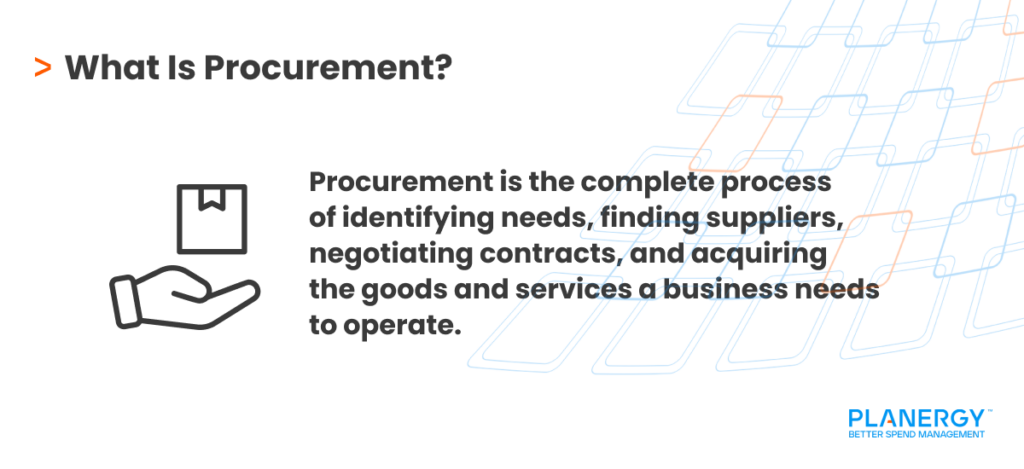
Procurement is the complete process of identifying needs, finding suppliers, negotiating contracts, and acquiring the goods and services a business needs to operate.
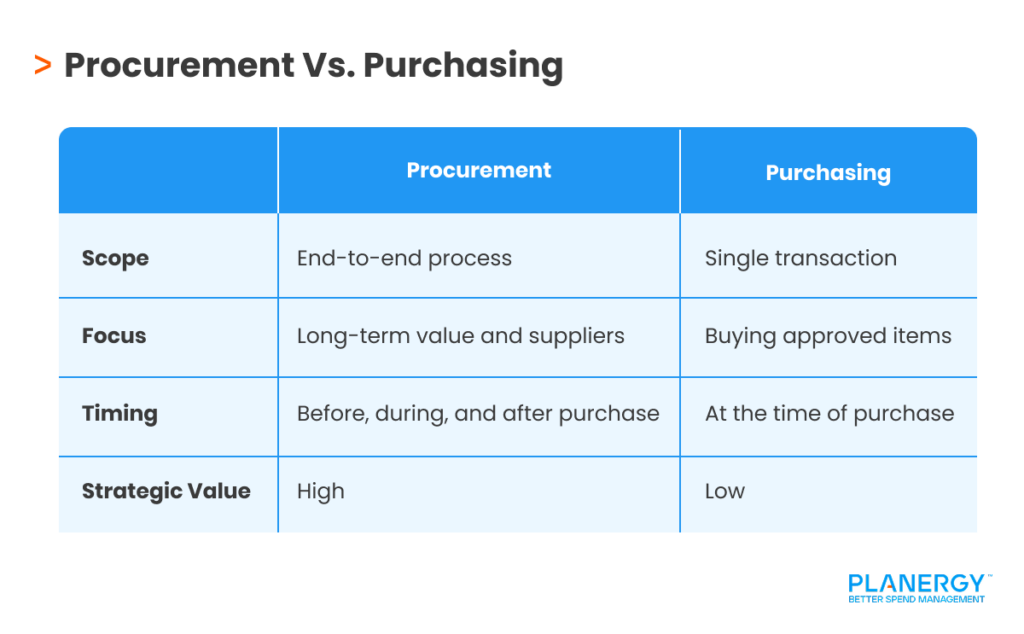
Many people confuse procurement with purchasing. They’re related but different. Purchasing is just one step in the larger procurement process.
Think of purchasing as the transaction itself, while procurement covers everything from identifying what you need to managing supplier relationships after the purchase.
Procurement differs from purchasing in scope and strategy. Purchasing focuses on buying what’s already been approved. Procurement takes a bigger picture view, looking at business needs, market research, supplier performance, and long-term value.
Three Main Categories of Procurement
Businesses typically deal with three types of procurement activities:
Direct Procurement
This involves acquiring raw materials and components that go directly into your products. A car manufacturer buying steel or a bakery purchasing flour are examples of direct procurement. These purchases directly impact your production and bottom line.
Indirect Procurement
This covers everything else your business needs to function. Office supplies, IT services, marketing materials, and facilities maintenance all fall under indirect procurement.
While these items don’t go into your final product, they keep your business operations running smoothly.
Services Procurement
This focuses on hiring external providers for consulting services, legal support, maintenance contracts, and other professional services. This type of procurement often requires different evaluation criteria than goods procurement.
The Complete Procurement Process Explained
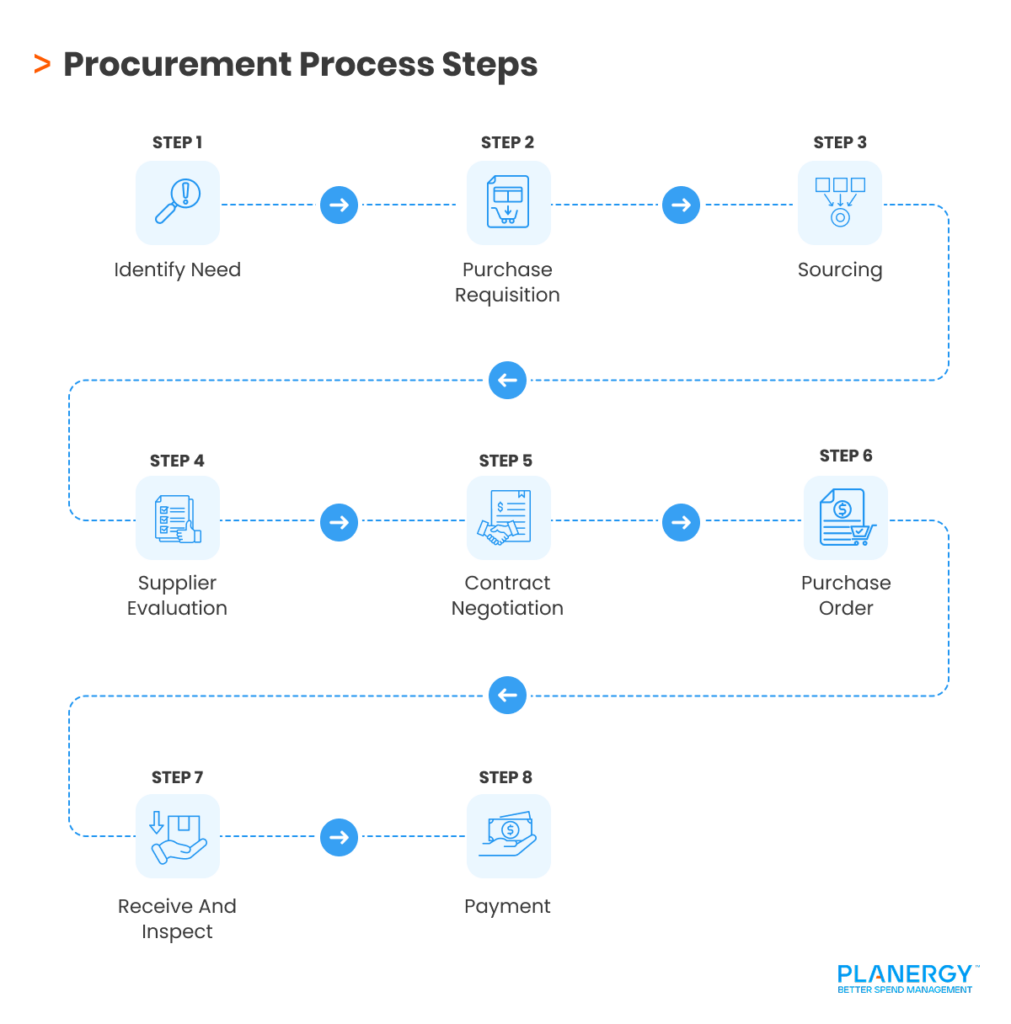
The procurement process follows a logical sequence of steps that helps businesses make smart purchasing decisions.
It starts with identifying business needs. Your procurement team works with stakeholders across departments to understand what’s required and when.
Next comes the purchase requisition stage. Employees submit purchase requests through your procurement department. These requests get reviewed and approved based on budget and necessity.
The sourcing phase involves finding potential suppliers who can meet your needs. Your procurement professionals conduct market research and reach out to providers who might be a good fit.
Request documents go out next. Depending on the situation, you might issue an RFP (request for proposal) for complex needs or an RFQ (request for quotation) for straightforward purchases. These documents help you compare options fairly.
Supplier selection follows evaluation. Your team reviews proposals, checks references, and assesses supplier performance history. Competitive bidding often plays a role here.
Negotiating contracts comes before finalizing any deal. Good procurement practices mean securing the best value, not just the lowest price. Contract management ensures both parties understand their obligations.
The purchase order gets issued once everything’s agreed. This official document authorizes the supplier to deliver the right goods or services.
Receiving and inspection happen when deliveries arrive. Your team verifies that what you ordered matches what you received.
Payment processing closes the loop. Accounts payable handles invoices according to agreed terms. Good record-keeping throughout this entire procurement lifecycle helps with future decisions.
Why Strategic Sourcing Matters
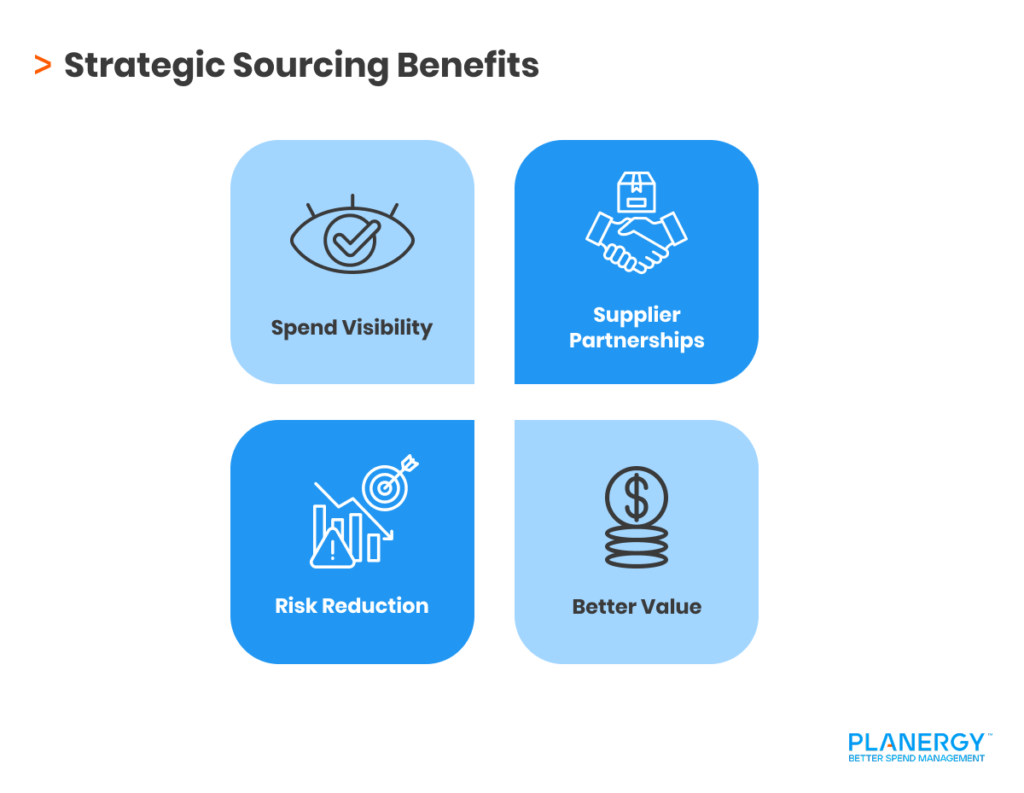
Strategic sourcing takes procurement beyond simple transactions. It’s about building partnerships with suppliers that deliver long-term value.
This approach involves analyzing your spending patterns and identifying opportunities to consolidate purchases. When you understand where your money goes, you can negotiate better terms and build stronger supplier relationships.
Strategic sourcing also means looking ahead. Forecasting helps you anticipate disruptions and plan accordingly. You’re not just reacting to immediate needs but optimizing your entire supply chain management.
The goal is to create partnerships that benefit both sides. When suppliers understand your business needs and goals, they can suggest improvements and innovations you might not have considered.
The Growing Importance of Ethical and Sustainable Practices
Modern procurement practices increasingly focus on sustainability and ethics. Customers and stakeholders want to know that products are sourced responsibly.
This means evaluating suppliers on more than price and quality. Where do their raw materials come from? How do they treat workers? What’s their environmental impact?
Effective procurement now includes setting standards for ethical behavior. Many procurement professionals use KPIs that track sustainability metrics alongside traditional performance measures.
This approach protects your reputation and often improves your bottom line. Sustainable suppliers tend to be more stable partners. They face fewer risks from regulatory changes or public criticism.
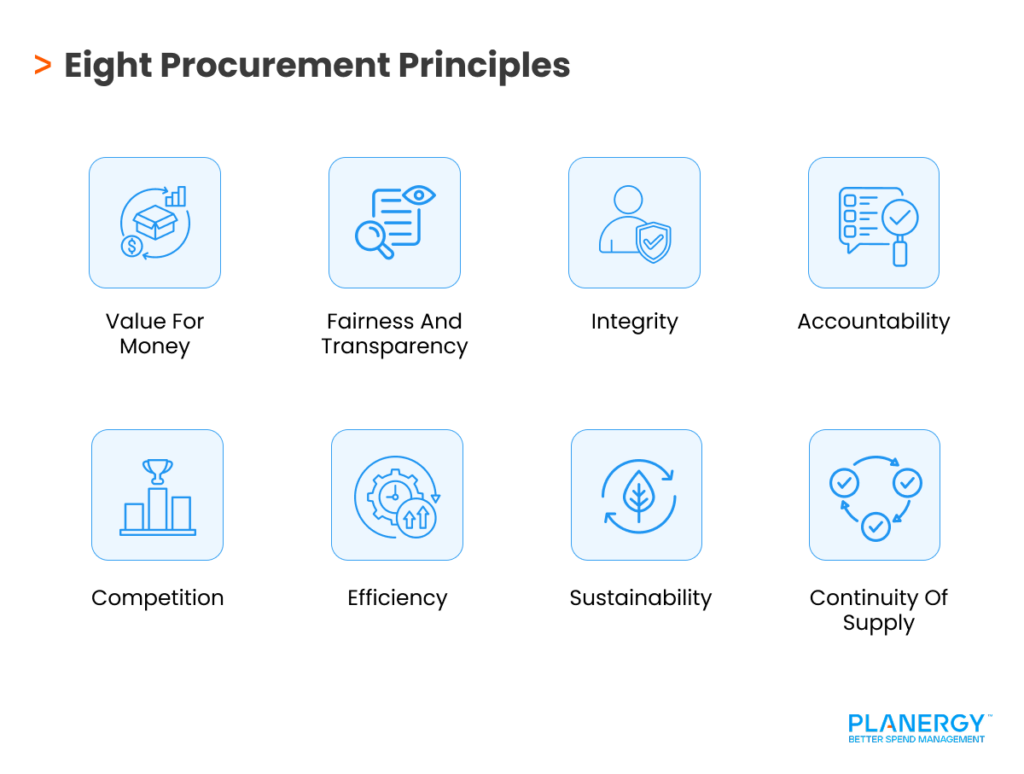
Eight Core Principles That Guide Procurement
Successful procurement follows established principles that ensure fair and effective outcomes. These principles form the foundation of an effective procurement strategy and guide decision-making across all purchasing activities.
Value for Money
You’re looking for the best value, not necessarily the lowest price.
This principle recognizes that the cheapest option rarely delivers the best results over time.
Value for money means considering the total cost of ownership. A supplier charging 20% more upfront might cost less if their products last longer or require less maintenance. Factor in quality, reliability, service levels, and long-term costs.
Your procurement team should evaluate how purchases contribute to business goals. Does this investment help you serve customers better? Will it improve efficiency? These questions matter as much as the price tag.
Fairness and Transparency
All potential suppliers should have an equal opportunity to compete for your business. This means clear specifications, consistent evaluation criteria, and open communication throughout the selection process.
Transparency builds trust with suppliers and protects your organization. When your decision-making process is documented and defensible, you avoid accusations of favoritism or bias.
Share evaluation criteria upfront. Let suppliers know what matters most in your decision. Give feedback to unsuccessful bidders when appropriate. These practices strengthen your reputation in the market and attract better suppliers.
Integrity
Procurement professionals must avoid conflicts of interest and any form of corruption. Personal relationships with suppliers, gifts, or kickbacks undermine the entire process.
Most organizations have policies about what procurement staff can accept from suppliers. Even small gifts can create the appearance of impropriety. When in doubt, decline.
Integrity also means honoring your commitments. If you promise to pay within 30 days, pay within 30 days. If you agree to certain terms, stick to them. Your reputation affects your ability to work with quality suppliers.
Accountability
Someone must own each procurement decision and be able to explain the rationale behind it. Clear responsibility prevents finger-pointing when problems arise.
Documentation supports accountability. Keep records of who made decisions, what alternatives were considered, and why the chosen option was selected. This paper trail protects both your organization and the procurement professionals involved.
Accountability extends beyond individual decisions to the entire procurement function. Leadership should regularly review procurement performance and outcomes. Are you meeting cost targets? Maintaining quality standards?
Competition
Competitive bidding helps you understand true market prices and capabilities. When multiple suppliers compete for your business, you typically get better pricing and terms.
However, competition shouldn’t be your only consideration. Sometimes a sole-source relationship makes sense for specialized needs or when you’ve invested heavily in integrating with a specific supplier’s systems.
The key is making conscious decisions about when to compete and when to partner. Document your reasoning either way. For high-value contracts, competition should be your default approach unless you have compelling reasons otherwise.
Efficiency
Procurement affects how quickly your company’s operations can respond to opportunities and challenges. Slow purchasing processes delay projects and frustrate stakeholders.
Streamline your workflows without sacrificing controls. Automated approvals for low-value purchases free your team to focus on strategic sourcing. Standard templates speed up contract negotiations. Clear policies reduce back-and-forth questions.
Efficiency also means avoiding waste. Don’t create unnecessary steps in your process. Don’t require excessive documentation for routine purchases. Balance control with practicality.
Sustainability
Procurement decisions impact society and the environment beyond your organization’s walls. Responsible sourcing protects long-term interests for everyone.
Consider environmental factors in supplier selection. How much energy does their manufacturing process consume? What happens to products at end of life? Can packaging be reduced or made recyclable?
Social responsibility matters too. Does the supplier pay fair wages? Maintain safe working conditions? Support their local community? These factors affect supply chain stability and your brand reputation.
Sustainability often aligns with financial goals. Efficient suppliers use fewer resources and cost less to work with over time. Ethical suppliers face fewer legal and reputational risks that could disrupt your supply chain.
Continuity of Supply
Your organization depends on reliable access to the goods and services it needs. Continuity of supply ensures critical items remain available when required.
Cost and quality matter, but reliability is essential. Procurement must assess supply risk alongside price — including supplier financial health, capacity, geographic exposure, and reliance on sub-suppliers.
Where appropriate, avoid overdependence on a single source. Dual sourcing or backup suppliers can reduce disruption risk. For critical categories, continuity planning should be built into your sourcing strategy.
Regular risk reviews and contingency planning help prevent costly interruptions. Continuity of supply protects operations, revenue, and customer trust — making resilience a core responsibility of modern procurement.
How Procurement Management Keeps Everything Running
Procurement management is the discipline of overseeing all procurement activities. It involves planning, organizing, and controlling the acquisition of goods and services.
A chief procurement officer or procurement department head typically manages this function. They develop a procurement strategy that aligns with business goals.
Day-to-day management includes tracking spend, monitoring supplier performance, and ensuring compliance with policies. Good management helps identify cost savings opportunities and reduce risk.
The procurement team uses various tools to stay organized. Procurement software helps track purchase requests, manage contracts, and analyze spending patterns in real-time.
Understanding Procure-to-Pay
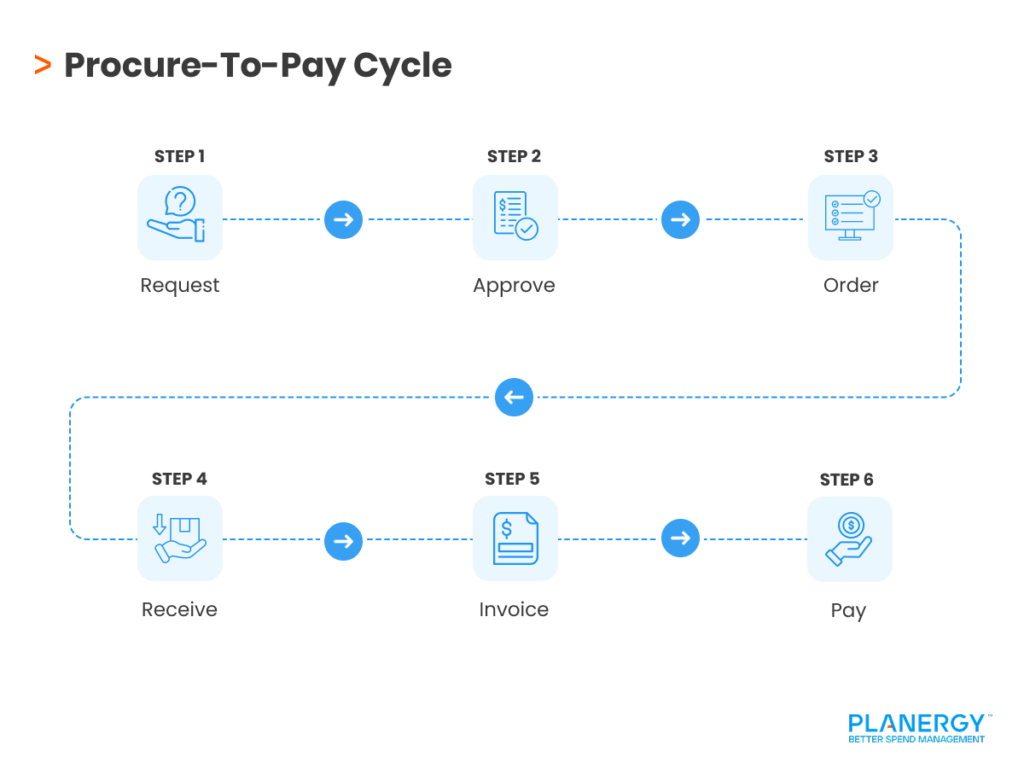
Procure-to-pay describes the end-to-end cycle from identifying a need to paying the supplier. It connects procurement activities with financial processes.
This cycle starts when someone submits a purchase requisition. It ends when accounts payable processes the final payment. Everything in between needs coordination between procurement, receiving, and finance teams.
Automating the procure-to-pay process delivers significant benefits. You reduce errors, speed up approvals, and gain better visibility into spending. E-procurement systems make this automation possible.
When procure-to-pay works smoothly, you avoid duplicate orders, catch pricing errors, and maintain accurate records. This efficiency directly impacts your bottom line through cost savings and better cash flow management.
What a Career in Procurement Involves
A job in procurement means managing the acquisition of goods and services for an organization. Procurement professionals wear many hats.
You might spend your morning negotiating contracts with suppliers. Afternoons could involve analyzing spending data or resolving delivery issues. The work requires strong communication skills and analytical thinking.
Entry-level roles often focus on specific procurement activities like processing purchase orders or managing office supplies. Senior positions involve developing procurement strategies and leading teams.
The field offers variety. You might work in manufacturing, healthcare, government, or any industry that purchases goods and services. Each sector has unique challenges and requirements.
Benefits of Building a Structured Procurement Function
Companies with organized procurement functions see measurable advantages. Structure brings consistency to purchasing decisions.
Cost savings rank high among benefits. Centralized procurement lets you leverage volume discounts and standardize specifications. You avoid maverick spending that happens when departments buy independently.
Better supplier relationships develop when you have dedicated procurement professionals managing partnerships. These relationships lead to improved terms, priority service, and collaborative problem-solving.
Risk management improves with structure. You can track supplier performance, maintain backup options, and respond faster to disruptions. Contract management becomes systematic rather than scattered.
Quality control strengthens when procurement follows established processes. You set clear standards, verify compliance, and address issues consistently.
Decision-making improves with better data. When all purchasing activities flow through your procurement department, you can analyze patterns and make informed choices about where to invest resources.
Best Practices That Make Procurement Work
Smart procurement practices separate high-performing organizations from the rest.
Build strong supplier relationships Beyond transactional interactions, regular communication helps both sides understand expectations and resolve problems quickly.
Use data to drive decisions Track spending, monitor supplier performance, and analyze market trends. Good record-keeping supports better forecasting and planning.
Standardize where possible Creating templates for contracts, evaluation criteria, and approval workflows saves time and reduces errors.
Invest in your team Training keeps procurement professionals current on market trends, regulations, and best practices. Their expertise directly impacts outcomes.
Embrace technology Procurement software automates routine tasks, provides real-time visibility, and helps optimize your entire procurement lifecycle.
Focus on total cost of ownership The cheapest option upfront often costs more over time. Consider maintenance, reliability, and support when selecting suppliers.
Maintain ethical standards Clear policies about conflicts of interest and fair treatment build trust with suppliers and stakeholders.
Review and improve continuously Regular audits of your purchasing process help identify bottlenecks and opportunities for improvement.
How AI Is Transforming Procurement
Artificial intelligence is reshaping procurement in practical ways. The technology helps automate repetitive tasks and uncover insights humans might miss.
AI can analyze thousands of supplier records in seconds, identifying patterns in pricing, quality, and delivery performance. This helps you make smarter decisions about which providers to work with.
Chatbots handle routine purchase requests, freeing your procurement team for strategic work. They can answer questions about policies, track order status, and route approvals automatically.
Predictive analytics help with forecasting. AI spots trends in your purchasing data and warns about potential disruptions. This early warning system lets you adjust before problems affect business operations.
Natural language processing helps with contract management. AI reviews contract terms, flags unusual clauses, and tracks renewal dates. This reduces risk and ensures compliance.
Spend analysis becomes more sophisticated with AI. The technology categorizes purchases automatically and identifies cost savings opportunities across your organization.
While AI brings powerful capabilities, it works best when combined with human expertise. Procurement professionals use these tools to enhance their decision-making, not replace it.
Why Procurement Matters for Business Success
Procurement contributes to company success in ways that extend far beyond buying things cheaply.
Your bottom line benefits directly from effective procurement. Smart sourcing decisions, volume discounts, and efficient workflows all reduce costs. These savings drop straight to profit.
Supply chain management depends on good procurement. When you have reliable suppliers and clear processes, your operations run smoothly. Products get made on time. Customers receive orders as promised.
Quality control starts with procurement. Selecting suppliers carefully and monitoring their performance ensures you receive materials and services that meet your standards.
Innovation often comes through supplier partnerships. When you build strong relationships, providers share new ideas and technologies. They help you stay competitive.
Risk management relies on diversified suppliers and clear contracts. Good procurement practices protect you from disruptions, whether they’re natural disasters, economic changes, or supplier failures.
Compliance and regulatory requirements get easier with organized procurement. You maintain documentation, follow policies, and demonstrate ethical practices when auditors come calling.
What’s your goal today?
1. Use PLANERGY to manage purchasing and accounts payable
We’ve helped save billions of dollars for our clients through better spend management, process automation in purchasing and finance, and reducing financial risks. To discover how we can help grow your business:
Download a free copy of our guide to better manage and make savings on your indirect spend. You’ll also be subscribed to our email newsletter and notified about new articles or if have something interesting to share.
3. Learn best practices for purchasing, finance, and more
Browse hundreds of articles, containing an amazing number of useful tools, techniques, and best practices. Many readers tell us they would have paid consultants for the advice in these articles.
We use cookies to personalise content and ads, to provide social media features and to analyse our traffic. We also share information about your use of our site with our social media, advertising and analytics partners who may combine it with other information that you’ve provided to them or that they’ve collected from your use of their services.
The technical storage or access is strictly necessary for the legitimate purpose of enabling the use of a specific service explicitly requested by the subscriber or user, or for the sole purpose of carrying out the transmission of a communication over an electronic communications network.
Preferences
The technical storage or access is necessary for the legitimate purpose of storing preferences that are not requested by the subscriber or user.
Statistics
The technical storage or access that is used exclusively for statistical purposes.The technical storage or access that is used exclusively for anonymous statistical purposes. Without a subpoena, voluntary compliance on the part of your Internet Service Provider, or additional records from a third party, information stored or retrieved for this purpose alone cannot usually be used to identify you.
Marketing
The technical storage or access is required to create user profiles to send advertising, or to track the user on a website or across several websites for similar marketing purposes.