We saved more than $1 million on our spend in the first year and just recently identified an opportunity to save about $10,000 every month on recurring expenses with PLANERGY.
It helps you determine which suppliers best influence your success and ensures they perform well.
Supply chain management uses SRM in procurement, operations, and project management.
SRM helps to foster positive relationships with your suppliers and helps guide the activities you should engage in with each supplier.
It works much the same way as customer relationship management, or CRM, does on the front end, dealing directly with customers.
The main goal of SRM is to improve business processes between you and your suppliers.
Creating a streamlined approach improves efficiency for both your business and your suppliers.
Though the approach to SRM can vary from one organization to the next, the main focus is developing a mutually beneficial relationship with all of your suppliers, especially those considered strategic partnerships for your brand.
SRM refers to both business practices and software. We’ll take a look at both.
Types of Supplier Relationships
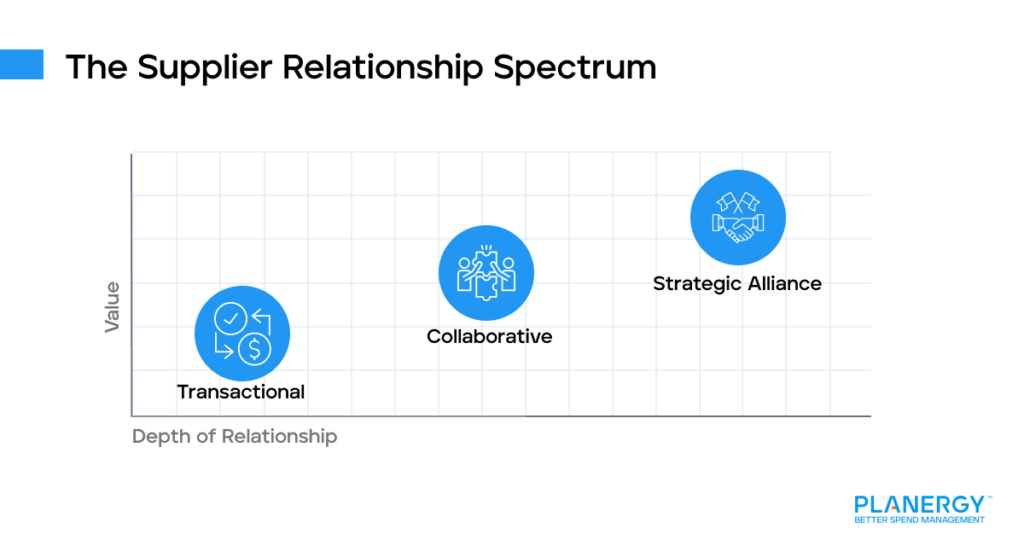
Understanding the nature of supplier relationships is critical in developing an effective SRM strategy.
Broadly, these relationships can be classified into three types, each with unique characteristics and implications for business operations.
Transactional
Transactional relationships are the most basic form of supplier interaction. These are typically short-term engagements focused on specific, one-off transactions or purchases.
Communication revolves around the procurement of goods or services, with minimal interaction beyond the completion of the transaction.
In a transactional relationship, the emphasis is on the exchange itself, rather than on building a long-term partnership.
Businesses may opt for transactional relationships when purchasing standard, non-critical items that do not require extensive collaboration or when the market offers many alternatives to the supplier.
Collaborative
Collaborative relationships represent a deeper level of engagement between a business and its suppliers.
Unlike transactional relationships, collaborative ones are built on the foundation of long-term partnerships, where both parties are invested in mutual growth and success.
These relationships are characterized by open communication, trust, and a shared vision for the future.
Suppliers in collaborative relationships are often seen as strategic partners, playing a key role in the company’s operations and success.
Activities in a collaborative relationship may include joint product development, shared market research, and cooperative marketing initiatives.
The goal is to create a win-win situation where both parties benefit from the relationship beyond mere transactions.
Strategic Alliances
Strategic alliances are supplier relationships at their deepest. They involve highly integrated partnerships in which both parties co-develop products and solutions, often sharing risks and rewards.
These relationships go beyond collaborative efforts, embedding the supplier into the very fabric of the company’s strategic planning and execution.
Strategic alliances are formed with key suppliers who provide critical components, technologies, or services integral to the company’s value proposition and competitive advantage.
In such alliances, both parties commit significant resources, including time, money, and expertise, to achieve shared objectives.
These might include entering new markets, developing innovative products, or enhancing supply chain resilience.
Strategic alliances require the highest level of trust and commitment but can offer the most significant benefits in innovation, market differentiation, and long-term success.
Each type of supplier relationship offers different benefits and challenges, and the choice among them should align with the company’s strategic goals, operational needs, and market dynamics.
Supplier relationship management isn’t a single activity but a structured framework made up of several interconnected elements.
Understanding these core components helps organizations approach SRM in a more intentional, consistent, and scalable way.
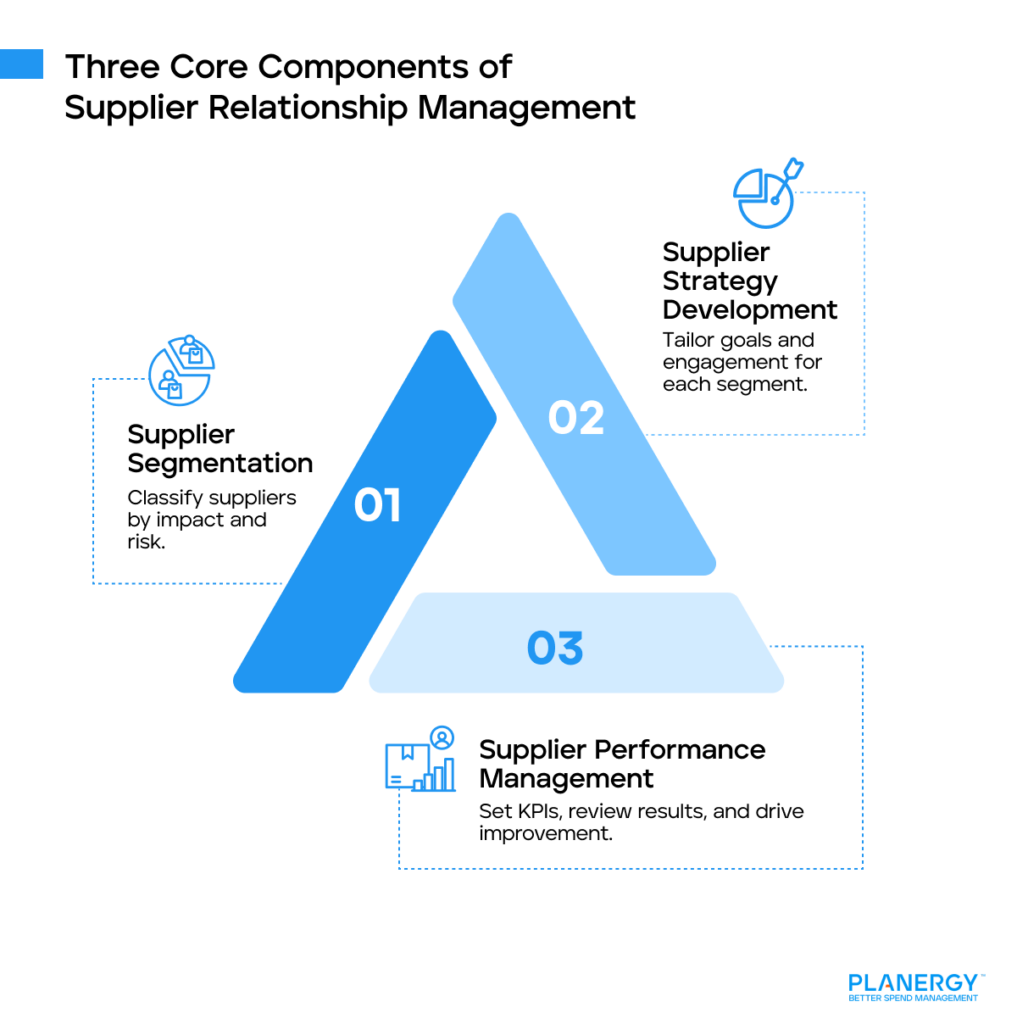
The SRM process can be broken down into three basic components, each vital for the effectiveness of the overall strategy.
Supplier Segmentation
Supplier segmentation is the process of categorizing suppliers based on their importance and impact on the business strategy.
This crucial first step allows organizations to prioritize their focus and allocate resources more efficiently.
Factors that might influence the segmentation include the supplier’s contribution to the company’s revenue, the uniqueness of their product or service, and the complexity of the supply chain.
Typically, suppliers are divided into strategic, preferred, and transactional categories. Strategic suppliers are those with whom the company has a significant, ongoing relationship critical to business operations.
Preferred suppliers are reliable but not critical, and transactional suppliers are those engaged on an as-needed basis.
Effective segmentation enables businesses to tailor their approach to managing their supply base, focusing efforts where they can make the most significant impact.
Supplier Strategy Development
Once suppliers have been segmented, the next step is to craft tailored strategies for engaging and managing the different segments.
This involves defining the goals of the relationship for each category of suppliers and determining the best ways to achieve those goals.
For strategic suppliers, the strategy might focus on building deep, collaborative relationships that drive innovation and competitive advantage.
For preferred suppliers, the strategy could ensure reliability and efficiency, while transactional suppliers might be managed with an emphasis on cost-effectiveness and simplicity.
Developing a clear strategy for each segment helps ensure that the company’s efforts are aligned with its broader business objectives and that it is getting the best possible value from each supplier relationship.
Supplier Performance Management
The final component of SRM is the ongoing monitoring and management of supplier performance to ensure that the objectives defined in the strategy phase are being met.
This involves setting clear performance metrics, regularly reviewing supplier performance against these metrics, and working collaboratively with suppliers to address any issues that arise.
Performance management can also include recognizing and rewarding suppliers for exceptional performance, which can further strengthen the relationship.
Effective performance management is crucial for maintaining the quality, reliability, and cost-effectiveness of the goods and services procured from suppliers. It also helps identify opportunities for improvement and innovation within the supply chain.
Key Steps in the Supplier Relationship Management Process
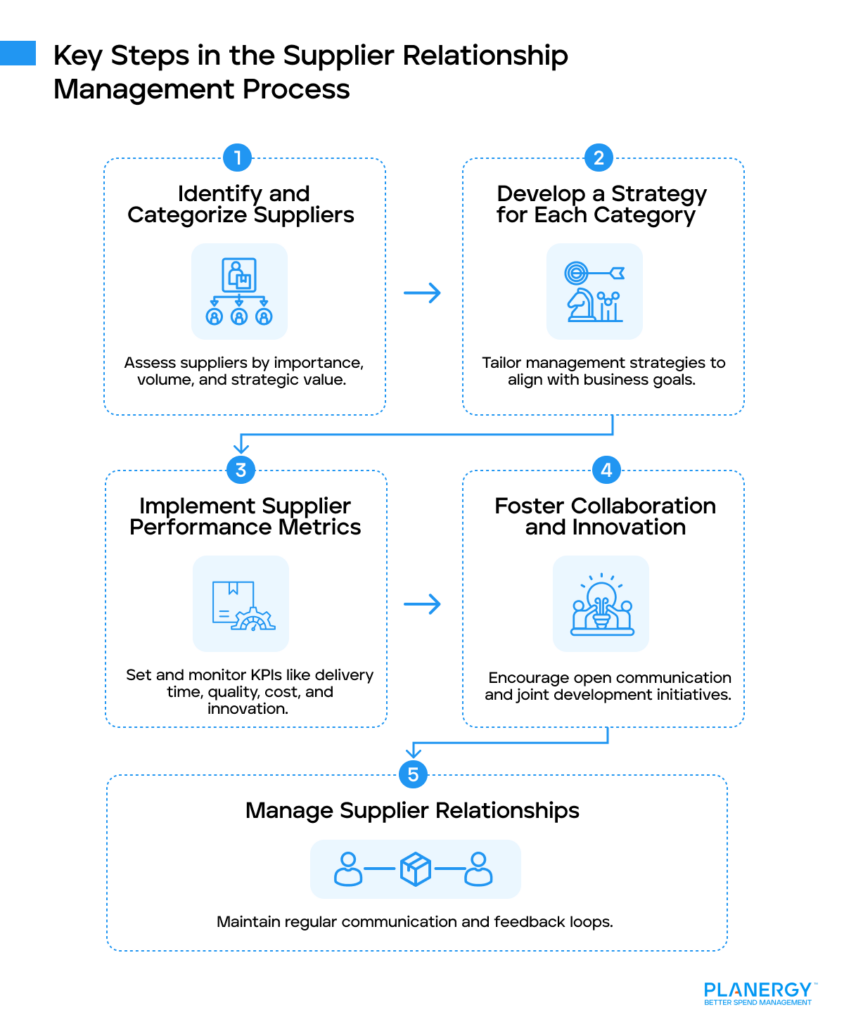
A successful SRM program follows a clear, repeatable process that guides how suppliers are evaluated, managed, and developed over time.
These steps help ensure supplier relationships align with business goals while driving performance and collaboration.
Identify and Categorize Suppliers
Identify and categorize suppliers based on their importance to your business operations.
This involves conducting a thorough assessment of your suppliers to understand not just who they are but also their role and significance in your supply chain.
Factors such as the volume of business, importance of the supplied goods or services, and strategic value of the supplier relationship help determine the categorization.
Common categories include strategic partners, key suppliers, and general suppliers, each requiring a different management approach.
This segmentation enables organizations to allocate their resources and efforts more effectively, focusing on managing relationships that are critical to their success.
Develop a Strategy for Each Category
Develop a tailored strategy for managing each category. This strategy should align with the overall business objectives and supply chain goals.
For strategic partners, the focus might be on building deep, collaborative relationships that foster innovation and growth.
For key suppliers, ensuring reliability, quality, and efficiency might be paramount.
And for general suppliers, the strategy may emphasize cost-effectiveness and transactional efficiency.
Developing a specific strategy for each category allows businesses to manage their supplier relationships more effectively, ensuring that each supplier is engaged in a manner that maximizes value for the organization.
Implement Supplier Performance Metrics
To manage vendor relationships effectively, it is crucial to implement Key Performance Indicators (KPIs) that allow for monitoring and evaluating supplier performance.
These metrics should line up with the organization’s goals and the objectives of each supplier relationship.
Common KPIs include delivery time, quality standards, cost management, and innovation contribution.
Regularly reviewing these metrics will give insights into supplier performance, identify areas for improvement, and make possible informed decisions about the future of the relationship.
Effective performance management fosters a culture of continuous improvement and accountability in the supply chain.
Foster Collaboration and Innovation
A key aspect of successful supplier relationship management is fostering an environment that encourages supplier collaboration and innovation.
This involves establishing open lines of communication, sharing strategic information, and working together on joint development initiatives.
Collaborative relationships can lead to innovations that benefit both parties, such as developing new products, improving processes, or reducing costs.
Encouraging suppliers to contribute ideas and share in the risks and rewards of innovation initiatives can strengthen relationships and provide a competitive edge in the market.
By treating suppliers as strategic partners, businesses can unlock new opportunities for growth and success.
Setting clear expectations and establishing mutual goals to ensure alignment and foster a partnership atmosphere is essential.
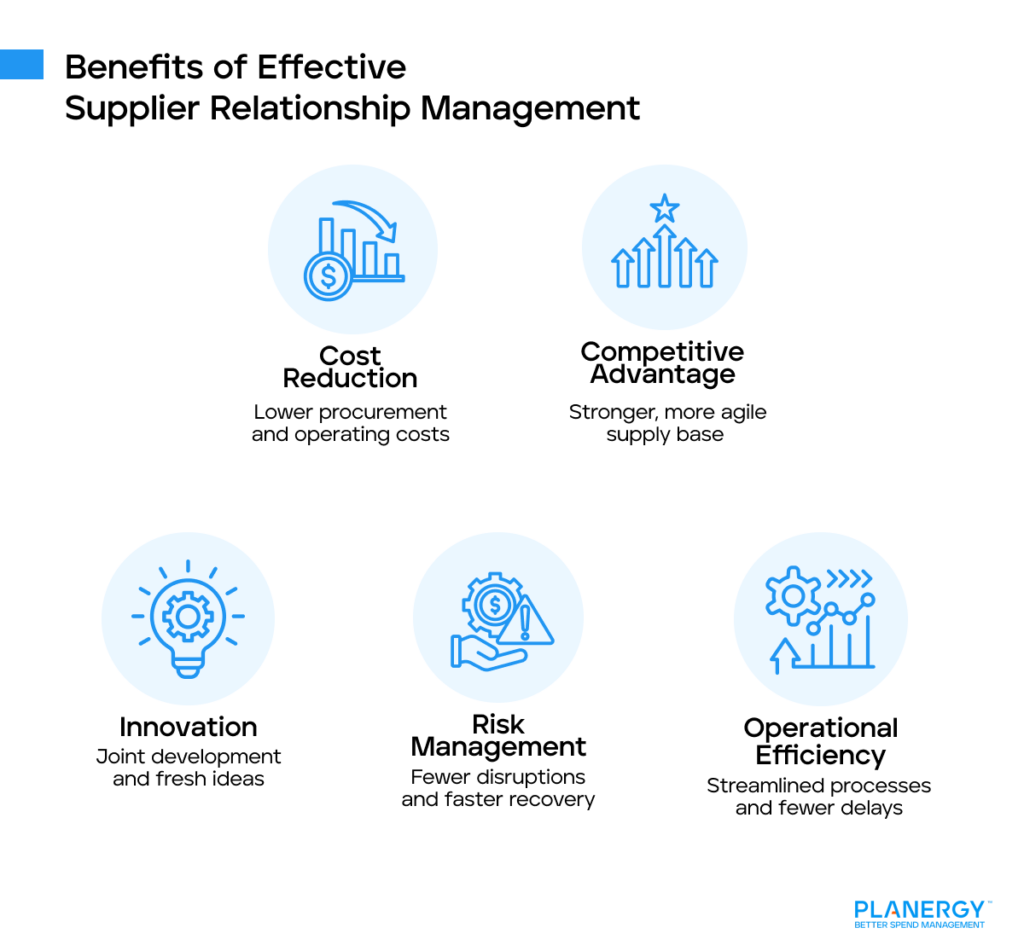
Benefits of Effective Supplier Relationship Management
When implemented correctly, supplier relationship management delivers value far beyond procurement efficiency.
Strong supplier partnerships can influence cost control, innovation, risk mitigation, and long-term competitiveness across the organization.
Cost Reduction
One of the main benefits of effective Supplier Chain Relationship Management (SCRM) is the potential for significant cost reduction.
Streamlining processes helps businesses tackle inefficiencies that often lead to unnecessary expenses.
This includes optimizing inventory levels to prevent overstocking or stockouts, improving logistics and transportation routes, and automating manual processes where possible.
Additionally, establishing strong relationships with suppliers opens the door for negotiations that can result in better pricing, payment terms, and discounts.
These negotiations are made possible by the mutual trust and understanding from long-term partnerships, allowing both parties to reduce costs without compromising on quality or service.
Ultimately, cost reduction through SCRM impacts the bottom line directly and enhances the business’s competitiveness in the market.
Innovation
Innovation is a critical driver of competitive advantage, and collaborative relationships with suppliers are a rich source of innovative solutions and products.
Suppliers often have unique insights into new materials, technologies, and processes that can significantly improve product offerings or production efficiency.
By fostering an environment of open communication and collaboration, businesses can tap into this wealth of knowledge and creativity.
Joint development initiatives encourage sharing ideas and expertise, leading to breakthrough innovations that may not have been possible otherwise.
Moreover, suppliers motivated by strong, collaborative relationships are more likely to invest in research and development efforts that benefit their partners, creating a virtuous cycle of innovation.
Risk Management
Effective risk management is essential in today’s volatile global market environment, and close relationships with suppliers play a crucial role in anticipating and mitigating potential supply chain disruptions.
A deep understanding of a supplier’s operations, capabilities, and challenges allows businesses to identify risks early and develop contingency plans.
This could involve diversifying the supplier base, increasing inventory buffers for critical components, or collaborating with suppliers to enhance their resilience to disruptions.
Strong relationships mean suppliers are more likely to communicate openly about potential issues, giving businesses more time to react and adapt and allowing for better mitigation.
By working closely with suppliers, companies can build a more resilient and agile supply chain capable of weathering unforeseen challenges.
Improved Efficiency
Enhanced communication and a deeper understanding between businesses and their suppliers lead to smoother operations and fewer errors, improving overall efficiency.
Effective SCRM facilitates aligning business processes and expectations, reducing misunderstandings and miscommunications that can cause delays and rework.
Regular interactions and feedback loops help fine-tune operations and quickly address any issues that arise.
Mutual understanding fosters a more collaborative approach to problem-solving, with both parties working together to find the most efficient solutions.
This improves the day-to-day operations and strengthens the supplier relationship, creating a foundation for long-term success and operational excellence.
Competitive Advantage
SRM contributes to competitive advantage by ensuring a reliable, efficient supply chain capable of quickly adapting to market changes and delivering innovation.
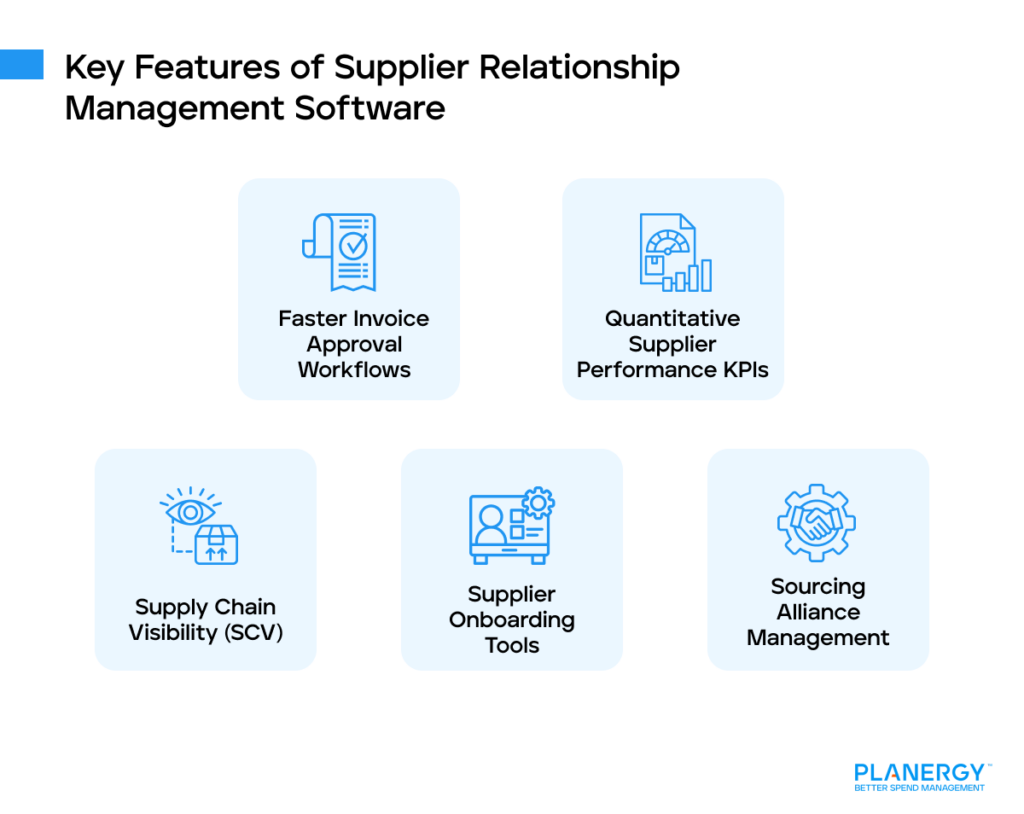
Key Features of Supplier Relationship Management Software
Technology plays a critical role in enabling modern SRM strategies, especially as supply chains grow more complex.
SRM software provides the tools organizations need to centralize supplier data, improve visibility, and manage relationships more effectively.
SCV
SCV refers to a business’s ability to track products in transit and anticipate potential issues in the supply chain.
SRM software enhances visibility by providing real-time supplier data across the supply chain to improve forecasting, historical data analysis, and more.
Supplier Onboarding
This process involves efficiently and effectively integrating new suppliers into the company’s supply chain and ensuring they meet business needs.
It also offers a place to track the scorecard and streamline contract management.
Sourcing Alliances
These are partnerships between businesses and their suppliers that aim to leverage collective bargaining power and share resources for mutual benefit.
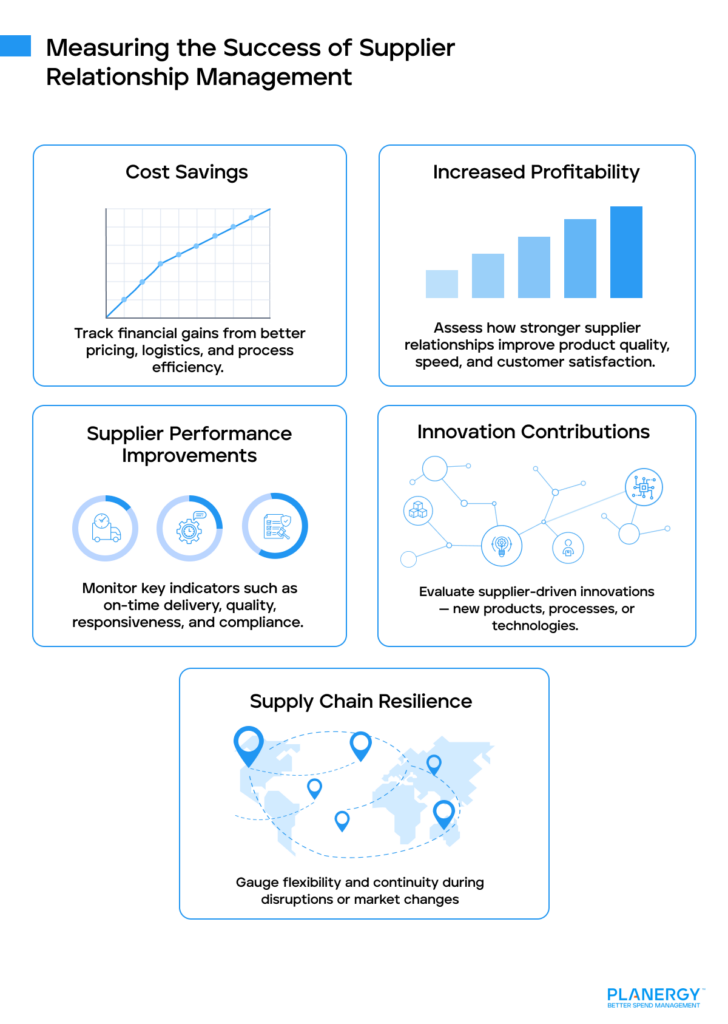
Measuring the Success of Supplier Relationship Management
To understand whether SRM initiatives are delivering real value, organizations must track outcomes using meaningful performance indicators.
Measuring success helps identify strengths, uncover gaps, and guide continuous improvement across supplier relationships.
The effectiveness of SRM can significantly impact a company’s bottom line and its ability to compete in the market.
Assessing the success of SRM initiatives involves a comprehensive evaluation of various KPIs and metrics that reflect the health of supplier relationships and the tangible benefits derived from them.
Cost Savings
Cost savings are one of the most direct indicators of successful SRM.
By analyzing procurement costs before and after implementing SRM strategies, companies can quantify the financial impact of streamlined processes, negotiated discounts, and more efficient logistics.
This includes reductions in raw material costs, transportation expenses, and inventory holding costs. Tracking cost savings over time provides clear evidence of the value generated by effective vendor management.
Increased Profitability
Beyond cost savings, increased profitability is a critical measure of SRM success.
Effective SRM can lead to improved product quality, faster time-to-market, and enhanced customer satisfaction, all contributing to increased sales and profit margins.
Analyzing profit trends in relation to SRM initiatives can help businesses understand how stronger supplier relationships drive financial performance.
Supplier Performance Improvements
Monitoring changes in supplier performance is essential for evaluating SRM success.
Key performance indicators such as on-time delivery rates, quality metrics, response times to inquiries or issues, and agreement compliance provide insights into how supplier relationships have evolved.
Improvement in these areas suggests that SRM efforts are yielding positive outcomes, contributing to smoother operations and fewer disruptions.
Innovation Contributions
Innovation contributions from suppliers are a testament to the strength of the relationships built through SRM.
Assessing the number and impact of innovations—whether they’re new products, processes, or technologies—contributed by suppliers can indicate the level of collaboration and mutual investment in the partnership.
Successful SRM fosters an environment where suppliers are motivated to share their best ideas and work collaboratively on development projects.
Evaluating how the company has managed supply chain risks, responded to unexpected events, and maintained operations continuity can reveal the effectiveness of its supplier relationships.
A resilient supply chain, characterized by flexibility, responsiveness, and minimal impact from disruptions, indicates strong and strategic supplier management.
Build a Better SRM Program
Implementing a robust SRM program requires commitment and strategic planning but can significantly impact an organization’s bottom line and competitive positioning.
By adopting best practices and leveraging technology like SRM software, companies can enhance business relationships and improve procurement processes, driving innovation, efficiency, and success in the market.
1. Use PLANERGY to manage purchasing and accounts payable
We’ve helped save billions of dollars for our clients through better spend management, process automation in purchasing and finance, and reducing financial risks. To discover how we can help grow your business:
2. Download our guide “Preparing Your AP Department For The Future”
Download a free copy of our guide to future proofing your accounts payable department. You’ll also be subscribed to our email newsletter and notified about new articles or if have something interesting to share.
3. Learn best practices for purchasing, finance, and more
Browse hundreds of articles, containing an amazing number of useful tools, techniques, and best practices. Many readers tell us they would have paid consultants for the advice in these articles.
We use cookies to personalise content and ads, to provide social media features and to analyse our traffic. We also share information about your use of our site with our social media, advertising and analytics partners who may combine it with other information that you’ve provided to them or that they’ve collected from your use of their services.
The technical storage or access is strictly necessary for the legitimate purpose of enabling the use of a specific service explicitly requested by the subscriber or user, or for the sole purpose of carrying out the transmission of a communication over an electronic communications network.
Preferences
The technical storage or access is necessary for the legitimate purpose of storing preferences that are not requested by the subscriber or user.
Statistics
The technical storage or access that is used exclusively for statistical purposes.The technical storage or access that is used exclusively for anonymous statistical purposes. Without a subpoena, voluntary compliance on the part of your Internet Service Provider, or additional records from a third party, information stored or retrieved for this purpose alone cannot usually be used to identify you.
Marketing
The technical storage or access is required to create user profiles to send advertising, or to track the user on a website or across several websites for similar marketing purposes.