What's PLANERGY?

Modern Spend Management and Accounts Payable software.

Helping organizations spend smarter and more efficiently by automating purchasing and invoice processing.

We saved more than $1 million on our spend in the first year and just recently identified an opportunity to save about $10,000 every month on recurring expenses with PLANERGY.

King Ocean Logo

Cristian Maradiaga

King Ocean

Download a free copy of "Preparing Your AP Department For The Future", to learn:

  • How to transition from paper and excel to eInvoicing.
  • How AP can improve relationships with your key suppliers.
  • How to capture early payment discounts and avoid late payment penalties.
  • How better management in AP can give you better flexibility for cash flow management.

How MATs Can Identify Hidden Savings in Their Procurement Data

KEY TAKEAWAYS

  • Most MATs lose significant money to fragmented purchasing across schools, but centralizing spend data can reveal savings opportunities worth £200,000 or more.
  • Cost savings and cost avoidance are two different things. Both matter for your bottom line, but they require different tracking methods.
  • Spend analysis software should offer real-time dashboards, automated categorization, and supplier performance tracking.
  • Supplier price escalations are manageable when you have visibility into baseline spending and contract terms.
  • Clean, centralized procurement data is not optional. It is the foundation for every cost reduction initiative.

Why Your Procurement Data Holds the Key to Better Budgets

If you work in MAT finance or operations, you already know the pressure.

According to the 2024 National School Trust Survey, 83% of respondents plan to make balancing budgets their focus for the next academic year. Not far behind, 73% said they would prioritize cost reduction.

But where do you start?

The answer is sitting in your procurement data. The problem is that for most MATs, that data is scattered across multiple schools, stored in different spreadsheets, and managed by people who rarely talk to each other.

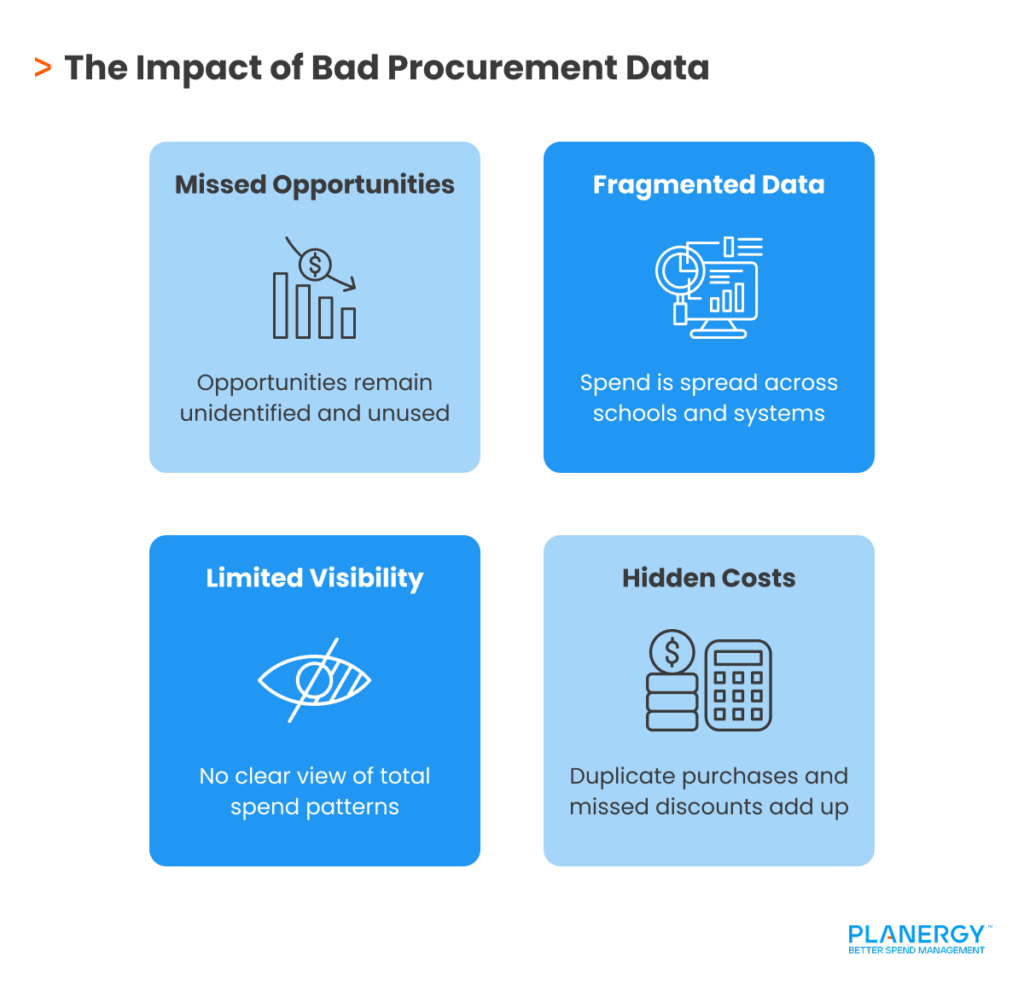
This fragmentation is inconvenient, and very expensive. Hidden costs pile up in the gaps between schools. Duplicate purchases. Missed volume discounts. Off-contract spending. These are all symptoms of the same disease: a lack of visibility.

Let’s explore how you can fix it.
Why Procurement Data Matters

The Real Cost of Disconnected Purchasing

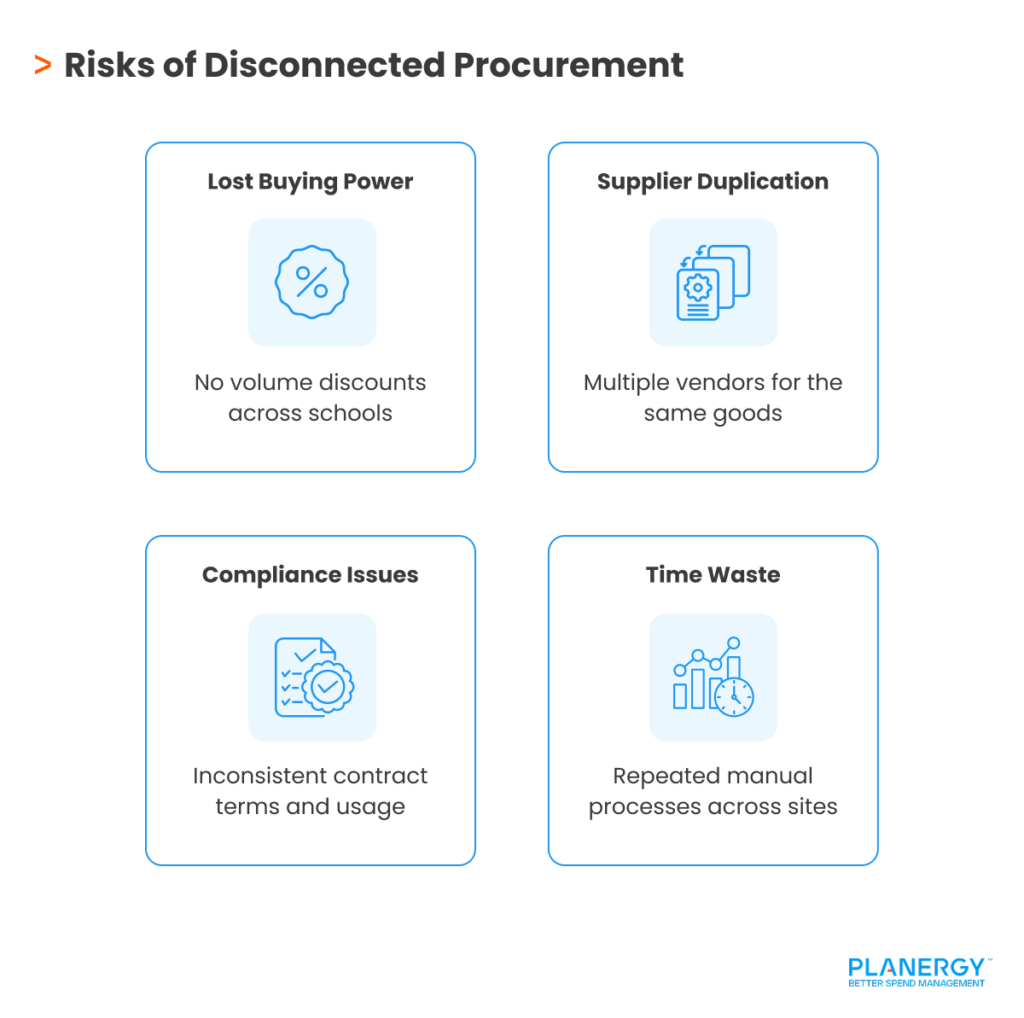
When each school in your trust manages procurement independently, you lose buying power. Full stop.

Think about it this way:

If three schools in your MAT all purchase the same printer paper from three different suppliers, none of them is getting the volume discount they deserve. Multiply that across every category of spend; from IT equipment to cleaning supplies. The leakage adds up fast.

But the hidden costs go beyond price. They include:

  • Duplicate supplier relationships that require separate negotiations.
  • Inconsistent contract terms that create compliance headaches.
  • Maverick spend that bypasses approved vendors entirely.
  • Wasted staff time managing the same processes across multiple sites.

When schools operate as separate business units with their own purchasing habits, data gets trapped in silos. Finance cannot see the full picture. Procurement leaders cannot identify patterns. And opportunities for consolidation slip through the cracks unnoticed.

The UK’s National Audit Office has identified more than 8,000 procurement frameworks across the public sector. For MATs operating within this fragmented landscape, consolidation is not a nice-to-have. It is essential for financial sustainability.

Risks of Disconnected Procurement

What Future Academies Discovered About Spend Visibility

Future Academies is a MAT operating ten schools across London and Hertfordshire.

Before centralizing their procurement, they dealt with the same challenges most trusts face: legacy systems that did not talk to each other, inconsistent oversight, and no clear picture of where money was going.

When they replaced those fragmented systems with a centralized procurement platform, the results were striking. They eliminated more than £200,000 in excess spend.

On top of that, they halved their finance staffing requirements and saved over £80,000 in the first year on personnel costs alone.

What made the difference? Visibility. Once procurement leaders could see spending patterns across all ten schools in real time, they identified savings opportunities that had been invisible before.

How to Measure Savings in Procurement

Before you can find hidden savings, you need to understand what you are measuring. This is where many procurement teams get confused.

There are two main types of procurement savings, and they are not the same thing.

Cost Savings

Cost savings are direct reductions in what you pay. If you renegotiate a contract and your unit price drops from £10 to £8, you have achieved cost savings. These show up on your balance sheet as real money kept in your budget.

Cost Avoidance

Cost avoidance prevents costs from increasing. If a supplier proposes a 10% price hike and you negotiate it down to 3%, you have avoided 7% in costs.

This matters enormously for your bottom line, but it does not appear as a line-item reduction. It prevents future spending from being higher than it otherwise would be.

Both types require tracking. The challenge is that cost avoidance is harder to prove. Without a baseline, you cannot show what did not happen. This is why spend data quality matters so much.

Beyond direct pricing, smart procurement teams also consider total cost. This includes delivery fees, administrative time, storage requirements, and any hidden charges that accumulate over the life of a purchase.

For example, a supplier with a lower unit price might actually cost more when you factor in unreliable delivery or poor quality that requires replacements.

Tracking total cost rather than just purchase price gives you a more accurate view of where money is really going.

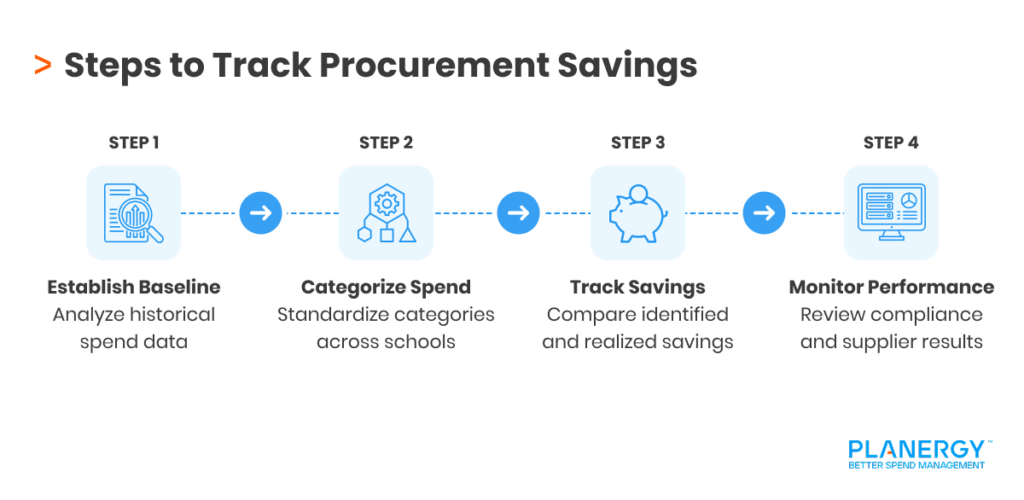
Steps to Track Procurement Savings

Setting Up a Procurement Savings Tracking System

Effective savings tracking starts with clean, categorized data. If your spend data is messy, your savings calculations will be unreliable.

Here is what a good tracking system looks like:

Establish a Baseline

You cannot measure improvement without knowing where you started. Pull historical spend data for the past 12 to 24 months. Break it down by category, supplier, and school. This becomes your benchmark for all future comparisons.

Categorize Everything

Spend categorization is the backbone of analysis. Without it, you are comparing apples to oranges. Use consistent category codes across all schools in your trust. If one school calls it “office supplies” and another calls it “stationery,” your data is already compromised.

Track Identified vs. Realized Savings

Identified savings are what you expect to achieve. Realized savings are what actually shows up in your financial statements. The gap between them often reveals problems with contract compliance, stakeholder adoption, or supplier performance.

For example, you might negotiate a 15% discount with a new logistics provider. That is your identified savings.

But if half your schools keep using the old vendor out of habit, your realized savings will fall short. Tracking both numbers keeps everyone accountable.

What to Look for in Spend Analysis Software

If your MAT is still relying on spreadsheets for spend management, you are leaving money on the table.

Manual processes cannot keep up with the volume and complexity of procurement data across multiple schools.

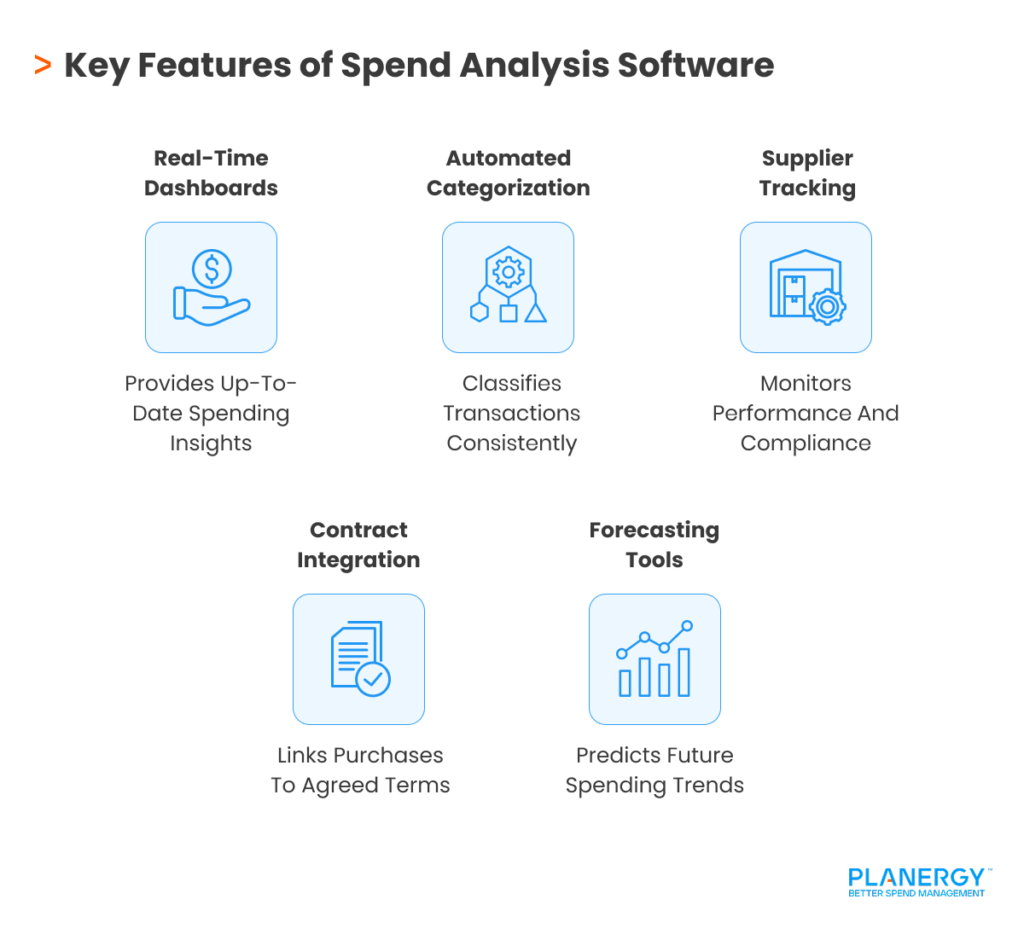
When evaluating spend analysis software, prioritize these capabilities:

Key Features of Spend Analysis Software

Real-Time Dashboards

Finance teams should not wait until month-end to understand spending trends. Dashboards that update in real time allow for faster decision-making and catch problems before they escalate.

More importantly, they translate raw data into actionable insights that procurement teams can use immediately.

A figure on a spreadsheet is just a number. A dashboard that highlights a 15% spend increase with a specific supplier tells you exactly where to look.

Automated Categorization

Good software uses AI to classify transactions automatically. This reduces manual data entry errors and frees up staff time for strategic work.

Supplier Performance Tracking

You need to know which suppliers deliver on their contracts and which don’t. Look for tools that track delivery times, quality metrics, and pricing compliance.

Contract Management Integration

Spending analysis should connect to your contracts. When purchase orders go out, the system should flag off-contract spending instantly.

Forecasting Capabilities

The best tools help you anticipate future spend, not just report on past performance. Forecasting supports budget planning and gives you leverage in supplier negotiations.

Tackling Supplier Price Escalations When Time Is Short

Price escalations are inevitable. Raw material costs rise. Fuel prices fluctuate. Suppliers pass those increases along.

The question is not whether you will face escalations. It is whether you will be ready for them.

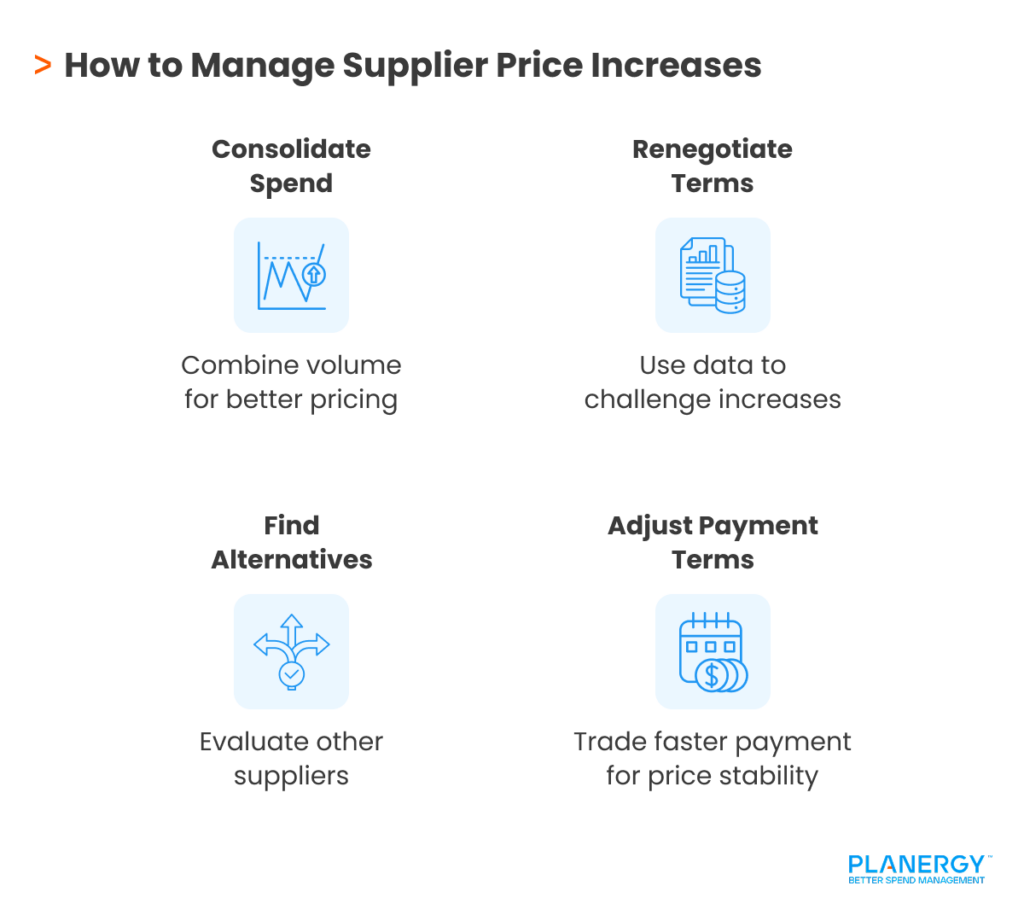
How to Manage Supplier Price Increases

Without centralized data, you are negotiating blind. You do not know your total spend with that supplier across all schools. You do not have visibility into historical pricing trends. You cannot benchmark against alternative suppliers quickly.

Supply chain pressures affect every MAT, whether you are buying classroom technology or catering services. The difference between Trusts that absorb those costs and Trusts that manage them comes down to preparation.

With good data, you have options:

  • Consolidation
    Combine volume across schools to negotiate better pricing.
  • Renegotiation
    Use historical spend data to push back on unjustified increases.
  • Strategic sourcing
    Identify alternative suppliers who can match or beat current pricing.
  • Payment Terms Adjustment
    Offer faster payment in exchange for price stability.

The key is preparation. If you wait until a supplier sends a price increase notice, you have already lost the advantage.

Is Messy Spend Data Just Part of the Job?

No. And if you think it is, you’re probably losing money because of it.

Messy data is not inevitable. It is a symptom of decentralized systems and inconsistent processes.

Standardizing procurement processes across your trust does more than clean up your data. It reduces procurement cost at every stage.

Fewer exceptions mean fewer manual interventions. Consistent workflows mean faster approvals.

And when everyone follows the same process, you spend less time chasing down discrepancies.

Clean data requires:

  • Standardized purchasing workflows across all schools
  • Mandatory use of approved suppliers
  • Consistent naming conventions for categories and vendors
  • Regular data audits to catch errors before they compound

Modern procurement systems automate much of this. They enforce compliance at the point of purchase, not after the fact. They flag anomalies in real time. They connect ERP data to purchasing data to contract data, creating a single source of truth.

If you are spending hours each month reconciling spreadsheets, it’s time to rethink your tools.

Where to Find Hidden Savings Opportunities

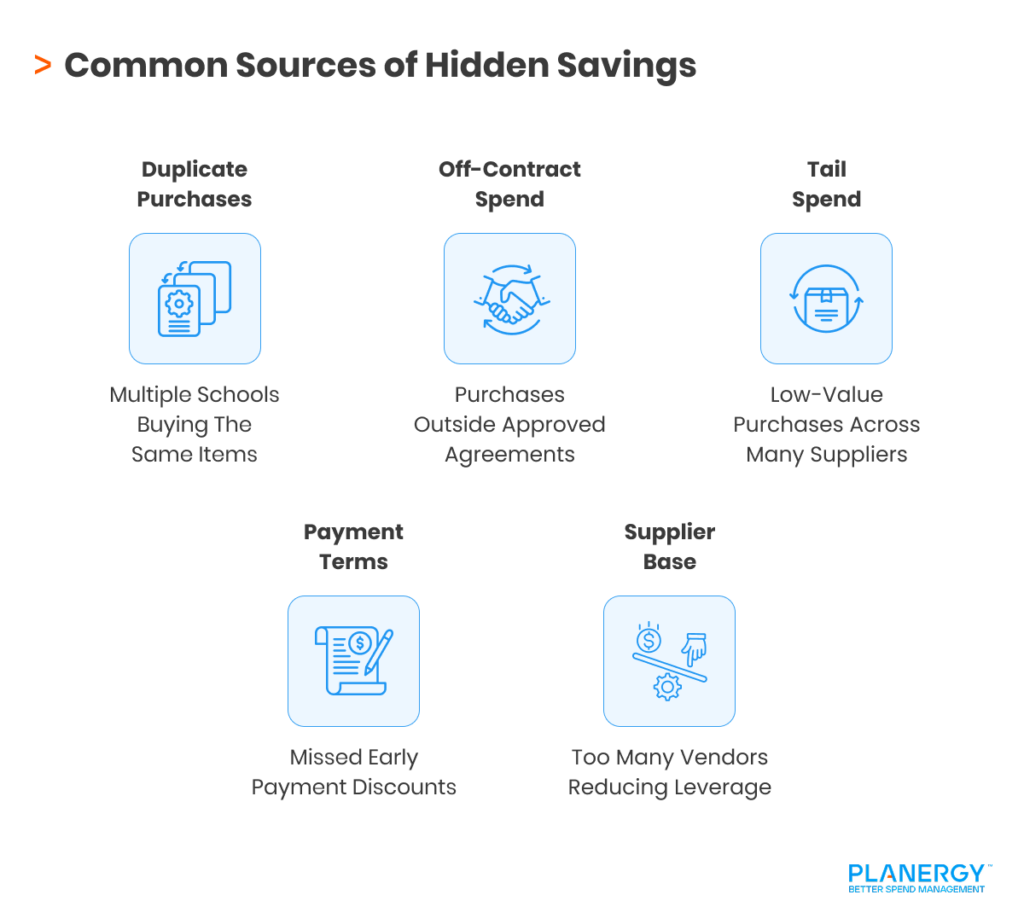
Now that you understand the foundation, let us talk specifics. Here are the most common places MATs find hidden savings:

Common Sources of Hidden Savings

Tail Spend

Tail spend refers to the 20% of suppliers who account for roughly 80% of transactions but only a small fraction of total spend.

Because these purchases seem small, they often escape scrutiny. But they add up. Consolidating tail spend under fewer suppliers can generate significant savings.

Off-Contract Purchases

When staff buy from non-approved vendors, you lose negotiated discounts. Spend analysis reveals where off-contract purchasing is happening. Then you can address it through training, system controls, or policy enforcement.

Duplicate Purchases

Multiple schools buying the same items independently is a common source of waste. Centralized visibility lets you consolidate orders, negotiate volume discounts, and reduce delivery costs.

Payment Term Optimization

Early payment discounts are often available but unclaimed. If your suppliers offer 2% off for payment within 10 days, that is free money. But you need cash flow visibility to take advantage of it.

Supplier Rationalization

Too many suppliers means too many relationships to manage. Reducing your supplier base concentrates spend with fewer vendors, which strengthens your negotiating position.

Strategic Supplier Partnerships

Reducing your supplier base is not just about cutting numbers. It creates space for deeper partnerships with your remaining vendors.

When suppliers know they have your full volume, they are more willing to offer better pricing, priority service, and flexible terms. These partnerships become assets rather than transactions.

Making the Case to Stakeholders

Procurement savings initiatives need buy-in from school leaders, finance teams, and sometimes teaching staff. Resistance is common, especially from schools that value their autonomy.

Here is how to build support:

Show the Numbers

Data wins arguments. If you can demonstrate that fragmented purchasing cost the trust £100,000 last year in missed discounts, you have a compelling case for change.

Address Autonomy Concerns

Schools worry about losing control. Acknowledge this. Show how centralized procurement can still accommodate local needs while capturing savings that benefit everyone.

Emphasize that centralization is about cost control, not micromanagement. Schools can still make purchasing decisions that meet their specific needs.

The difference is that those decisions happen within a framework that captures data, enforces contracts, and protects the trust from unnecessary spending.

Highlight Quick Wins

Start with categories where savings are obvious and implementation is easy. Early successes build momentum and credibility for larger initiatives.

Connect to Educational Outcomes

Every pound saved on procurement is a pound that can go toward teaching and learning. Frame cost reduction as a means to better educational outcomes, not just financial efficiency.

Building a Data-Driven Procurement Function

The MATs that thrive financially are the ones that treat procurement as a strategic function, not just an administrative one.

They develop a procurement strategy that aligns with trust-wide goals. They measure what matters. And they use data to drive decisions rather than gut instinct.

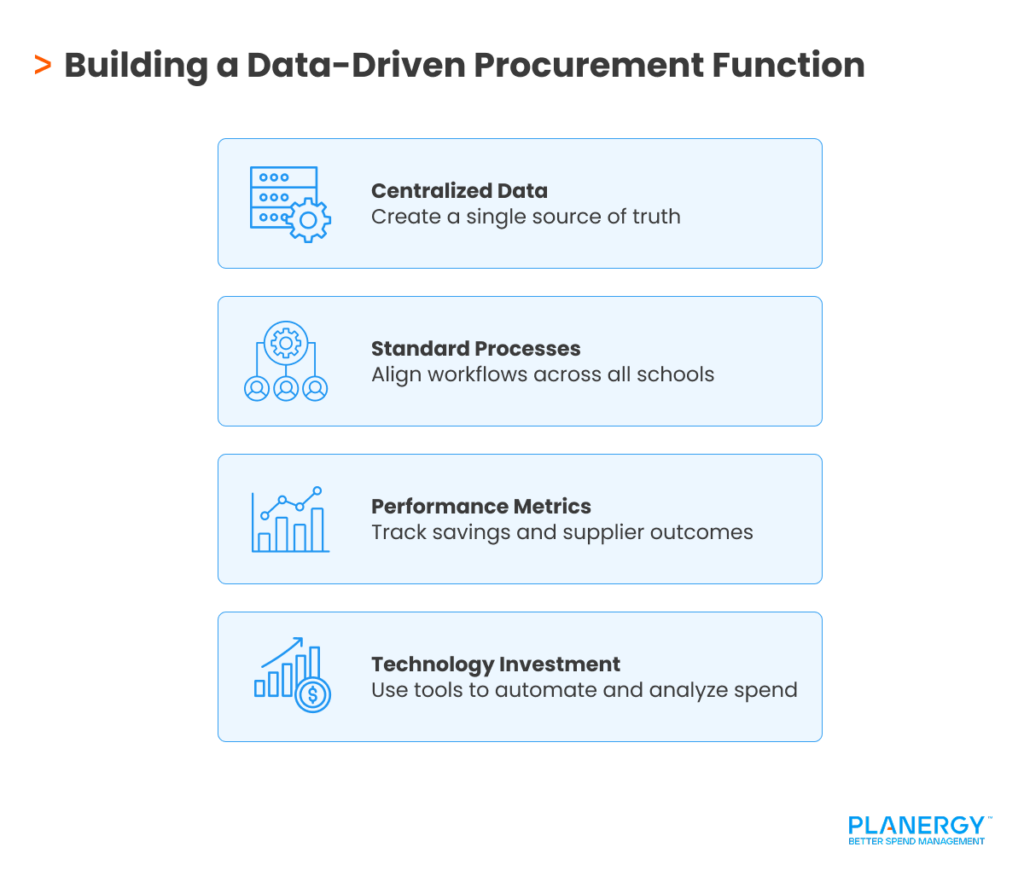
Building a Data-Driven Procurement Function

This means investing in:

  • Technology that provides real-time visibility
  • Training that builds procurement skills across the trust
  • KPIs that measure savings, compliance, and supplier performance
  • Processes that enforce standards while remaining flexible

Future Academies did not just install software. They transformed how their schools think about purchasing. The result was not only £200,000 in direct savings but also a more efficient operation that required half the finance staff it once did.

Your Next Steps

If your MAT lacks centralized procurement data, start there. Audit your current systems. Identify where spend data lives and who controls it. Map the gaps.

Then evaluate whether your existing tools can deliver the visibility you need. If not, explore purpose-built procurement platforms designed for multi-site organizations.

The savings are there. The question is whether you can see them.

What’s your goal today?

1. Use PLANERGY to manage purchasing and accounts payable

We’ve helped save billions of dollars for our clients through better spend management, process automation in purchasing and finance, and reducing financial risks. To discover how we can help grow your business:

2. Download our guide “Preparing Your AP Department For The Future”

Download a free copy of our guide to future proofing your accounts payable department. You’ll also be subscribed to our email newsletter and notified about new articles or if have something interesting to share.

3. Learn best practices for purchasing, finance, and more

Browse hundreds of articles, containing an amazing number of useful tools, techniques, and best practices. Many readers tell us they would have paid consultants for the advice in these articles.

Business is Our Business

Stay up-to-date with news sent straight to your inbox

PLANERGY LOGO

Sign up with your email to receive updates from our blog