What's PLANERGY?

Modern Spend Management and Accounts Payable software.

Helping organizations spend smarter and more efficiently by automating purchasing and invoice processing.

We saved more than $1 million on our spend in the first year and just recently identified an opportunity to save about $10,000 every month on recurring expenses with PLANERGY.

King Ocean Logo

Cristian Maradiaga

King Ocean

Download a free copy of "Preparing Your AP Department For The Future", to learn:

  • How to transition from paper and excel to eInvoicing.
  • How AP can improve relationships with your key suppliers.
  • How to capture early payment discounts and avoid late payment penalties.
  • How better management in AP can give you better flexibility for cash flow management.

Procurement & Accounts Payable for Multi-Academy Trusts

KEY TAKEAWAYS

  • MATs face unique procurement and AP challenges due to mixed central and decentralized structures, multiple sites, and tight budgets.

  • Without dedicated systems, MAT finance teams struggle with visibility, compliance, and audit readiness.

  • Automating procurement and AP processes reduces manual workload, cuts errors, and helps stretch every pound further.

  • Framework agreements and procurement policies are essential tools for MATs to achieve value for money and stay compliant.

  • Best-of-breed, true cloud solutions like PLANERGY are purpose-built for these challenges in ways that legacy all-in-one finance systems simply are not.

Running procurement and Accounts Payable across a Multi-Academy Trust is not the same as managing finances in a single school. The moment you add multiple sites, mixed governance structures, and a mix of centralized and decentralized teams, the complexity multiplies fast.

And yet most MATs are still doing it with tools that were never designed for the job.

This guide is for trust finance leads, business managers, and CFOs who want to get procurement and AP under control, without adding headcount or cutting corners on compliance.

What Procurement Actually Looks Like in Education

The procurement process in education covers every purchase a trust makes, from stationery and catering contracts to IT infrastructure and professional services.
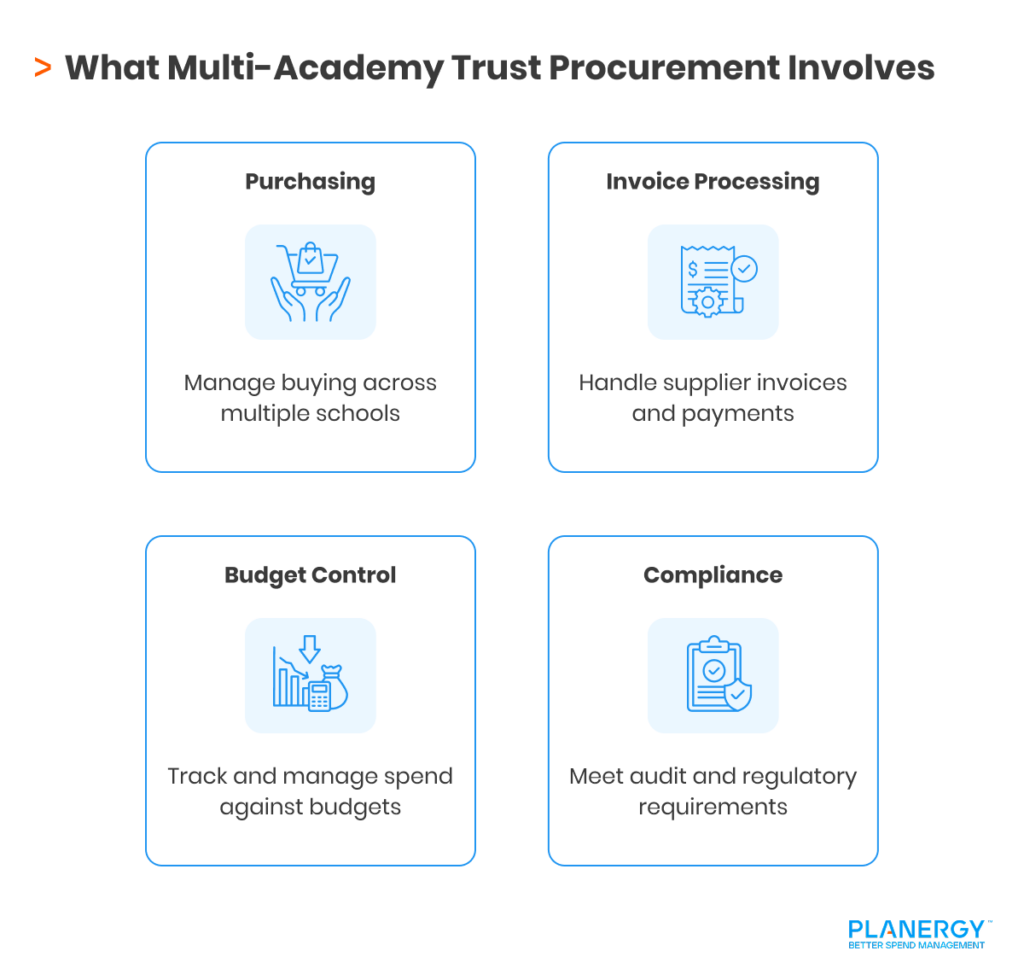
What Multi-Academy Trust Procurement Involves

For MATs, this means managing spend across multiple schools, often with different procurement practices at each site.

Some Trusts centralize purchasing decisions at Trust level. Others delegate budgets to individual school business managers. Many do both, depending on the category of spend.

This hybrid model is not wrong. But without a shared system and a clear procurement strategy, it creates gaps. Duplicate suppliers. Inconsistent pricing. Contracts that no one is monitoring. And a finance team that spends more time chasing paperwork than managing spend.

The Department for Education expects MATs to demonstrate value for money. Ofsted and auditors look at whether financial management meets the standards set out in the Academies Trust Handbook. That means procurement needs to be documented, policy-compliant, and audit ready, not just functional.
The Real Challenges Facing MAT Procurement Teams

Education procurement comes with its own set of pressures that the private sector rarely deals with in quite the same way.

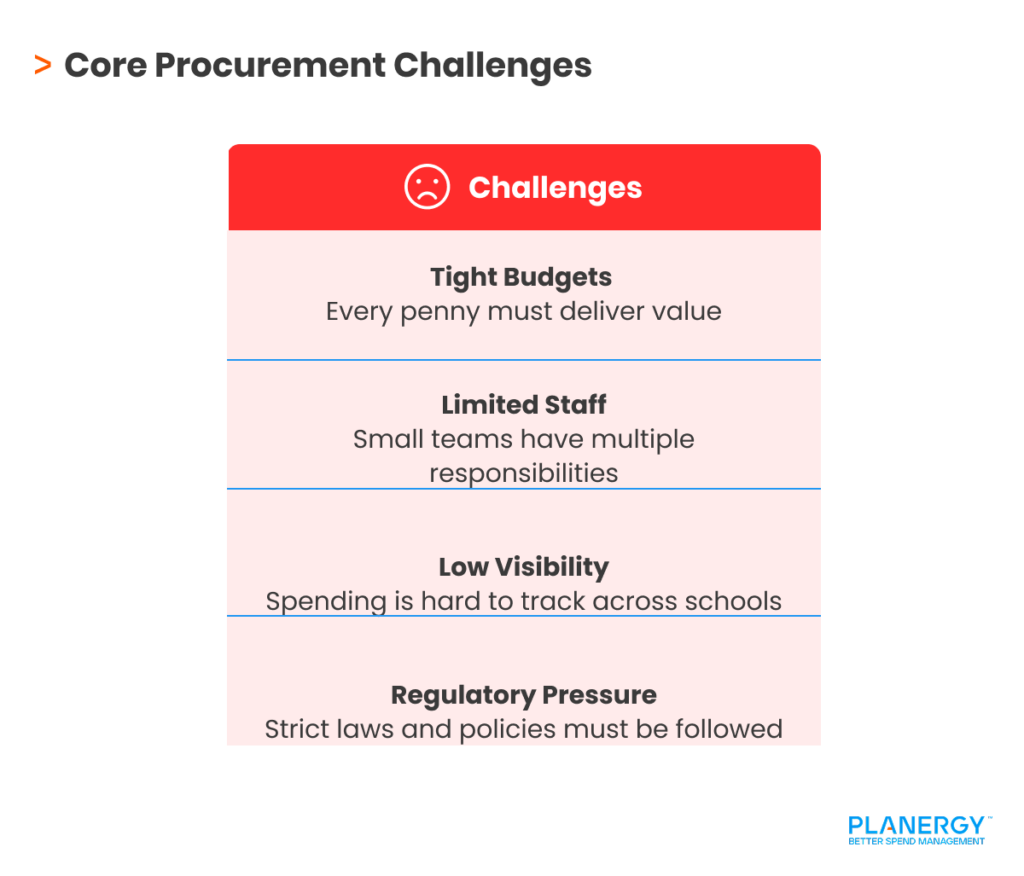
Core Procurement Challenges For MATs

Tight Budgets With No Room for Waste

MATs operate on fixed funding. Every pound spent on an overpriced supplier or a duplicate order is a pound that does not go into the classroom. The pressure to achieve cost savings while maintaining quality is constant, and there is very little tolerance for procurement errors.

Stretched Staff Without Specialist Expertise

Most school finance teams are small. A Trust business manager might be handling AP, payroll, compliance, and supplier negotiations at the same time. That does not leave much room for strategic procurement or supplier relationship management.

Without a dedicated procurement team or access to specialist training, it is difficult to know whether you are getting the best price from your providers or leaving money on the table.

Mixed Structures That Create Blind Spots

In a decentralized Trust, individual schools may be raising purchase orders and approving invoices independently. Without a central system, the Trust leadership has no real-time view of what is being spent, by whom, or against which budget.

That is a problem when it comes to reporting to the DfE, managing cash flow, or responding to an audit.

Compliance With Public Procurement Rules

MATs are contracting authorities under the Procurement Act. They must follow public procurement regulations when spending above certain thresholds, including running compliant tender processes, documenting contract award decisions, and keeping proper records.

The Public Contracts Regulations have been updated, and the Procurement Act 2023 brings further changes. Keeping up with these rules is difficult without a structured procurement process and clear procurement policy.

The gap between a MAT that struggles with spend control and one that does not is rarely about team size or budget. It is almost always about having the right processes and the right tools to support them.

Why AP Is a Bigger Problem Than Most MATs Realize

Accounts Payable might not get as much attention as procurement strategy, but for most MATs, it is where the day-to-day pain is felt most acutely.

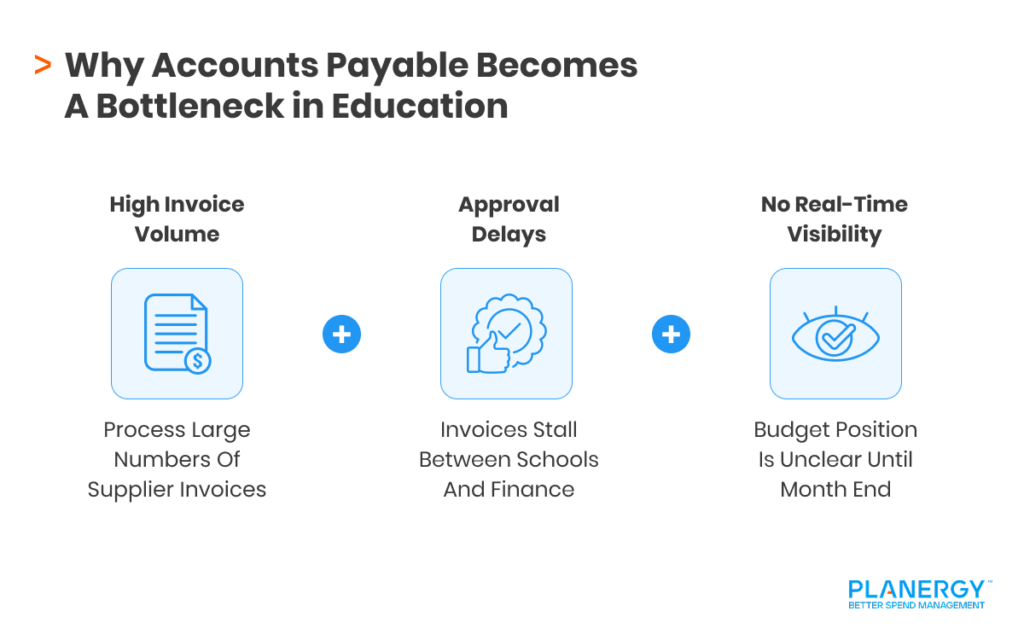
Why AP Becomes A Bottleneck

High Invoice Volumes Across Multiple Sites

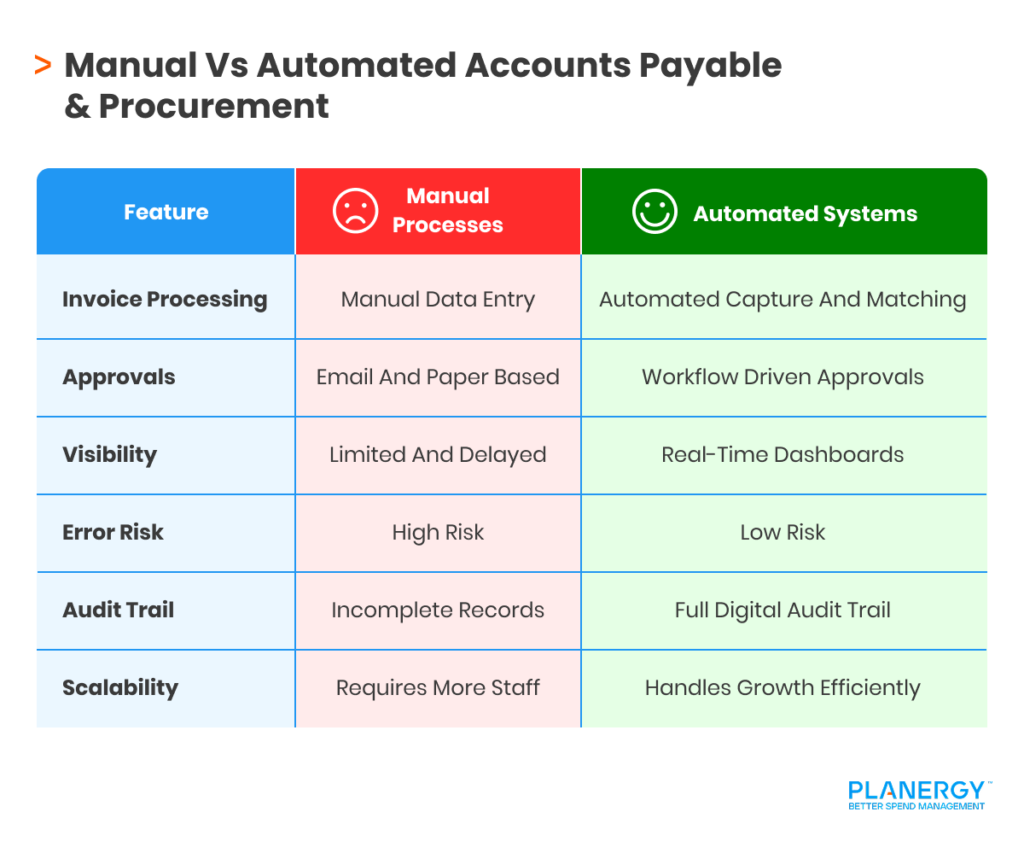
A Trust with ten schools might be processing hundreds of invoices every month, from dozens of different suppliers. Without AP automation, that means manual data entry, paper chasing, and a high risk of errors, duplicate payments, or missed early payment discounts.

Communication Breakdowns Between Sites and Finance

When finance is centralized but purchasing happens at school level, invoice approvals often get stuck. A school business manager approves a delivery but the invoice goes to central finance, where no one knows whether the goods arrived or whether the order was correct.

Without systems in place, this back-and-forth happens over email and phone, which is slow and leaves no audit trail.

No Visibility Until It Is Too Late

Without real-time dashboards, finance teams often do not know their true budget position until the end of the month. By that point, overspending may have already happened.

Good AP and procurement tools give you a live view of committed spend, available budget, and outstanding invoices, so you can make decisions based on facts, not estimates.

Manual Vs Automated AP And Procurement

How MATs Can Take Back Control

The good news is that the same challenges that make MAT finance difficult also make the case for better systems very clear.

Start With a Procurement Policy That Everyone Follows

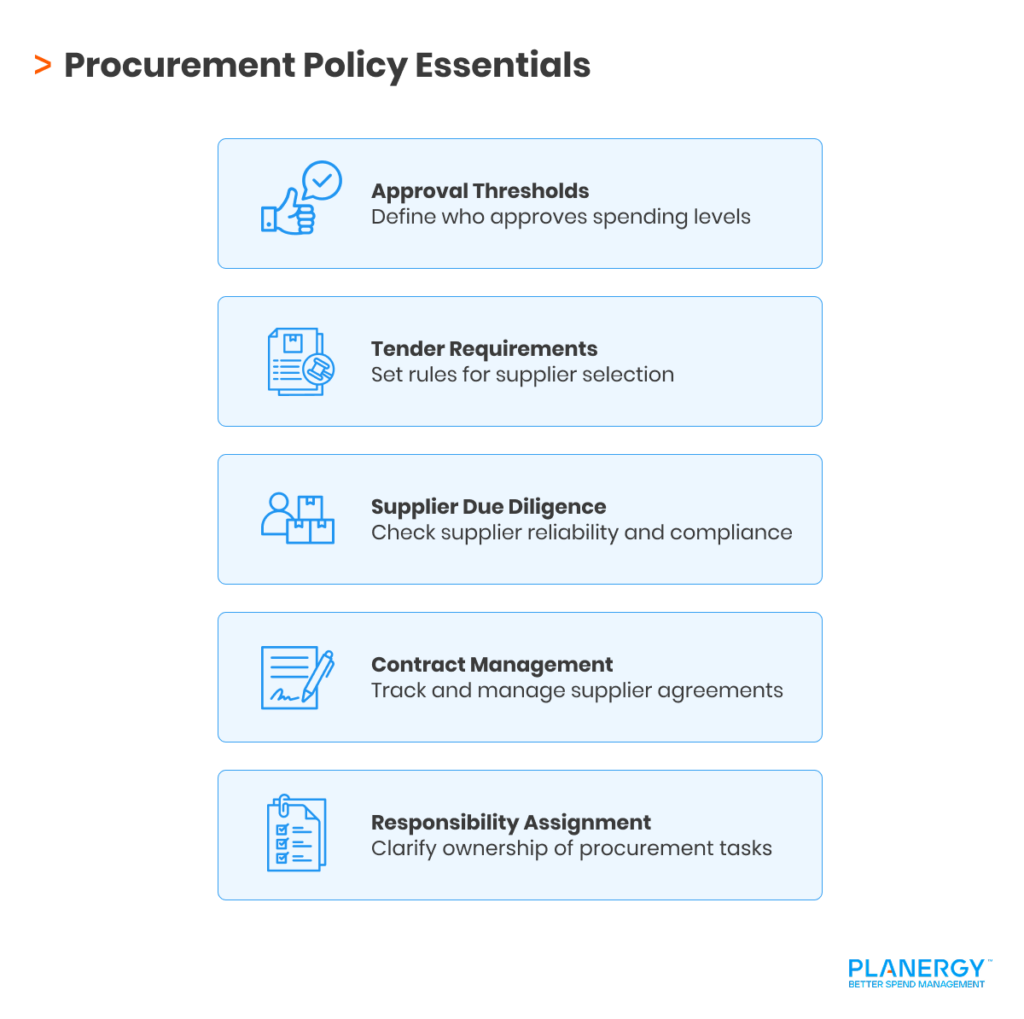
A procurement policy sets out the rules for how purchasing decisions are made across the trust. It covers approval thresholds, tender requirements, supplier due diligence, and how contracts are managed.

Without a shared policy, each school may be doing things differently. That creates inconsistency, compliance risk, and a very difficult audit trail to piece together.

A good policy should cover approval processes at different spend levels, when to use a framework agreement, how to document contract award decisions, and who is responsible for supplier relationships.

Use Framework Agreements to Save Time and Meet Compliance Requirements

Framework agreements are pre-tendered contracts set up by organizations like Crown Commercial Service, YPO, or sector-specific bodies.

Using a compliant framework means the tender process has already been run on your behalf, so you can call off contracts without running your own full procurement exercise.

For MATs, frameworks are one of the most cost-effective ways to get genuine value from education procurement without stretching your team.

Frameworks also help you meet your obligations under public procurement rules, because the supplier has already gone through a compliant selection process.

The key is to make sure staff across the Trust know which frameworks are available, and that your procurement strategy directs them to use them.

Automate Approval Workflows

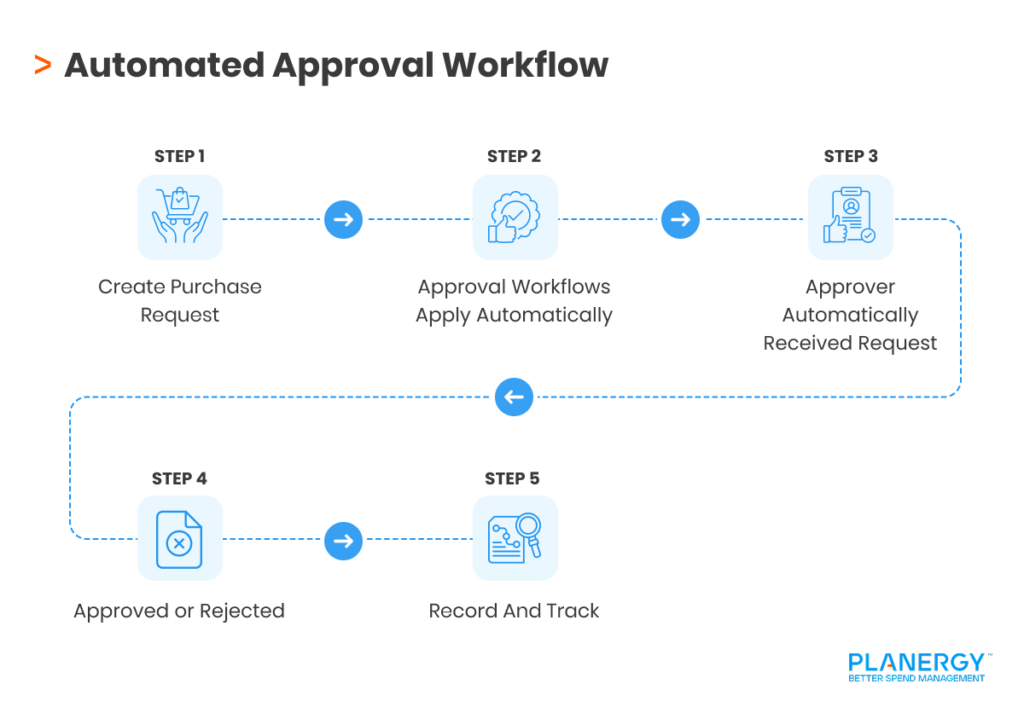
One of the biggest wins for any MAT finance team is automating the approval process for purchase orders and invoices.

With the right system, you can set approval levels based on spend thresholds, department, or budget holder. A classroom supply order might be approved automatically under a certain value. A new contract above threshold routes to the CFO. Everything is tracked, time-stamped, and visible.

This removes the email chains, reduces the risk of unauthorized spending, and means your approval processes are documented and consistent across every school in the Trust.

How Approval Workflows Work

Get a Real-Time View of Budget Position

When budget holders can see their committed spend in real time, they make better decisions. When finance leads can see Trust-wide spend at a glance, they can intervene early if something looks off.

Real-time dashboards are not a luxury in a multi-site Trust. They are how you stay in control between month-end reports.

Can AP Automation Really Reduce Your FTE Requirements?

Yes, it can, and for many MATs this is one of the most compelling arguments for investing in AP automation.

Manual invoice processing is time-consuming. Matching invoices to purchase orders, chasing approvals, entering data, resolving queries, and filing documents all take staff time. In a Trust processing high volumes of invoices across multiple sites, that adds up quickly.

AP automation handles the routine work. Invoices are captured digitally, matched to POs automatically, and routed for approval without manual intervention. Exceptions are flagged. Duplicate invoices are caught before they are paid.

The result is that your existing team can handle a much higher volume of work without burning out, or you can absorb growth from new schools joining the Trust without proportionally increasing your finance headcount.

Why Purpose-Built Solutions Beat Legacy Finance Systems

Many MATs are running their finances on legacy systems that were designed for a different era of school finance. Some of these are all-in-one platforms that promise to do everything, but in practice do none of it particularly well.

The problem with systems that were not built for the cloud is that they are slow to update, difficult to access across multiple sites, and rarely offer the kind of automation and real-time visibility that modern MAT finance teams need.

Best-of-breed, true cloud solutions are built differently. They are designed to integrate with the tools you already use, updated continuously, and accessible from anywhere.

They are also built with the specific workflows of finance teams in mind, rather than being a general-purpose tool trying to cover too much ground.

PLANERGY is one example of a solution built specifically for procurement and AP. It handles purchase orders, budget management, approval workflows, invoice processing, and reporting in one place, without the compromises that come with a legacy all-in-one system.

It is also the platform chosen by Nexus Multi-Academy Trust, a CIPS-accredited Trust. CIPS (the Chartered Institute of Procurement and Supply) is the global professional body for procurement and supply chain management.

Achieving CIPS accreditation is a significant mark of procurement excellence, and Nexus MAT’s use of PLANERGY is part of how they meet that standard.

What Good Procurement Practice Looks Like in a MAT

Procurement is not just about buying things at the lowest price. It is about getting the best overall value, managing supplier relationships, meeting your obligations as a contracting authority, and making sure every purchase supports the trust’s goals.

That means thinking about social value when you award contracts. It means considering sustainability in your supply chain decisions. It means checking suppliers for safeguarding compliance, especially where they have contact with students.

It also means keeping stakeholders informed. Headteachers, governors, and the DfE all have a legitimate interest in how Trust money is spent. A clear procurement strategy, supported by good systems, makes it much easier to demonstrate that you are spending public money responsibly.

Key Elements Of A Strong Procurement Policy

The Practical Steps to Improve MAT Procurement and AP

If your Trust is still relying on spreadsheets, email approvals, and manual invoice entry, the gap between where you are and where you need to be can feel wide. But you do not have to fix everything at once.

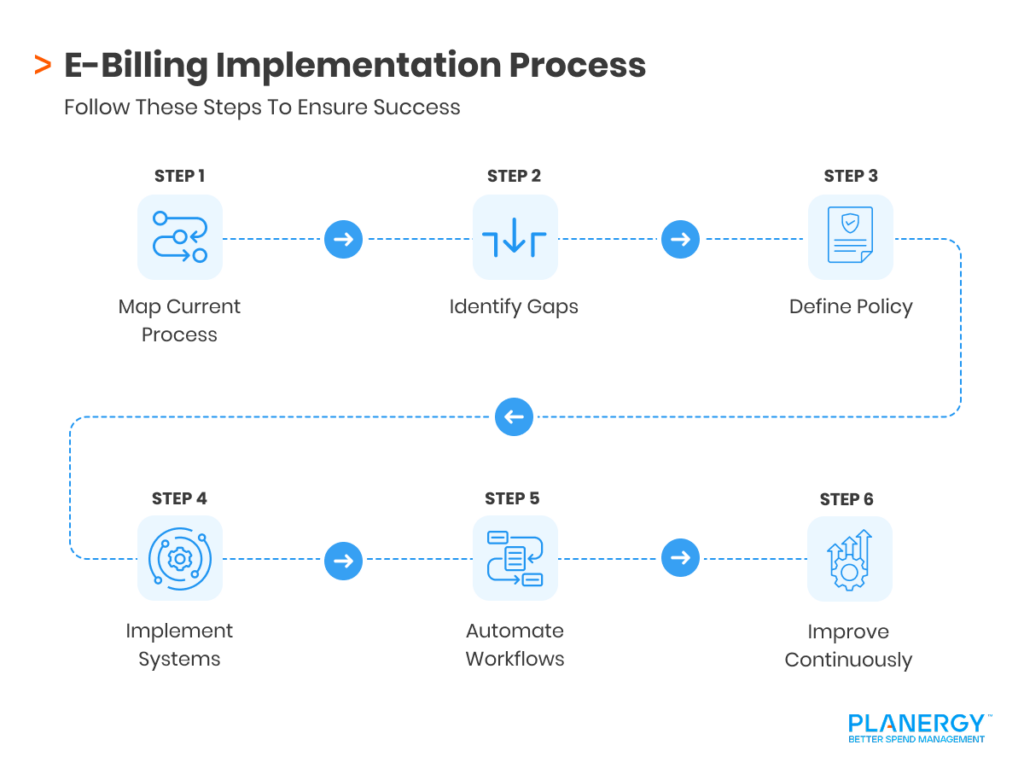
A sensible starting point is to map your current purchasing process across the Trust. Where are the bottlenecks? Where does spend happen outside of any formal approval process? Which schools are buying from the same suppliers at different prices?

From there, you can build a procurement policy that reflects how your Trust actually operates and then look at the systems that will support it.

Getting workflows, budget visibility, and invoice automation in place will deliver results quickly and give your finance team time back to focus on the work that actually requires their expertise.

For MATs that are serious about financial management, working towards CIPS accreditation is also worth exploring. It signals to auditors, the DfE, and your wider stakeholder community that your procurement practices meet a recognized professional standard.

Good procurement and AP practice in a Multi-Academy Trust is not about adding bureaucracy. It is about giving your team the tools and policies they need to spend confidently, account for it clearly, and prove it to anyone who asks.

The Trusts that get this right are not the ones with the biggest finance teams. They are the ones with the best systems and the clearest processes.

MAT Procurement And AP Improvement Process

Where to Start if You’re Ready to Improve

You do not need to overhaul everything at once. Pick the area causing the most pain right now, whether that is invoice bottlenecks, budget visibility, or inconsistent purchasing across schools, and start there.

Map your current process. Identify where approvals stall, where spend goes undocumented, and which suppliers you are using without a formal contract in place. Then build your procurement policy around what you find.

If you want to see how a purpose-built solution like PLANERGY fits into that picture, the best next step is a demo. See it working against your actual workflows, not a generic template.

What’s your goal today?

1. Use PLANERGY to manage purchasing and accounts payable

We’ve helped save billions of dollars for our clients through better spend management, process automation in purchasing and finance, and reducing financial risks. To discover how we can help grow your business:

2. Download our guide “Preparing Your AP Department For The Future”

Download a free copy of our guide to future proofing your accounts payable department. You’ll also be subscribed to our email newsletter and notified about new articles or if have something interesting to share.

3. Learn best practices for purchasing, finance, and more

Browse hundreds of articles, containing an amazing number of useful tools, techniques, and best practices. Many readers tell us they would have paid consultants for the advice in these articles.

Related Posts

Business is Our Business

Stay up-to-date with news sent straight to your inbox

PLANERGY LOGO

Sign up with your email to receive updates from our blog