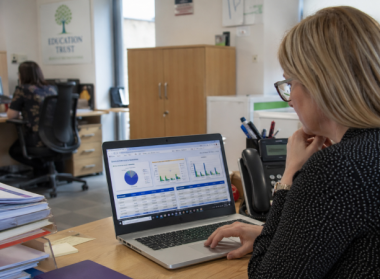
We saved more than $1 million on our spend in the first year and just recently identified an opportunity to save about $10,000 every month on recurring expenses with PLANERGY.
Digital transformation replaces paper-based procurement with e-procurement, RPA, and AI to automate buying, approvals, and payments.
Schools gain real-time budget visibility, faster processing, stronger compliance, and reduced manual workload.
A phased rollout with strong stakeholder engagement and clean data is critical to successful adoption.
When done well, digital procurement saves money, improves efficiency, and redirects more resources toward student outcomes.
Students use tablets in class and teachers collaborate through cloud platforms, yet many finance offices still process paper purchase orders and manually enter invoices. This gap wastes time and money that could support student learning.
Digital transformation in procurement means using technology to replace paper-based buying processes. For educational institutions, this changes how finance teams work, how budgets are tracked, and how resources reach classrooms.
What Is Digital Transformation in Procurement?
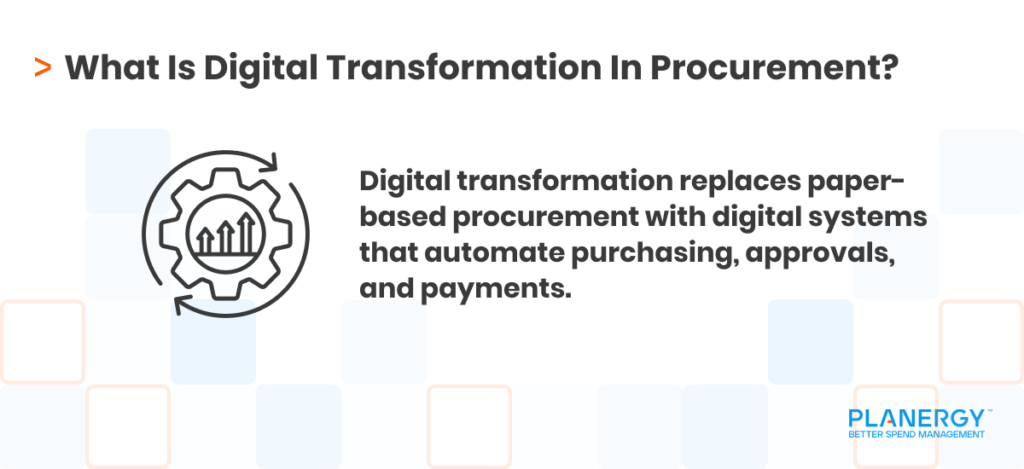
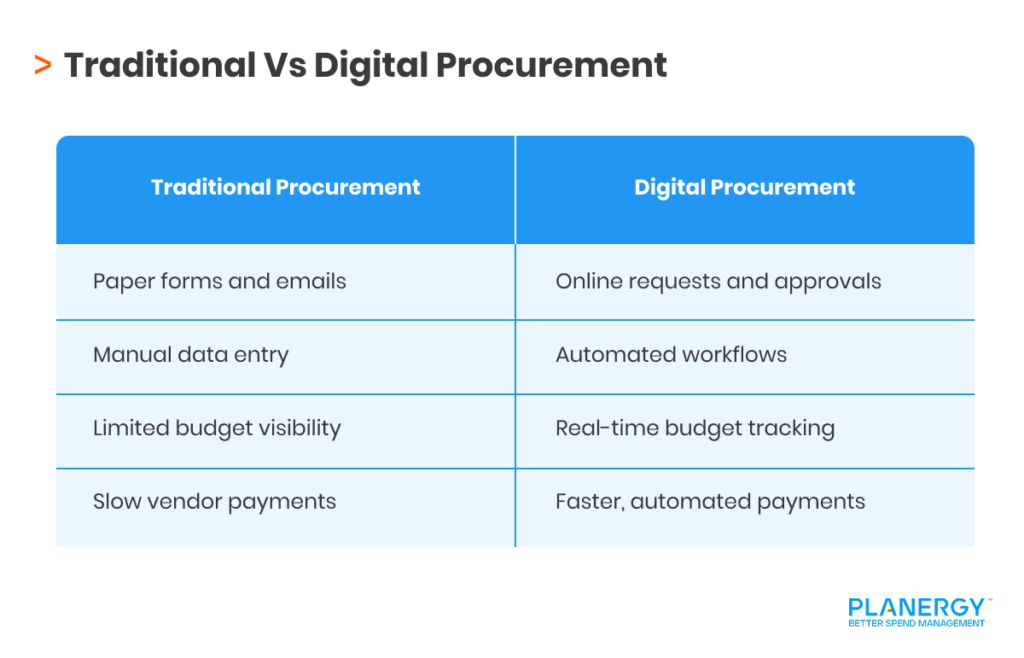
Digital transformation replaces old paper systems with digital tools that automate buying and payment processes.
It means efficiency improvements like teachers submitting requests online, software automatically matching invoices with purchase orders, and department heads check budget balances anytime through web portals.
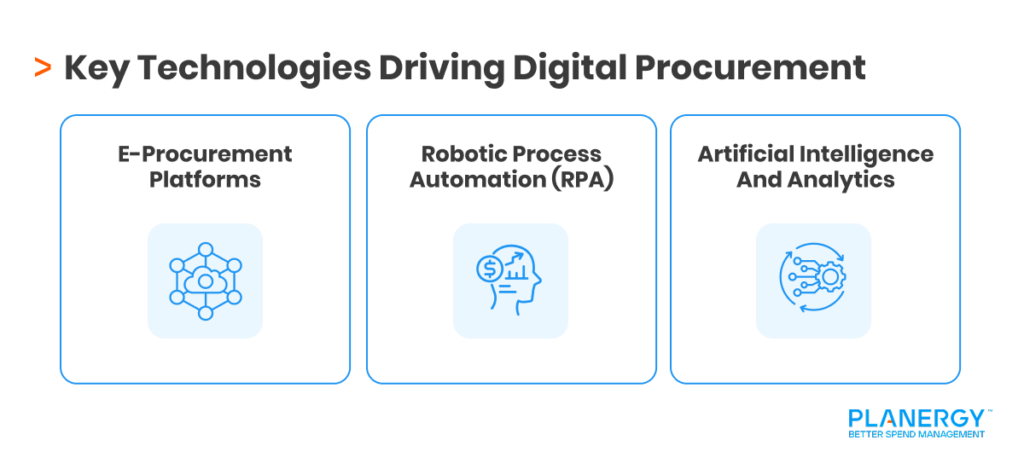
This change combines emerging technologies:
E-procurement platforms handle the complete workflow from requesting items to paying vendors. These digital tools create online catalogs, route approvals automatically, and track every procurement step.
Robotic Process Automation (RPA) uses automation software to handle repetitive tasks like reading invoices, entering data, matching documents, and flagging problems.
Advanced digital systems use artificial intelligence to learn from patterns and make smarter decisions about which transactions need human review.
Together, these cost-effective technologies streamline procurement and reduce errors in procurement processes. Understanding digital transformation in procurement helps institutions plan successful implementations.
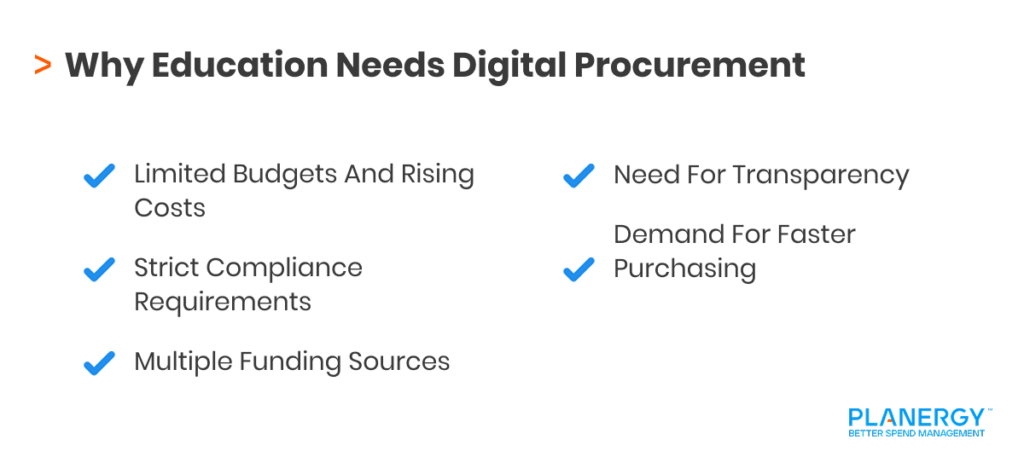
Why Education Needs Digital Procurement
Educational institutions face unique challenges that make digital procurement especially valuable. Public sector organizations must follow strict rules, manage tight budgets, track multiple funding sources, and stay transparent for stakeholders.
Higher education institutions have additional complexity with research grants, departmental budgets, and auxiliary enterprises.
Wasted Time: Finance staff spend hours on data entry and chasing approvals.
No Visibility: Department heads cannot see current budget balances, leading to overspending.
Compliance Risks: Paper records make audits painful and increase the risk of losing grant funding.
Slow Payments: 45-60 day payment cycles frustrate vendors and damage important partnerships with providers.
Missing Information: Without organized data, schools cannot identify cost-effective opportunities or improve strategic sourcing.
These inefficiencies prevent school districts and universities from operating efficiently and delivering high-quality educational services.
How Digital Technologies Transform School Procurement
Automated Workflows
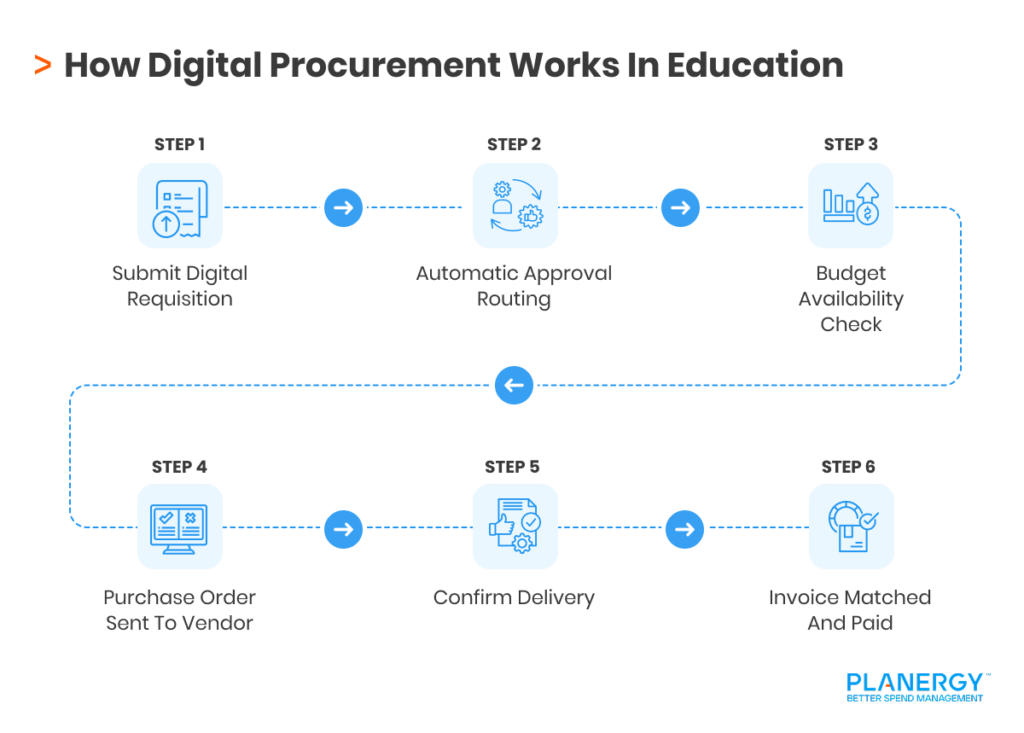
Modern e-procurement systems digitize every buying step:
Requesting: Teachers search online catalogs and submit digital requisitions
Approval: The system automatically routes requests based on dollar amounts
Budget Check: Software verifies money availability before approving purchases
Ordering: Approved requests become purchase orders sent to the provider
Receiving: Staff confirm delivery through an app or website
Payment: The system matches invoices to orders and schedules payment
RPA bots handle tasks that once took hours. A bot can process an invoice in seconds compared to 10 minutes manually.
Benefits for Everyone
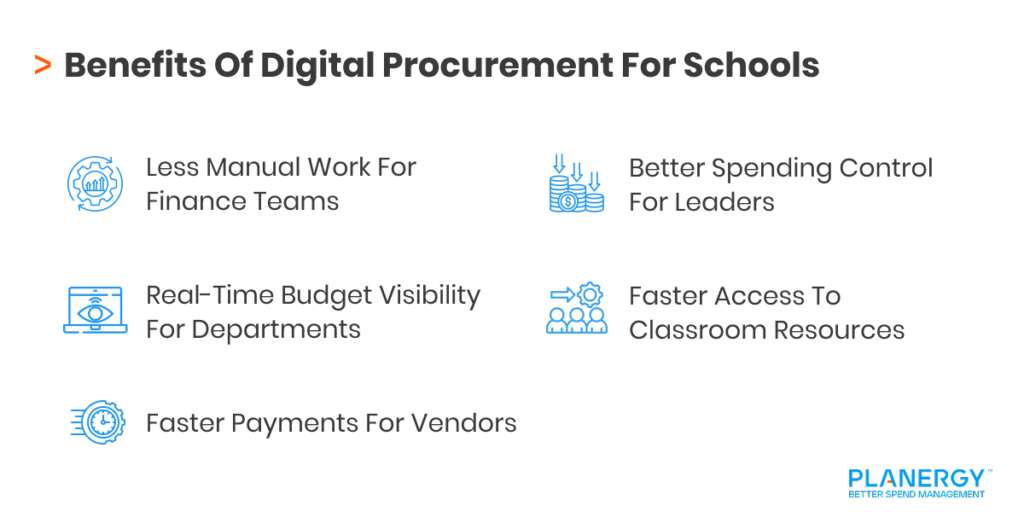
Finance teams focus on strategic work like vendor negotiations, strategic sourcing, and fraud prevention instead of data entry.
Teachers and department heads use self-service portals to check budgets, submit requests, and track orders without waiting for business office responses.
School leaders access dashboards showing spending patterns across departments, enabling data-driven decision-making and better strategic planning for high-quality educational outcomes.
Vendors receive faster payments and clearer communication, improving partnerships and unlocking early payment discounts. This creates a healthier procurement ecosystem for school districts.
Students benefit when resources arrive faster and saved money buys more educational technology and learning materials.
Common Challenges in Going Digital
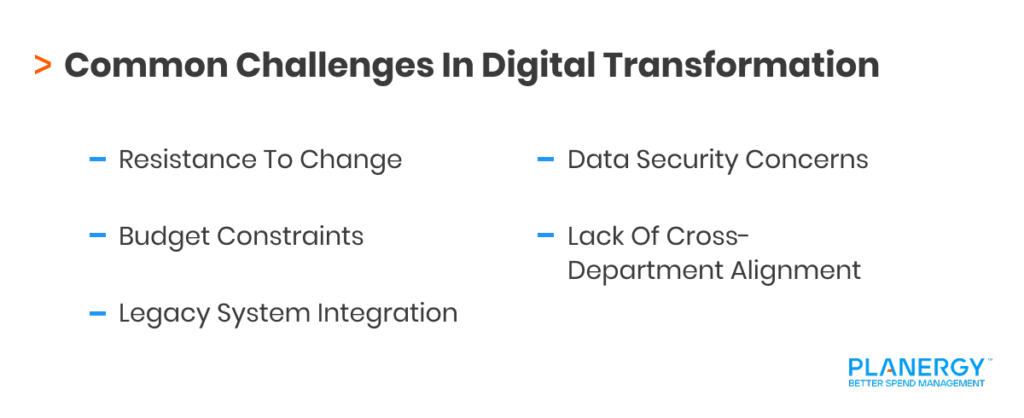
People Resist Change
Staff who have worked the same way for years worry about job security, learning new digital systems, and whether changes will actually help. These fears are real and must be addressed directly.
All stakeholders need reassurance about how digital initiatives will improve their work. Understanding why digital transformations fail helps institutions avoid common pitfalls.
Money Is Tight
School budgets are stretched thin. Leaders worry about upfront software costs, implementation expenses, ongoing fees, and hidden costs. However, cost-effective solutions exist for school districts of all sizes.
Higher education institutions face competing priorities for technology investments and strategic planning initiatives.
Technical Problems
Many schools use old computer systems that do not work well together. Integration challenges multiply when data formats differ, security rules for student data add complexity, and IT staff lack cloud system experience.
Cybersecurity and data security requirements demand additional safeguards for financial data, which is especially important in education procurement.
Digital systems must protect sensitive vendor, contract, and institutional financial information throughout the procurement ecosystem.
Departments Do Not Cooperate
Success requires teamwork between finance, IT, teachers, and administrators. Different goals and poor communication can stop digital transformation initiatives.
Steps to Successful Digital Transformation
Plan Before Buying Software
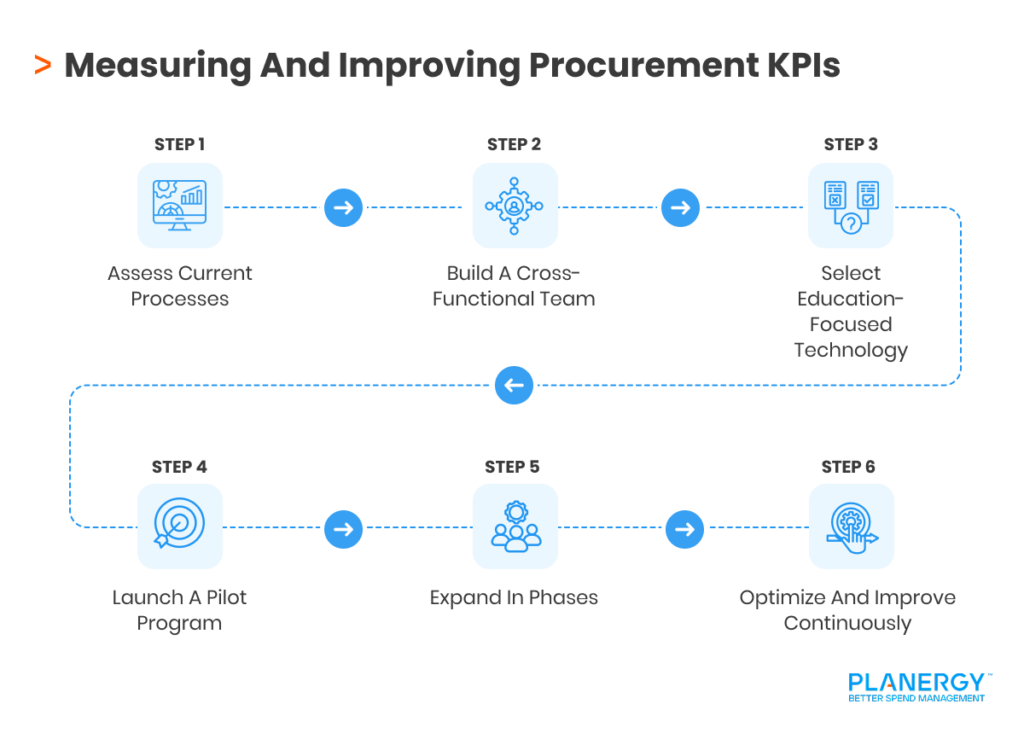
Start by understanding your current situation. Map existing workflows, interview staff about frustrations, count monthly purchase orders and processing times, and define success metrics aligned with institutional goals.
This strategic planning phase should involve stakeholders from across your institution and establish the foundation for data-driven improvements. Document current inefficiencies to build a strong business case for change.
Build the Right Team
Create a project team including a senior leader as executive sponsor, finance staff who use the system daily, IT representatives handling integration and data security, end-users from departments, and a project manager.
In higher education and large school districts, include representatives from different colleges or schools since their needs may vary.
Pick Technology That Fits
Look for cloud-based digital systems that are configurable, built for education, integration-ready, scalable, and include strong cybersecurity and data security protections.
Emerging technologies like artificial intelligence and machine learning can enhance these platforms. Request demos using your actual data. Talk to other educational institutions about their provider experiences.
Strong vendor partnerships matter for building a sustainable procurement ecosystem.
Roll Out in Phases
Educational institutions that switch entire procurement systems overnight often face major problems. A phased approach reduces risk and builds success step by step while ensuring sustainability.
Phase 1: Start with a Pilot Program
Begin with a small test group to work out problems before affecting the whole institution.
Choose the Right Pilot Group
Select tech-friendly users with supportive leaders whose work reflects typical procurement needs. Good examples include the main office staff, one school building in a school district, or one college department in higher education.
Define Clear Pilot Goals
Test all basic features, identify technical problems and inefficiencies, gather user feedback, train your project team, and document needed changes. Plan for 4-8 weeks to complete multiple procurement cycles.
Track Everything and Make Improvements
Record transaction times, note every error and complaint, survey pilot users weekly, and watch them work to spot confusion. After the pilot, analyze results and make necessary adjustments. Share results with stakeholders to maintain support for the initiative and inform strategic planning.
Celebrate Pilot Successes
Share positive results: “Purchase orders now take 2 days instead of 10 days” or “We caught 3 duplicate orders that saved $5,000.” Success stories reduce anxiety about upcoming changes and demonstrate cost-effective solutions.
Phase 2: Expand Gradually
Once the pilot succeeds, expand to additional groups in planned waves.
Create a Rollout Schedule
Consider departmental readiness, urgent needs, support team capacity, and timing. Add 2-3 departments monthly in large school districts or one building quarterly in smaller districts. Higher education might roll out by college or division.
Prepare and Support Each Wave
Announce timelines well in advance, schedule training, set up catalogs and approvals, assign pilot users as mentors, and ensure support staff readiness. Provide strong support during the critical first week, checking in daily and holding drop-in help sessions.
Learn and Adjust
After each wave, survey users, identify confusing features, note recurring inefficiencies, and track improvements. Use insights to streamline the next wave.
Stay flexible with your schedule, prioritizing successful adoption over arbitrary dates. Keep stakeholders informed about timeline changes.
Phase 3: Optimize and Add Advanced Features
Once users work comfortably with the basics, activate advanced features to maximize sustainability and value.
Activate Advanced Automation
Turn on RPA for invoices, auto-approval rules, smart routing, batch processing, and artificial intelligence for predicting budget needs or identifying unusual spending patterns.
These emerging technologies streamline operations and improve data-driven decision-making while creating long-term sustainability.
Implement Analytics and Reporting
Create spending dashboards, set budget alerts, compare vendor prices, analyze patterns for cost savings, and track vendor performance.
Good analytics transform procurement into a strategic tool supporting data-driven decision-making across educational institutions.
Use these insights for better strategic sourcing, high-quality purchasing decisions, and long-term strategic planning.
Integrate Additional Systems
Connect with asset management, inventory, grant management, and travel systems to create a comprehensive procurement ecosystem.
In higher education, integrate with research administration for better grant tracking. Each integration eliminates duplicate entries and supports stronger vendor partnerships while maintaining data security protocols.
Expand to Related Processes
Add contract management, purchase card programs, travel and expense modules, and vendor portals. Expanding scope increases value and creates one central place for spending activities within the procurement ecosystem.
Focus on Continuous Improvement
Review usage quarterly, collect suggestions, stay updated on emerging technologies and new features, benchmark against other school districts, and adjust workflows.
Build deliberate pauses between phases for reflection and preparation to ensure sustainability.
Communicate Progress Throughout
Send monthly updates about implementation progress, share success metrics, highlight testimonials, be transparent about challenges, and recognize successful adopters. Regular communication maintains stakeholder support for the initiative.
Help People Adjust
Communicate why change helps everyone, offer multiple training formats, identify enthusiastic champions, and create feedback channels.
Explain that automation removes boring tasks while supporting better data-driven decision-making and creating more sustainable operations. Effective digital transformation change management is essential for successful adoption.
Clean Your Data
Remove duplicate vendor records, fix addresses and contact information, correct invalid budget codes, set data entry rules, and test before going live.
Clean data ensures accurate decision-making and protects data security across the procurement ecosystem.
Measuring Your Success
Speed and Efficiency
Track days from request to purchase order, invoice to payment, staff hours saved, and error percentages. These metrics show how digital initiatives eliminate inefficiencies and streamline operations.
Money Saved
Monitor savings from better negotiations and strategic sourcing, early payment discounts captured, late fees avoided, and budget variance reduction. Financial stakeholders especially value these cost-effective digital transformation results.
Following Rules
Measure audit findings, policy compliance rates, vendor documentation, and contract compliance for high-quality oversight.
People Using the System
Track login frequency, transactions through digital systems versus workarounds, self-service usage, and training satisfaction.
Digital Transformation Benefits the Whole Supply Chain
Digital procurement improves the entire supply chain from manufacturer to classroom. When educational institutions use modern procurement practices and strategic sourcing, vendors plan better, deliver faster, and offer better prices.
This benefits the public sector as school districts share best practices and negotiate together.
Educational technology (edtech) companies especially benefit from streamlined procurement processes. When schools buy edtech tools quickly, students access learning technology faster.
Strong partnerships between educational institutions and providers create better outcomes for everyone within the procurement ecosystem.
Higher education institutions and school districts leverage purchasing power more effectively through digital systems, supporting research initiatives efficiently and redirecting savings toward academic programs through data-driven strategic planning.
This creates long-term sustainability for educational programs.
Building Your Future
Digital transformation in school procurement creates a modern system supporting your main goal: helping students succeed through high-quality educational services.
When finance teams use emerging technologies, they become strategic partners, analyzing data and supporting data-driven decision-making.
Teachers with real-time budget information plan better. Vendors receiving timely payment offer better service through stronger partnerships.
Educational institutions that transform now gain important advantages:
Save money for more classroom supplies and technology through better strategic sourcing and cost-effective purchasing
Attract staff expecting modern digital tools
Respond faster to changing educational needs
Prove responsible spending to taxpayers and boards
Support strategic initiatives with better data and strategic planning
Build sustainable operations that eliminate inefficiencies
The journey requires planning, resources, and attention to technology and people. You need leader support, cross-department cooperation, and patience through setbacks.
Educational institutions that embrace digital transformation see immediate, measurable benefits. Supplies reach classrooms faster, budgets go further, and staff and leaders can focus on higher-value work that supports student success.
Strong cybersecurity protects institutional data across the procurement ecosystem, while artificial intelligence streamlines routine tasks and identifies efficiencies.
Technology partnerships provide the innovation and long-term support institutions need to sustain progress.
Getting Started Today
Paper systems cannot handle growing needs with fewer staff. The question is whether your educational institution leads this change or faces rushed decisions later.
Start your digital transformation now:
Assess current processes: Document workflows and identify inefficiencies
Form your team: Include finance, IT, teachers, and leaders as stakeholders
Set clear goals: Connect technology to the educational mission through strategic planning
Choose good technology: Pick cost-effective digital systems with strong data security
Start small: Test with one department before expanding
Support people: Invest in training and change management
Track results: Measure progress and share wins
Change takes months or years, not weeks. But educational institutions completing this journey become stronger and better serve students through high-quality, sustainable operations.
The future of school procurement is digital. Procurement processes will use digital tools and emerging technologies like artificial intelligence.
Supply chain management will be automated. Procurement strategy will rely on data-driven analytics supporting decision-making. Public sector institutions embracing these changes lead the way.
Higher education and school districts that streamline procurement through digital initiatives position themselves for success.
Strong partnerships with vendors, attention to cybersecurity and data security, cost-effective strategic sourcing practices, and stakeholder engagement create lasting transformation within a healthy procurement ecosystem.
Start your journey today. Your students, staff, and community will benefit from an educational institution working smarter and more efficiently through data-driven, sustainable digital systems that deliver high-quality.
1. Use PLANERGY to manage purchasing and accounts payable
We’ve helped save billions of dollars for our clients through better spend management, process automation in purchasing and finance, and reducing financial risks. To discover how we can help grow your business:
2. Download our guide “Preparing Your AP Department For The Future”
Download a free copy of our guide to future proofing your accounts payable department. You’ll also be subscribed to our email newsletter and notified about new articles or if have something interesting to share.
3. Learn best practices for purchasing, finance, and more
Browse hundreds of articles, containing an amazing number of useful tools, techniques, and best practices. Many readers tell us they would have paid consultants for the advice in these articles.
We use cookies to personalise content and ads, to provide social media features and to analyse our traffic. We also share information about your use of our site with our social media, advertising and analytics partners who may combine it with other information that you’ve provided to them or that they’ve collected from your use of their services.
The technical storage or access is strictly necessary for the legitimate purpose of enabling the use of a specific service explicitly requested by the subscriber or user, or for the sole purpose of carrying out the transmission of a communication over an electronic communications network.
Preferences
The technical storage or access is necessary for the legitimate purpose of storing preferences that are not requested by the subscriber or user.
Statistics
The technical storage or access that is used exclusively for statistical purposes.The technical storage or access that is used exclusively for anonymous statistical purposes. Without a subpoena, voluntary compliance on the part of your Internet Service Provider, or additional records from a third party, information stored or retrieved for this purpose alone cannot usually be used to identify you.
Marketing
The technical storage or access is required to create user profiles to send advertising, or to track the user on a website or across several websites for similar marketing purposes.

 These inefficiencies prevent school districts and universities from operating efficiently and delivering high-quality educational services.