We saved more than $1 million on our spend in the first year and just recently identified an opportunity to save about $10,000 every month on recurring expenses with PLANERGY.
Cash flow analysis tracks money entering and leaving a business to ensure it can meet financial obligations and remain solvent.
Businesses should monitor operating, investing, and financing cash flows to understand where money is generated and spent.
Analyzing cash flow statements helps identify risks like overspending, slow collections, or weak operational performance.
Regular cash flow analysis supports smarter financial planning, investment decisions, and long-term business stability.
Having adequate cash on hand is essential for small and large businesses alike. Without a sufficient inflow of cash, it’s impossible for a business to maintain long-term operation.
The best way to track and manage cash flow is through cash flow analysis, which uses cash flow statements that track both incoming and outgoing cash.
We’ll explain more about cash flow, the types of cash flow a business needs to monitor, and how proper cash flow analysis helps with financial planning, investment decisions, and your company’s financial health.
What is Cash Flow?
Cash flow represents money flowing into or out of a business. For a business to remain successful, this cash flow must be effectively monitored and managed.
Positive cash flow refers to the money that comes into the business, such as payments from customers or investments.
Negative cash flow refers to the cash that flows out of the business when purchases are made or bills are paid.
What is a Cash Flow Statement?
A cash flow statement is a financial document that shows the flow of cash in and out of a business over a specific period.
Standard financial statements provide businesses with information on current assets, current liabilities, and net profit.
But if you want to know how much cash your business has on hand, you’ll look at a cash flow statement, also known as a statement of cash flows.
The cash flow statement is designed to provide business owners, CFOs, and other interested stakeholders with a detailed view of the cash that entering and leaving a business in a given time frame.
Cash flow statements are prepared using one of two methods.
Direct Method
The direct method, which is more useful for short-term planning, converts accrual accounts into a cash amount.
The indirect method starts with net income that is adjusted to reflect non-cash expenses, then records balance sheet changes.
The indirect method is best used for larger businesses that need to look beyond a three-month window at cash flow.
The Three Types of Cash Flow
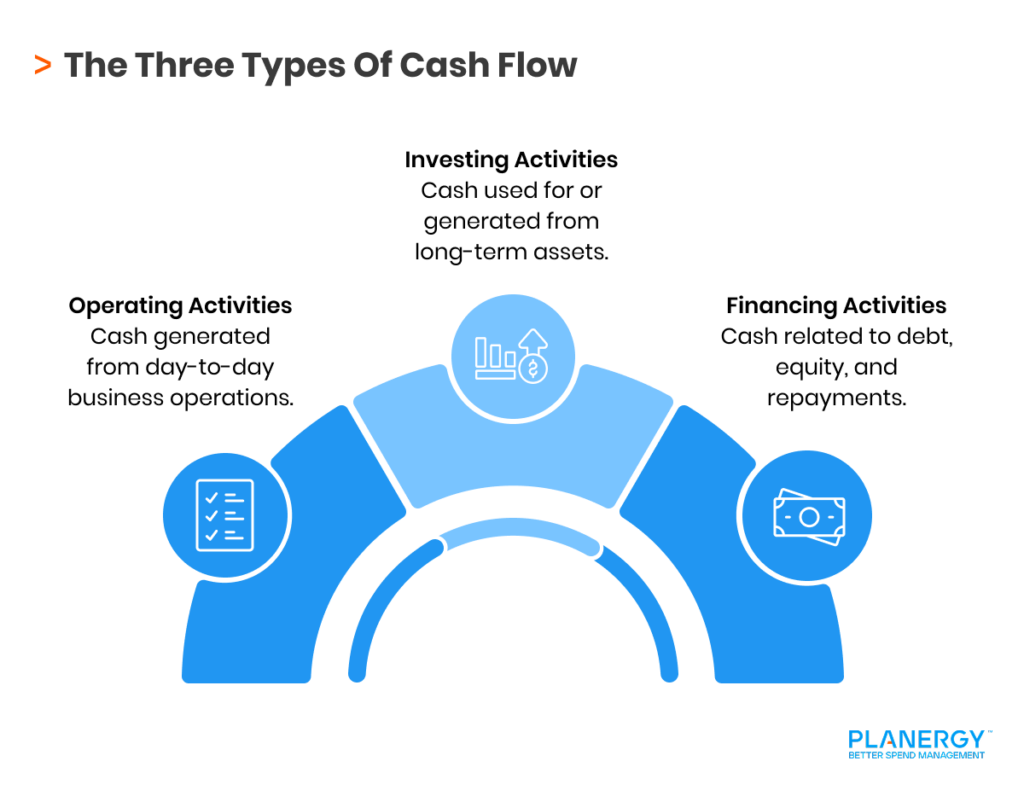
There are three types of cash flow that all businesses should be actively tracking.
Operating Activities
Cash flow from operating activities tracks cash that flows in and out as a result of regular business activities.
Any time a product or service is sold or a bill is paid, it directly impacts your cash flow from operating activities. For very small businesses, cash flow from operating activities may be the most important type of cash flow to monitor.
Investing Activities
Cash flow from investing activities tracks investment activity, such as the purchase or sale of long-term assets like property, plant, or equipment, and also includes stocks, bonds, or securities.
For instance, if you invest in a commercial space, you’ll track incoming cash from rent or outgoing cash expenses such as repairs or maintenance.
Financing Activities
Financing activities include any loans that you may make or any loans that need to be repaid.
For instance, if you purchase a company car, the payment to the lender would be considered a financing activity.
If your company is publicly held, financing activities would also include issuing stocks and paying dividends to investors.
What is in a Cash Flow Analysis?
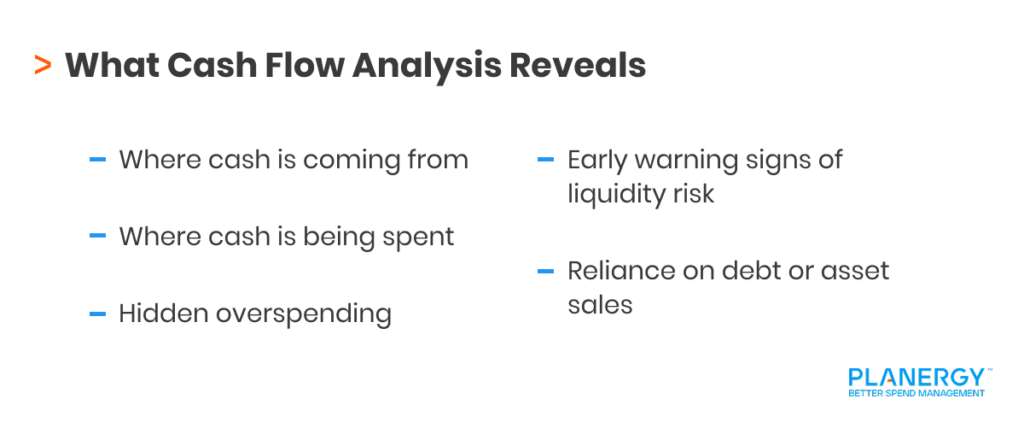
A cash flow analysis contains a detailed examination of where a business’s cash is coming from and going to, helping to identify trends and insights into different cash flow categories.
For instance, a cash flow statement provides detailed information on the amount of cash your business has on hand, but analyzing those results allows you to determine where the majority of your cash is coming from or going to.
When cash flow is low in one area and high in another, it provides the details you need to identify and address potential red flags and make the necessary changes.
On the other hand, if your cash flow statement shows that the majority of cash inflow is from investment activities, it may be an indication that your product or service sales are sluggish.
Your cash flow statement can also help pinpoint overspending that an income statement cannot.
For instance, if your incoming operating cash flow is always less than your outgoing operating cash flow, that may be an indication of slow sales or overspending.
Cash flow analysis typically looks like this:
Cash Flow Statement as of June 30, 2025
Cash Flow
Company A
Company B
Cash Balance as of June 1, 2025
$ 49,000
$ 110,000
Cash Flows from Operating Activities
Net Income
$ 77,000
$ 125,000
Depreciation Adjustment
$ 4,000
$ 10,000
Inventory Purchase
($ 23,000)
($ 75,000)
Increase/Decrease in Accounts Receivable
$ 16,000
($ 30,000)
Increase/Decrease in Accounts Payable
$10,000
($ 27,000)
Net Cash Flow from Operations
$ 84,000
$ 3,000
Cash Flows from Investing Activities
Sale of Property
$ 45,000
$ 100,000
Land Purchase
($ 33,000)
$ 0
Net Cash Flow from Investing
$ 12,000
$ 100,000
Cash Flow from Financing Activities
Loan Repayment
($ 7,500)
($ 5,000)
Notes Payable
($ 5,500)
$ 0
Net Cash Flow from Financing Activities
($ 13,000)
($ 5,000)
Net Increase/Decrease in Cash
$ 73,000
$ 98,000
Cash Balance as of June 30, 2025
$132,000
$208,000
Looking at Company A’s cash flow statement above, you’ll see that operating expenses are relatively low, with higher expenses found in the financing activity.
But when analyzing cash flow for Company B, you can see the impact that increased inventory purchases, along with an increase in accounts receivable and a decrease in accounts payable balances, directly impact operating cash flow activities.
Meanwhile the sale of a building for Company B increased their cash flow from investing activities.
When preparing a cash flow statement, keep in mind that a decrease in accounts receivable increases both cash flow and working capital, since it means that payment has been received from the customer.
On the other hand, an increase in accounts receivable negatively impacts cash flow because inventory costs are up, but payment has not yet been received for products or services.
When dealing with accounts payable, remember that an increase in accounts payable boosts cash flow and working capital, while a decrease reduces cash flow because vendor and supplier payments have been made.
Conducting a Cash Flow Analysis
Cash flow analysis, or a cash flow test, is used to determine if your company is generating enough cash to meet both short-term and long-term financial obligations.
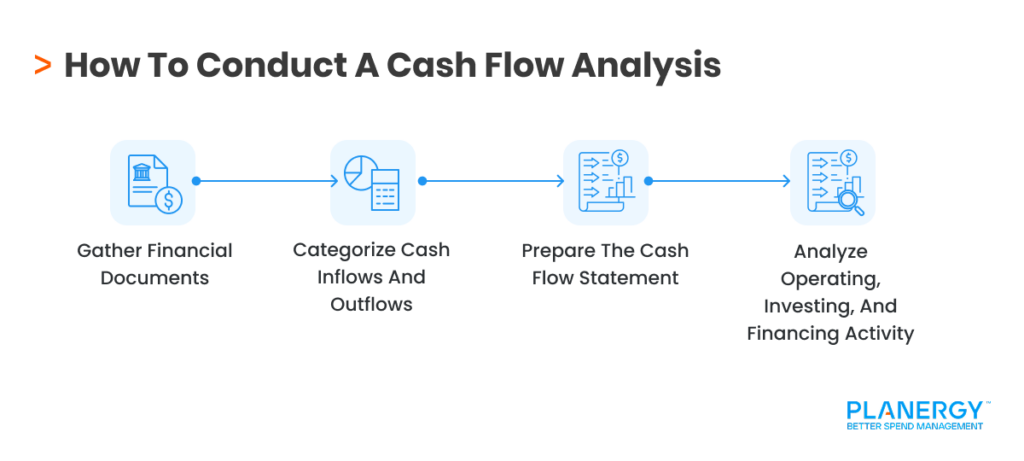
You can follow these easy steps to conduct a cash flow analysis for your business.
1. Gather All Relevant Financial Documents
This includes bank and credit card statements for the period, along with all invoices and receipts.
Invoice and receipt totals can be obtained from an income statement or your journals, if you’re still using spreadsheets and ledgers to record accounting transactions.
2. Categorize Your Cash Flow Activities
If you’re using an automated accounting software application, creating a categorized cash flow statement will be completed automatically, but if you’re creating one from scratch, you’ll want to categorize your cash inflows and outflows into these three categories:
Operating activities
Investing activities
Financing activities
Once you’ve categorized all incoming and outgoing transactions, you can move on to the next step.
3. Create a Cash Flow Statement
If you’re using an accounting software application, you should be able to easily print a cash flow statement whenever you desire.
For those preparing a statement manually, you’ll need to add the totals for each of the three areas to determine your net cash flow for the month.
4. Analyze the Statement
Once the cash flow statement is completed, you’ll need to undertake a three-step review of the statement to determine where cash flow is strongest and where it may need some shoring up.
First, review your cash flow from operating activities to determine the net cash flow from main business operations. This is the area smaller businesses will need to concentrate on the most.
Next, you’ll want to take a look at investing activities such as buying or selling long-term assets.
Finally, you’ll want to take a look at financing activities to see how much of your business is funded with debt and how well you’re managing your current debt.
Reviewing these areas helps identify potential financial risks before they become a major issue while providing helpful insight during the decision-making process.
The cash flow analysis or cash flow test also helps inform lending decisions by creditors.
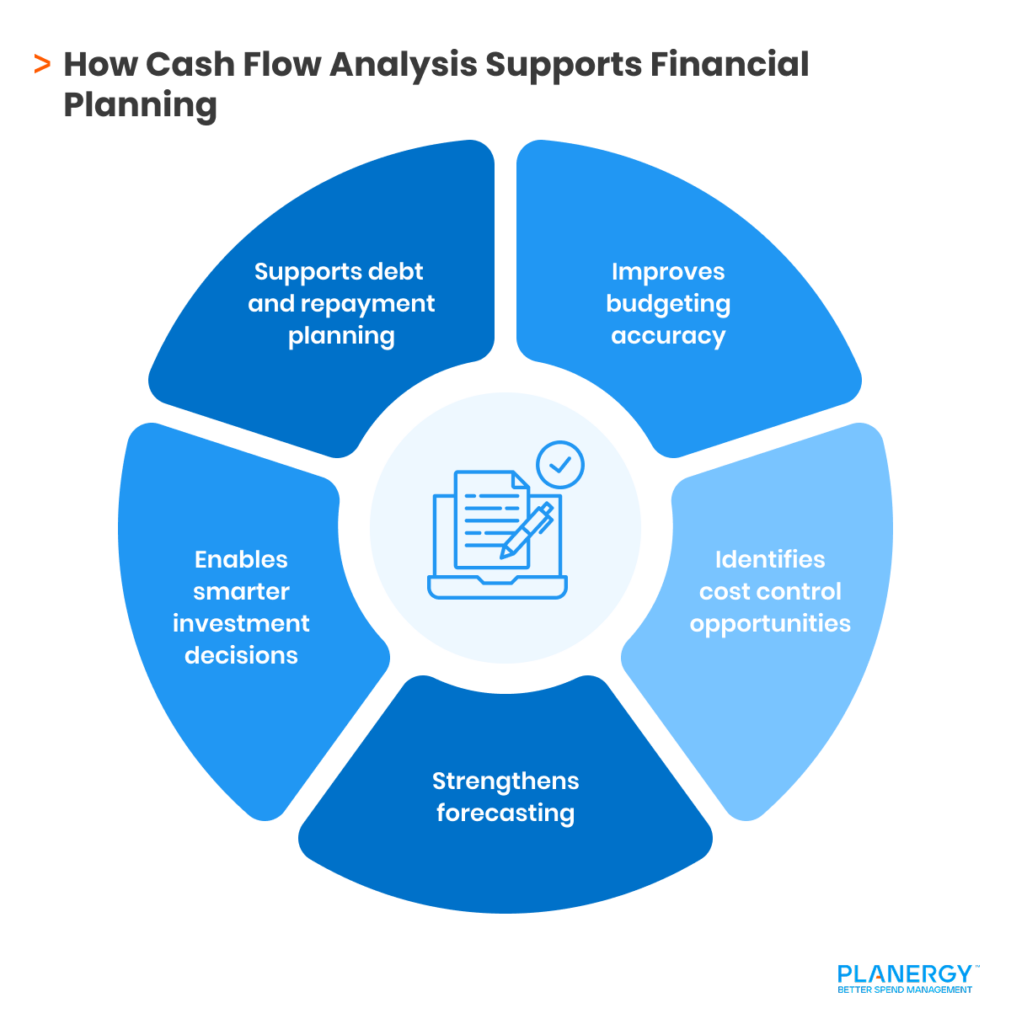
How Does Cash Flow Analysis Help in Financial Planning?
Cash flow analysis helps in creating an accurate financial plan by provides information you need to understand your current financial position, such as pinpointing strong or weak areas.
For instance, a high cash outflow can signal a need to rein in spending or reduce costs in some other fashion.
Understanding spending patterns aids in creating a more accurate budget, while helping to manage current debt more effectively, increase savings and other investments, and shore up operations.
For example, if your cash flow analysis shows that collection activity is stagnant, you can create a plan to address the issue. This may include instituting better collection techniques or updating credit terms.
What Is Free Cash Flow Analysis?
Free Cash Flow (FCF) analysis is used to determine a company’s ability to generate cash after all operating and capital expenditures have been paid.
FCF measures cash flow from operations along with long-term assets like plant and equipment.
FCF is a good measure of a business’s financial health and growth potential while providing helpful information to potential investors and creditors.
Is a Larger-Than-Planned Change in Accounts Payable Cause for Concern?
Changes in accounts payable, like accounts receivable, are normal. Numbers regularly fluctuate throughout the month.
However, a large change may indicate that you are not taking advantage of processing times to increase your accounts payable balance. It may also indicate that you are paying your vendor and supplier invoices too quickly.
Better AP management, including the utilization of an automated AP system, helps manage AP more efficiently, reducing the likelihood of large changes in your accounts payable balance.
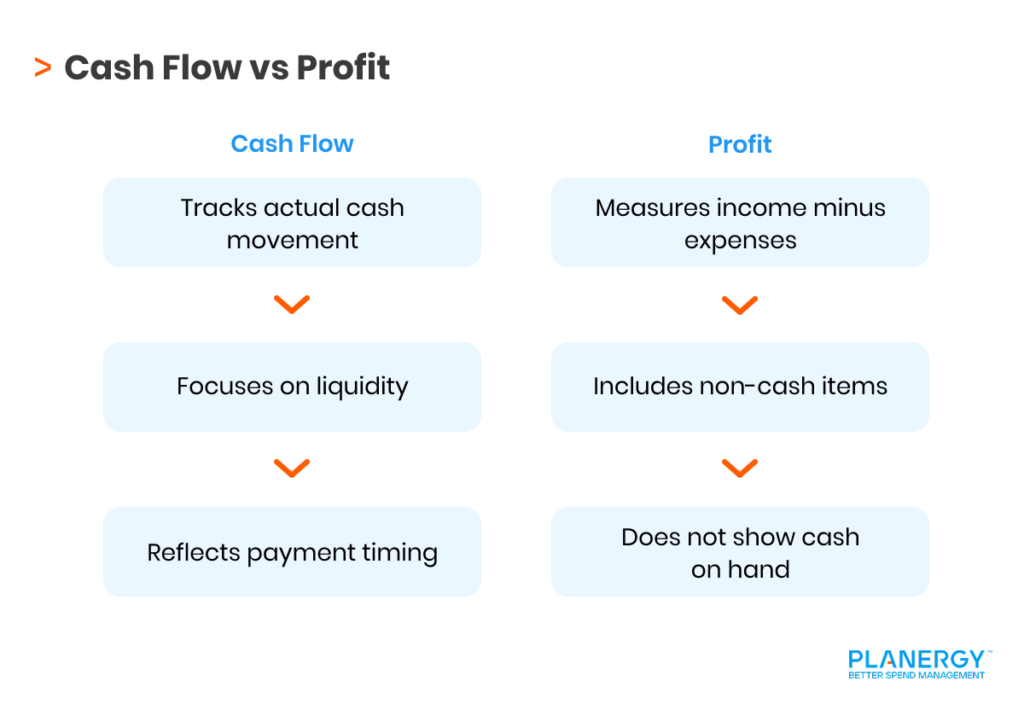
What Is the Difference Between Cash Flow and Profit?
Cash flow measures cash inflows and outflows and overall liquidity, while profit measures the profit made from operations, regardless of whether funds have been received or disbursed.
The primary difference between cash flow and profit lies in the accounting method used. If you use cash accounting, there is no difference. But if you’re using accrual accounting, you’re recording transactions at the time they are incurred.
For example, on a cash flow statement, the statement reflects only funds that have been received, not funds that have been billed and recorded on your income statement as accounts receivable.
In addition, non-cash items, such as depreciation and amortization expenses, which reduce profit, are added back to your cash totals on a cash flow statement.
How Can Cash Flow Analysis Help in Making Investment Decisions?
A cash flow analysis is helpful for both companies seeking to make informed investments and potential investors looking to invest in a company.
For companies, cash flow analysis helps evaluate a potential investment, better allocate excess cash, and invest in opportunities when they’re available.
For investors, cash flow analysis provides a view into the financial health of a business, helps to identify financially healthy businesses and potential future growth, and pinpoints companies in a position to pay healthy dividends.
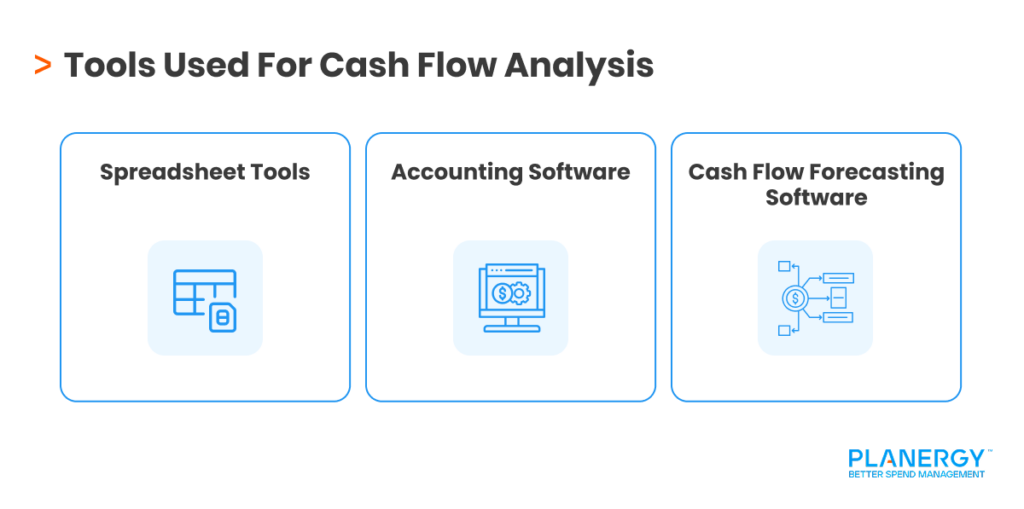
What Tools Can Be Used for Effective Cash Flow Analysis?
There are several tools and resources available that can be used when analyzing cash flow.
Spreadsheet Software
For businesses that use manual accounting systems, spreadsheet software such as Microsoft Excel or Google Sheets can assist with cash flow analysis.
Even those using accounting software may find it helpful to utilize spreadsheets, since they offer excellent customization capability along with scenario analysis that allows you to view multiple options and outcomes.
Accounting Software
Today’s popular accounting software applications, such as QuickBooks, Xero, and Sage, include automated income and expense tracking, along with real-time cash flow statements.
Cash Flow Forecasting Software
While smaller businesses may be able to manage cash flow using standard accounting software and perhaps spreadsheets, businesses with more complicated needs will appreciate the additional capabilities found in cash flow forecasting software.
Cash flow forecasting software includes all the standard tools found in accounting software applications, along with more advanced features such as automated cash flow projections, alerts for cash shortfalls, and scenario planning.
Business Intelligence Applications
Business intelligence applications provide larger businesses with a host of advanced features.
These include customizable dashboards designed to display current and historical cash flow trends, provide key performance indicators, and spot emerging trends, along with data modelling and analysis.
Enterprise Resource Planning (ERP) Systems
ERPs are comprehensive applications well-suited for larger businesses, although smaller businesses will appreciate their holistic composition.
ERP systems allow for management of all financial transactions, including cash flow management and analysis, from a single application.
Spend Management Software
Spend management software that incorporates AP Automation software, like PLANERGY, will give you accurate real-time reporting on your financial commitments.
This empowers a company to accurately manage and analyze cash flow.
Accounts payable KPIs, like invoice processing time, can be measured and improved thanks to the AI powered automated invoice processing.
Less time spent on invoice processing will also free up the finance team to focus on value-add tasks like cash flow analysis.
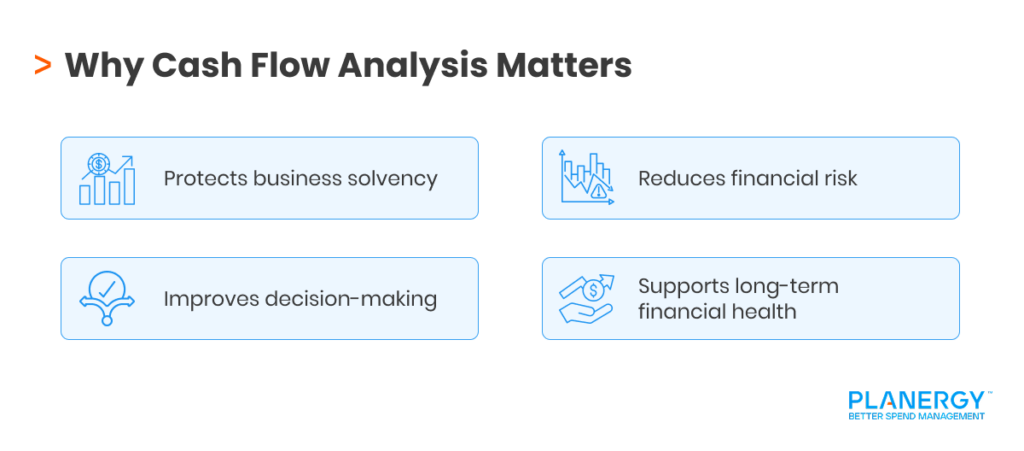
Why Cash Flow Analysis Matters
Solid financial analysis starts with understanding your company’s cash flow data. Having this data at your fingertips allows you to identify and address key concerns such as slow sales or excessive expenses.
Cash flow analysis also provides you with the details needed to make more informed decisions while better managing financial risk.
Above all, regular cash flow analysis helps ensure that businesses remain solvent and well-positioned for future success.
1. Use PLANERGY to manage purchasing and accounts payable
We’ve helped save billions of dollars for our clients through better spend management, process automation in purchasing and finance, and reducing financial risks. To discover how we can help grow your business:
2. Download our guide “Preparing Your AP Department For The Future”
Download a free copy of our guide to future proofing your accounts payable department. You’ll also be subscribed to our email newsletter and notified about new articles or if have something interesting to share.
3. Learn best practices for purchasing, finance, and more
Browse hundreds of articles, containing an amazing number of useful tools, techniques, and best practices. Many readers tell us they would have paid consultants for the advice in these articles.
We use cookies to personalise content and ads, to provide social media features and to analyse our traffic. We also share information about your use of our site with our social media, advertising and analytics partners who may combine it with other information that you’ve provided to them or that they’ve collected from your use of their services.
The technical storage or access is strictly necessary for the legitimate purpose of enabling the use of a specific service explicitly requested by the subscriber or user, or for the sole purpose of carrying out the transmission of a communication over an electronic communications network.
Preferences
The technical storage or access is necessary for the legitimate purpose of storing preferences that are not requested by the subscriber or user.
Statistics
The technical storage or access that is used exclusively for statistical purposes.The technical storage or access that is used exclusively for anonymous statistical purposes. Without a subpoena, voluntary compliance on the part of your Internet Service Provider, or additional records from a third party, information stored or retrieved for this purpose alone cannot usually be used to identify you.
Marketing
The technical storage or access is required to create user profiles to send advertising, or to track the user on a website or across several websites for similar marketing purposes.