

What's PLANERGY?

Modern Spend Management and Accounts Payable software.

Helping organizations spend smarter and more efficiently by automating purchasing and invoice processing.

We saved more than $1 million on our spend in the first year and just recently identified an opportunity to save about $10,000 every month on recurring expenses with PLANERGY.

King Ocean Logo

Cristian Maradiaga

King Ocean

Download a free copy of "Preparing Your AP Department For The Future", to learn:

  • How to transition from paper and excel to eInvoicing.
  • How AP can improve relationships with your key suppliers.
  • How to capture early payment discounts and avoid late payment penalties.
  • How better management in AP can give you better flexibility for cash flow management.

Understanding English School Funding: Structures, Challenges & the Road Ahead

KEY TAKEAWAYS

  • State-funded schools in England get most of their money through the Dedicated Schools Grant, distributed via the National Funding Formula.
  • The government’s 2026 Schools White Paper commits £4 billion to SEND reforms, including £1.6 billion for an Inclusive Mainstream Fund.
  • Schools face pressure from rising costs, falling enrollment, and increasing demand for special educational needs support.
  • Primary pupil numbers are expected to fall by over 300,000 between 2024-25 and 2030-31.


Where does the money come from to run schools in England?

This question matters to headteachers managing tight budgets, governors making spending decisions, and parents wondering why their child’s school keeps asking for donations.

The school funding system in England is complicated. Different pots of money serve different purposes, and the formulas used to distribute funding try to balance fairness with local needs.

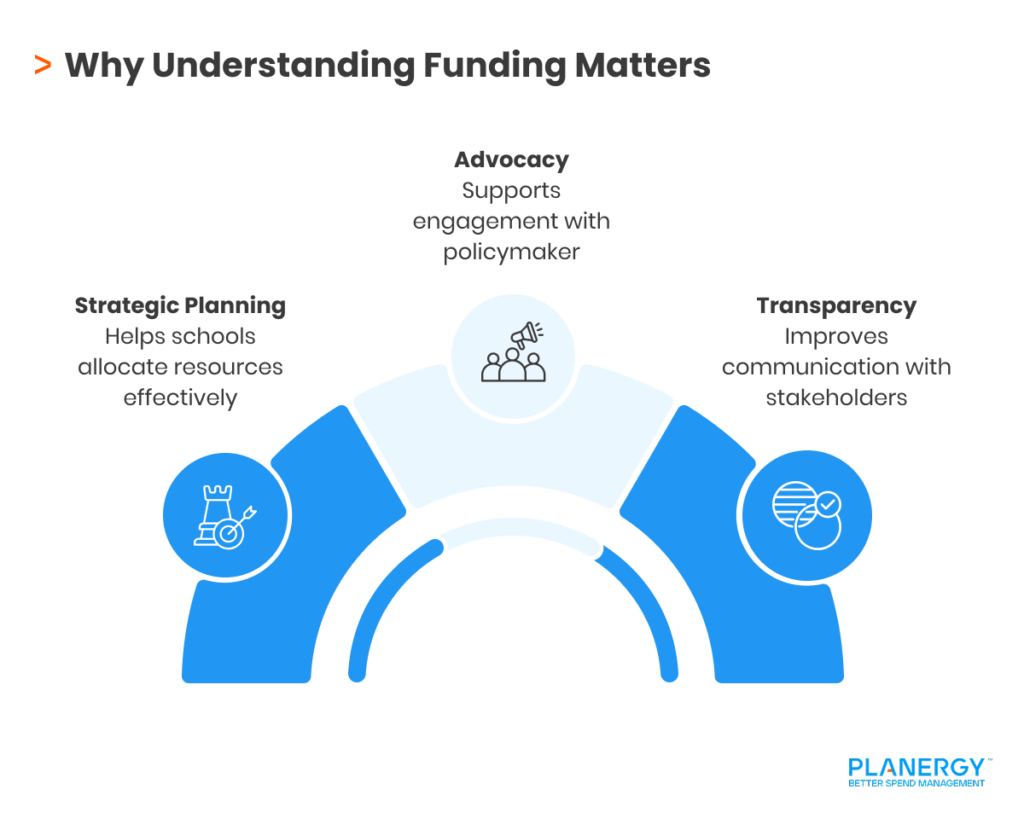
For school leaders and education stakeholders, understanding these structures helps with advocacy, strategic planning, and community engagement.

How Schools Receive Their Funding

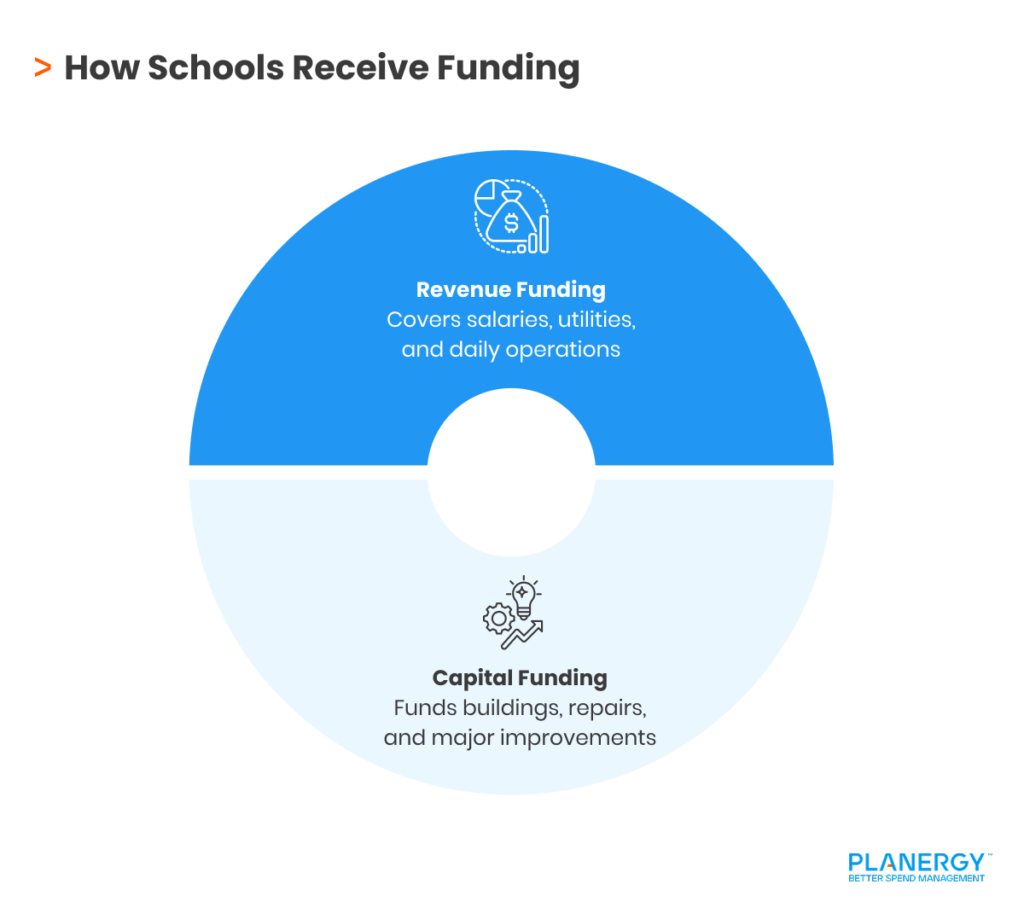
Most state-funded schools in England receive money through two main channels: revenue funding and capital funding.
How Schools Receive Funding

Revenue funding covers day-to-day costs. This includes teacher salaries, support staff pay, energy bills, teaching materials, and minor repairs.

Schools have flexibility in how they spend this money based on their needs. Most goes toward paying staff, but it can be allocated according to local priorities.

Capital funding works differently. This separate pot pays for new school buildings and major improvements to facilities. Schools cannot use capital funding for running costs, no matter how tight their budget gets.

Independent and private schools operate outside this system entirely. They raise their own money through donations, and fees paid by parents.
The Dedicated Schools Grant

The Dedicated Schools Grant (DSG) is where most school funding comes from. The Department for Education (DfE) allocates this grant funding to local authorities. Those local authorities then distribute it among individual schools in their area.

Dedicated Schools Grant Breakdown

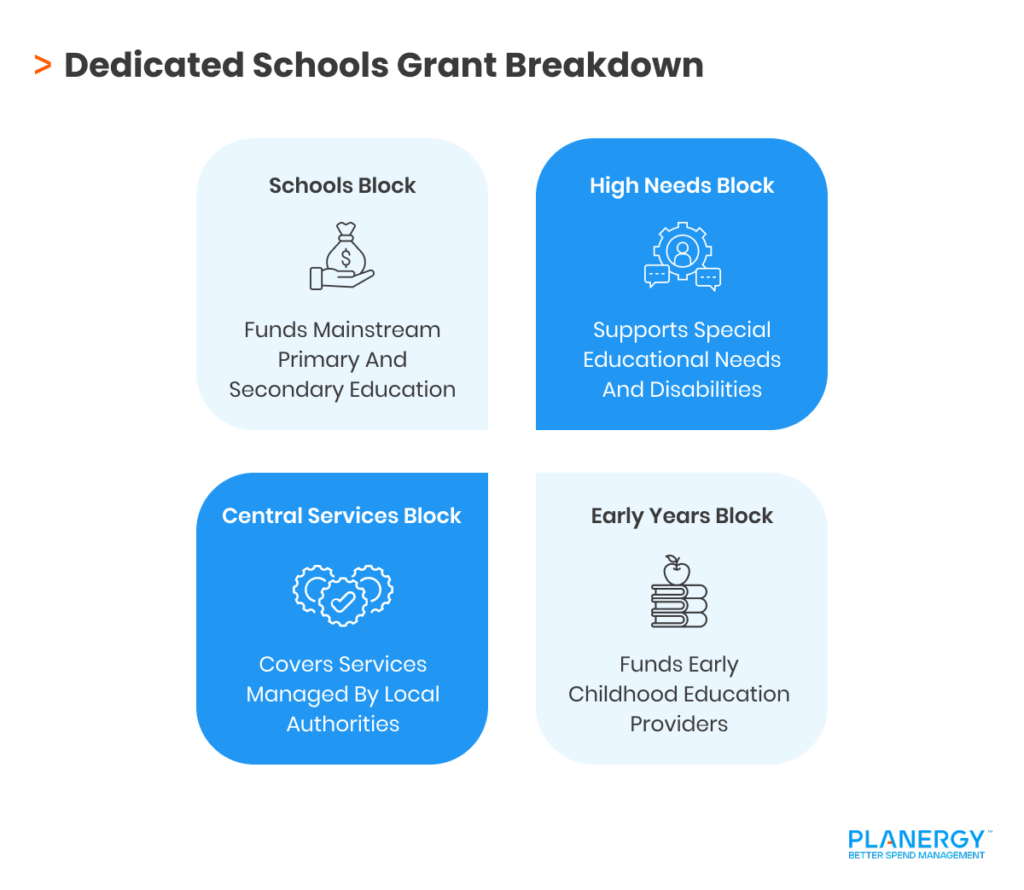
The DSG splits into several parts called “blocks.”

The schools block funds mainstream schools at the primary and secondary levels.

The high needs block supports children and young people with special educational needs and disabilities.

The central school services block covers services local authorities handle centrally, like managing school admissions.

For academies and academy trusts, the system is different. They receive the General Annual Grant (GAG) as their core funding.

The GAG comes directly from the DfE rather than going through local authorities. But the amount is calculated using the same formula as that used for local authority-maintained schools in the area.

Early years providers, including nurseries and other childcare settings, receive funding through a separate early years block. This covers the free entitlement hours that parents can claim for young children before they start primary school.

How the National Funding Formula Works

The National Funding Formula (NFF) decides how much money each school should get. Since 2018, it has been the main way education funding gets distributed across England.

How the National Funding Formula Works

Before the NFF, schools with similar pupils could receive very different amounts depending on where they were located. A primary school in one area might get much more per pupil than an almost identical school somewhere else.

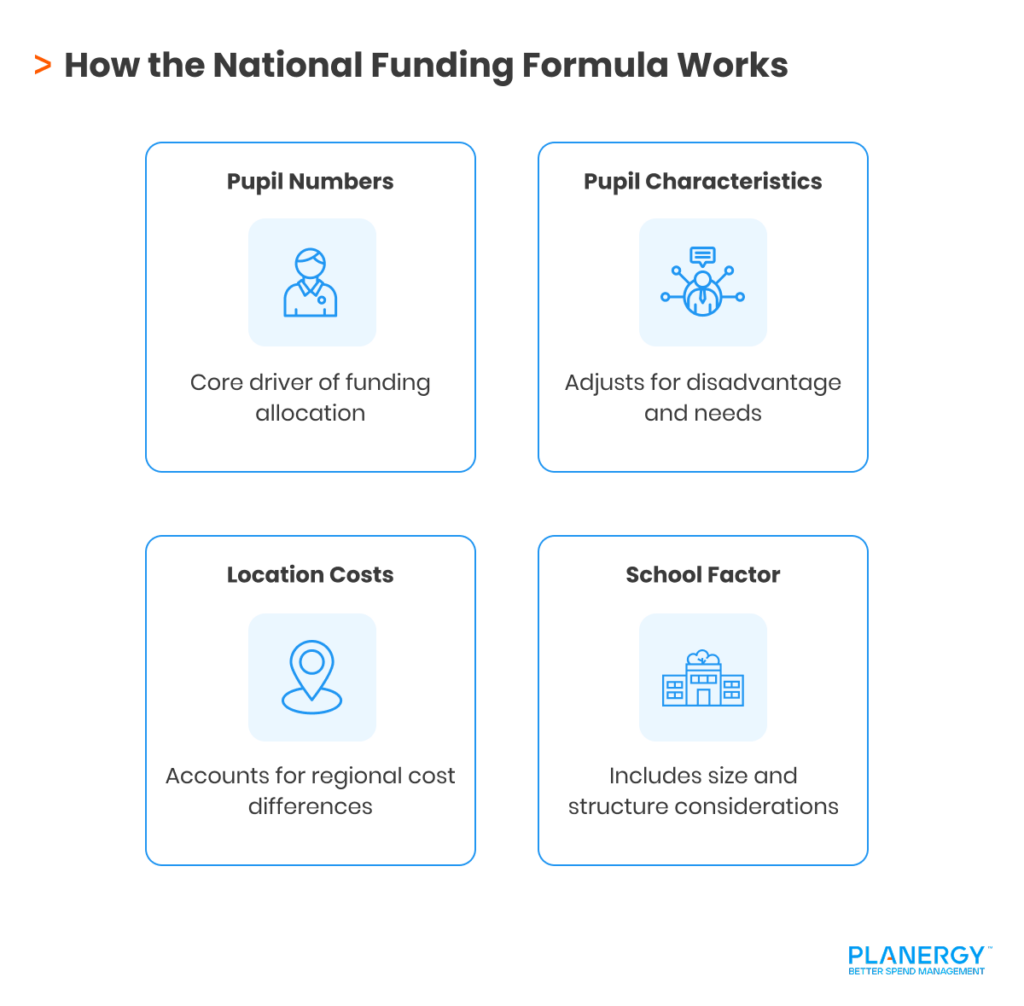
The formula aims to fix unfair differences by creating a clear, consistent approach. The NFF therefore considers several factors when calculating allocations for individual schools.

The number of pupils matters most, but pupil characteristics also count. Schools get additional funding for disadvantaged pupils, those learning English as an additional language, and those with low prior attainment. Schools in higher-cost areas receive additional adjustments.

DfE data shows per-pupil funding reached £8,580 in cash terms for 2026-27. This represents a 65% increase from £5,190 back in 2010-11.

When adjusted for inflation, the picture is more nuanced. Funding per pupil stayed broadly flat between 2010-11 and 2015-16 at around £7,700 in 2025-26 prices. It then fell by 3.6% between 2016-17 and 2018-19, before recovering. Since 2021-22, funding has increased by 7.1% in real terms and now stands at £8,390 per pupil.

The 2025 Spending Review set the core schools budget for three years from 2026-27 to 2028-29. School funding is increasing by £1.7 billion in 2026-27, bringing the total schools budget to £67 billion compared to £65.3 billion in 2025-26.

Currently, the NFF operates as a “soft” formula. The DfE uses it to calculate each local authority’s total allocation, but local authorities then set their own formulas for distributing money to schools. The government has been moving toward a “hard” formula where the NFF would directly set every school’s funding.

Pupil Premium Funding

Pupil premium funding gives schools extra money specifically to help disadvantaged pupils close the attainment gap with their peers.

Schools receive this additional funding for several groups. These include children eligible for free school meals at any point in the past six years, looked-after children in care, and children whose parents serve in the armed forces.

The funding goes straight to schools. In return, schools must show how they use it to improve outcomes for eligible children. Many schools publish pupil premium strategies explaining their approach.

According to NASUWT guidance, pupil premium rates for 2026/27 will increase by 2.23%, matching the GDP deflator measure of inflation. The DfE is also exploring whether to base eligibility on parental income rather than the current system, with consultation expected in 2026.

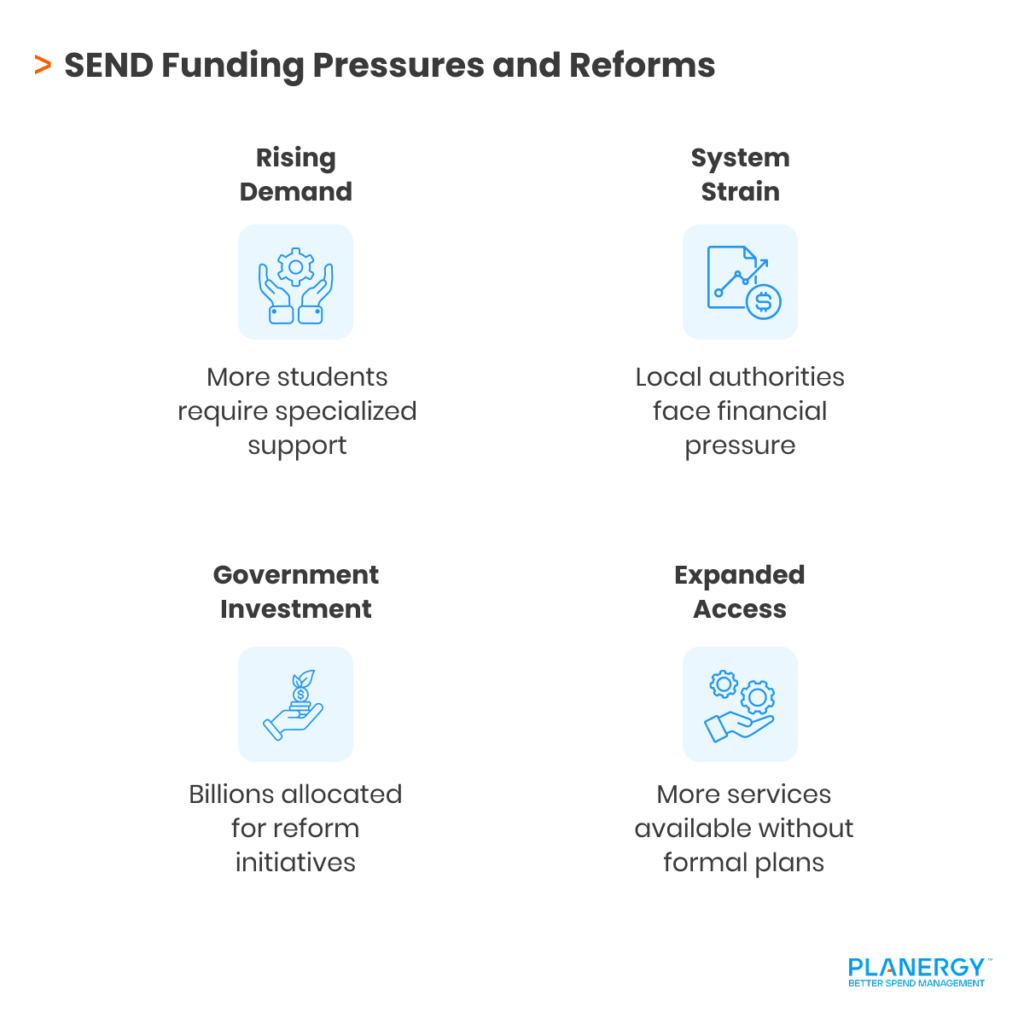
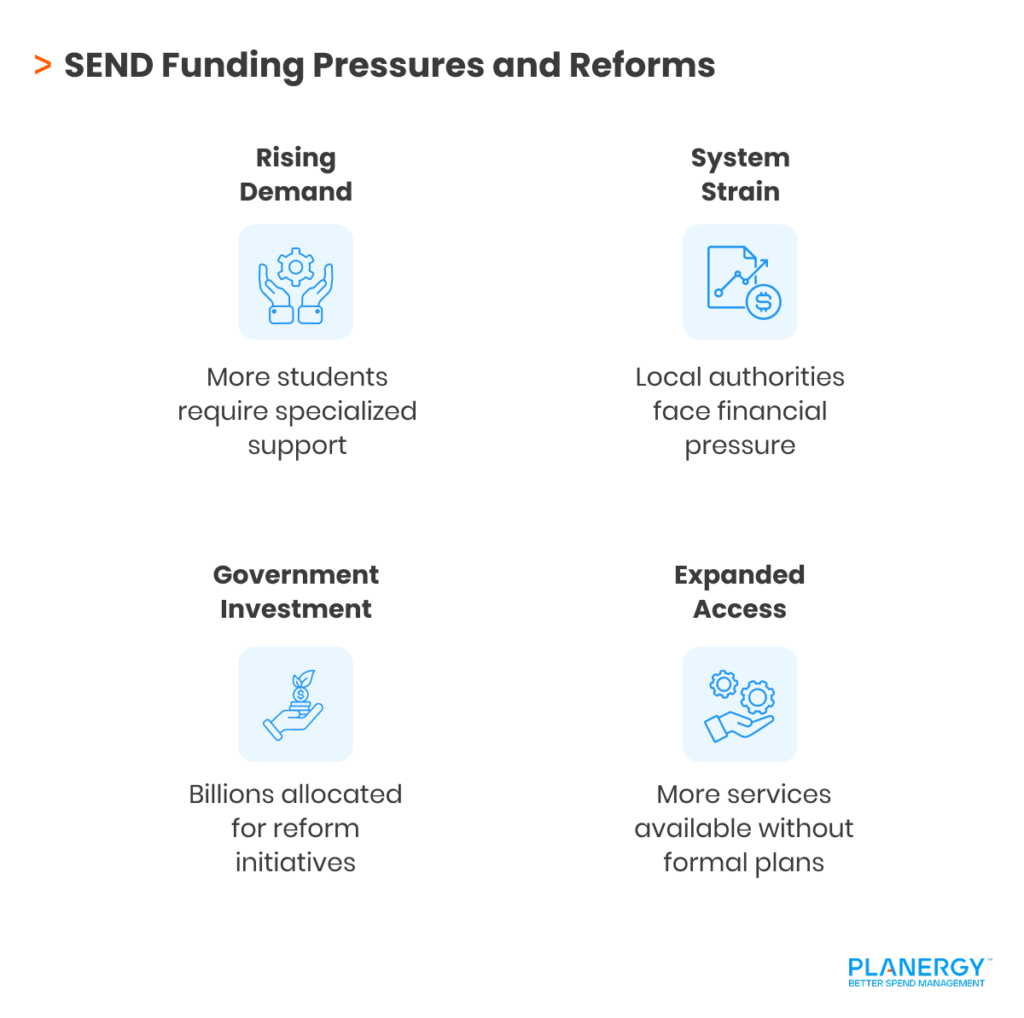
SEND Funding Pressures and Reforms

Capital Funding for School Buildings

Capital funding covers the physical buildings and facilities schools need. This money cannot pay for the daily running costs. Instead, it covers construction projects, major renovations, and significant improvements.

Schools access capital funding through several programmes. The Condition Improvement Fund helps voluntary-aided schools and academies with building repairs. Devolved Formula Capital gives schools smaller amounts that they can manage for minor projects.

The condition of school buildings varies hugely across England. Some schools have modern facilities with up-to-date technology. Others operate from aging buildings needing constant repairs. These differences affect what schools can offer pupils.

The SEND Funding Crisis and Reform

Special educational needs and disabilities funding has become one of the biggest challenges in UK education in recent years.

About 1.7 million children in England have SEND. That works out to roughly one in five young people in schools across the country. The system designed to support them has faced growing strain.

SEND Funding Pressures and Reforms

The Institute for Government’s Performance Tracker found the SEND system is a source of particular concern. Some children and young people with special educational needs are missing out on support altogether, while soaring costs put local authorities’ financial sustainability at risk.

The government responded with major reforms in the 2026 Schools White Paper. According to FE News, the government announced £4 billion in SEND reforms as part of its white paper, Every Child Achieving and Thriving.

This investment includes several big changes. A £1.6 billion Inclusive Mainstream Fund will go directly to early years settings, schools, colleges, and post-16 providers for early intervention and targeted support.

A new £1.8 billion “Experts at Hand” service will create specialist banks in every local area, accessible without an Education, Health and Care (EHC) plan. This means children can get support from speech therapists, educational psychologists, and other specialists without their parents having to fight for a formal plan first.

The Education Hub blog explained that over four years, £7 billion of investment and new National Inclusion Standards will build the reformed system’s foundations.

Total high needs funding remains at £12 billion nationally in 2026/27, covering special schools, alternative provision settings, and support for pupils with the most complex needs.

Falling Enrollment and Its Impact

The number of pupils in schools is changing fast, creating major challenges for school funding.

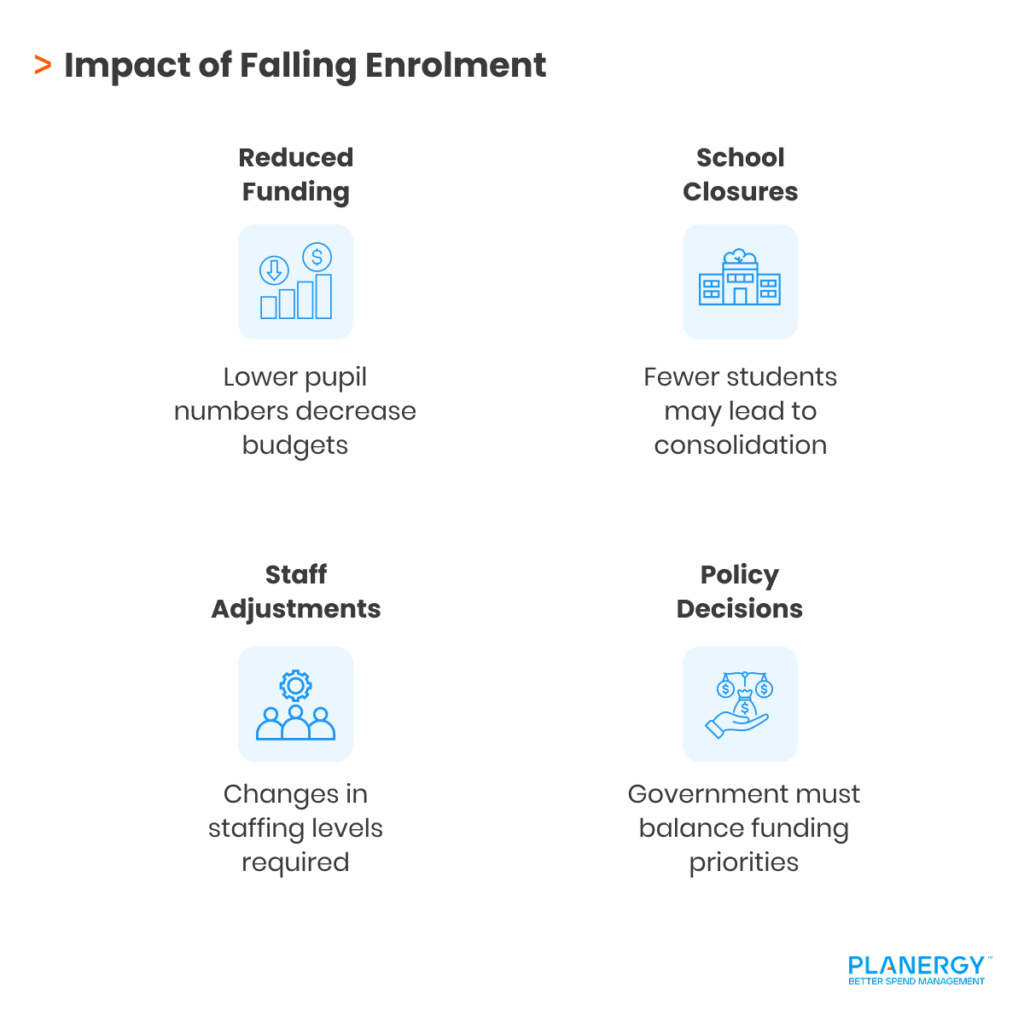
Impact of Falling Enrolment

Primary school numbers are dropping quickly. The Institute for Fiscal Studies projects the primary pupil population will fall by over 300,000 between 2024-25 and 2030-31, representing about 8%.

The secondary pupil population is expected to fall by about 100,000 or 4%, with these falls starting from 2026-27.

Some regions face much sharper drops. IFS analysis found primary pupil numbers fell by 9% in London between 2016 and 2025, compared to 3% in Scotland and 4% in Wales.

These demographic shifts leave policymakers with choices. They could use falling numbers to make savings by reducing schools and teachers. Alternatively, they could increase per-pupil funding and reduce class sizes.

The Education Policy Institute modeled how this affects different phases. Primary funding will be overtaken by secondary funding in 2026-27. In 2023-24, total primary school funding was 5.9% higher than secondary.

All regions will see primary funding decrease between 2023-24 and 2029-30, with the North East facing the largest drop at 9.0% and the East of England seeing just 1.2%.

Regional Inequality in Funding

Despite the National Funding Formula’s goal of creating fairness, significant regional differences remain. Moreover, the recent pandemic made existing inequalities worse.

Institute for Government research showed educational inequalities across English schools widening at an alarming rate, with some gaps growing to their greatest extent in a decade. Disadvantaged pupils, and those with special educational needs, faced the greatest setbacks.

IFS research highlighted a troubling pattern: schools serving the most disadvantaged children have faced the biggest spending cuts over time.

The Northern Health Science Alliance recommends allocating additional funding to secondary and post-16 providers supporting young people from disadvantaged areas.

Sixth form and further education face their own challenges. Funding per student in colleges is around 8% lower than in 2010-11 and around 20% lower in school sixth forms. This affects young people’s options after they finish their GCSEs.

Schools Asking Parents for Money

With budgets under pressure, many schools ask parents for financial help. This raises questions about fairness and what state education should provide.

Schools Week found that outstanding-rated schools raise almost twice as much through parental donations as those rated inadequate. Grammar schools raise five times more than non-selective neighbours.

Schools have always asked for trip donations, but now they use contributions for capital projects and curriculum provision. Some schools described being “desperate for funding” and set recommended rates as high as £20 per child monthly.

This raises questions around fairness. Schools in wealthy areas tap into wealthier parent communities. Schools in deprived areas struggle. The entitlement to free state education feels unequal when some schools offer much more than others.

What School Leaders Need to Know

Understanding funding helps school leaders plan and advocate effectively.

Know your numbers inside out. Understand how your funding gets calculated, which factors drive allocations, and how you compare to similar schools. This forms the foundation of effective advocacy.

Watch the policy direction carefully. The move toward a “hard” National Funding Formula means the DfE will eventually set funding directly. Get involved in consultations. According to Kids charity, there is a 12-week consultation on SEND reforms running until 18 May 2026.

Plan for demographic change. Pupil numbers will continue declining after 2030. Schools need strategies accounting for significant shifts in enrollment. Build strong relationships with local authorities, who still distribute funding and coordinate high needs provision.

Why Understanding Funding Matters

The Road Ahead

Several major questions will shape school funding over the coming years.

Success depends on more than money. As one analysis noted, the government white paper reforms will depend on consistent implementation across every school.

SEND creates particular fiscal challenges. News coverage highlighted that covering SEND costs currently paid by local councils from 2028 creates £6 billion pressure on the national budget.

Free school meals expansion brings another change. From September 2026, all children in households receiving universal credit will qualify.

The core tension remains unresolved. Demand for services keeps growing while budgets face constraints. School leaders, parents, and policymakers recognize the system isn’t working as well as it should.

The question is whether reforms come fast enough, with enough resources, to make a real difference for young people in schools today.

For school leaders, engage proactively with funding decisions. For governors, scrutinize how funding gets used. For parents, respond to consultations and contact MPs about concerns.

Those who understand the system will be best placed to advocate for the children they serve.

What’s your goal today?

1. Use PLANERGY to manage purchasing and accounts payable

We’ve helped save billions of dollars for our clients through better spend management, process automation in purchasing and finance, and reducing financial risks. To discover how we can help grow your business:

2. Download our guide “Preparing Your AP Department For The Future”

Download a free copy of our guide to future proofing your accounts payable department. You’ll also be subscribed to our email newsletter and notified about new articles or if have something interesting to share.

3. Learn best practices for purchasing, finance, and more

Browse hundreds of articles, containing an amazing number of useful tools, techniques, and best practices. Many readers tell us they would have paid consultants for the advice in these articles.

Business is Our Business

Stay up-to-date with news sent straight to your inbox

PLANERGY LOGO

Sign up with your email to receive updates from our blog