
What's PLANERGY?

Modern Spend Management and Accounts Payable software.

Helping organizations spend smarter and more efficiently by automating purchasing and invoice processing.

We saved more than $1 million on our spend in the first year and just recently identified an opportunity to save about $10,000 every month on recurring expenses with PLANERGY.

King Ocean Logo

Cristian Maradiaga

King Ocean

Download a free copy of "Preparing Your AP Department For The Future", to learn:

  • How to transition from paper and excel to eInvoicing.
  • How AP can improve relationships with your key suppliers.
  • How to capture early payment discounts and avoid late payment penalties.
  • How better management in AP can give you better flexibility for cash flow management.

The Role Of A Modern CFO: Changing With The Times


The highest-ranking financial officer in a business, the Chief Financial Officer (CFO) is responsible for maintaining the financial health of a business.

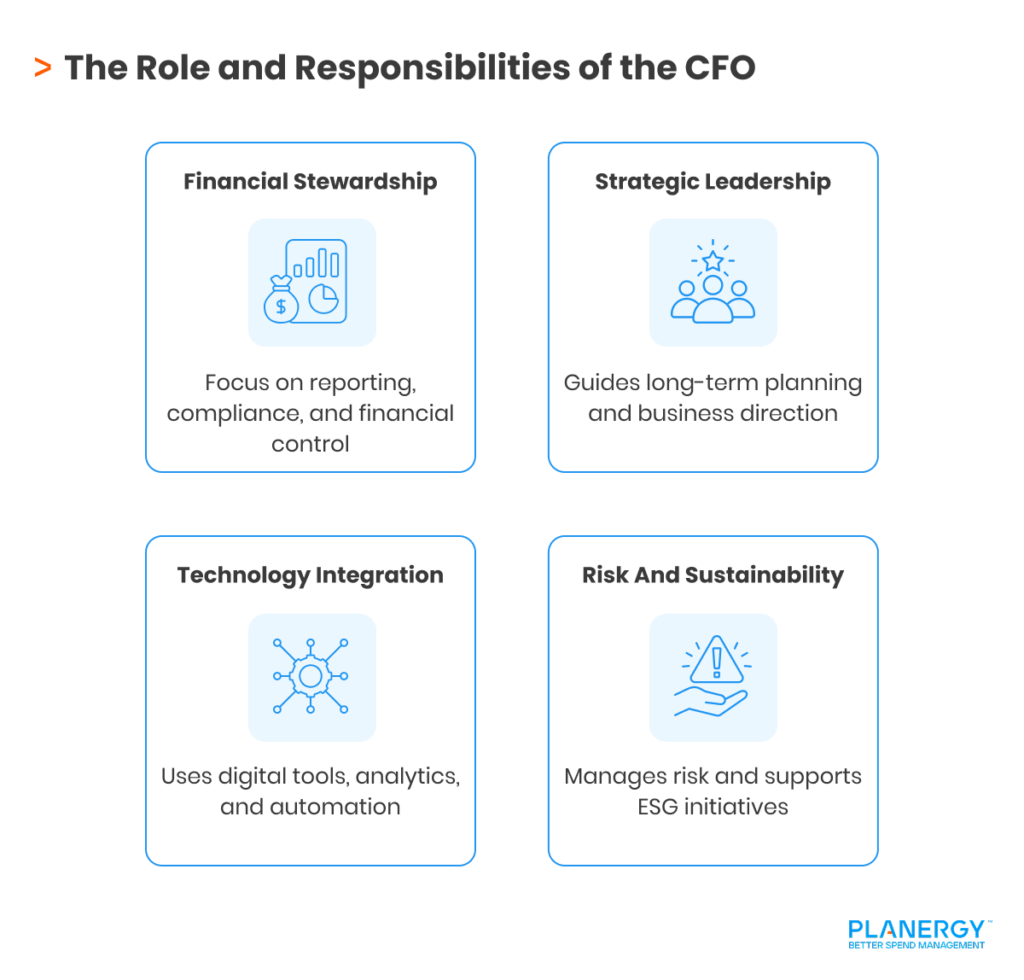
But in the last few decades, the role of the CFO has changed dramatically from a focus on financial stewardship and compliance to a more proactive role, which now includes strategic leadership and risk management oversight.

What is a CFO and What Do They Do?

A CFO is a senior executive responsible for managing the financial health of a business, including financial planning, risk management, record keeping, and financial reporting, while ensuring the company complies with all regulatory agencies.

Traditionally, the CFO’s focus was on financial statement management, overseeing the preparation of statements from the finance team.

In its more traditional role, the CFO also managed budgets, assisted with strategic planning, actively monitored cash flow, and was actively involved in investment decisions.

In recent decades, the role of the CFO has evolved considerably. While a CFO is still responsible for reporting on the financial position of a business, the role has expanded to include technology, analytics, and corporate sustainability.  

The modern CFO now tends to play a more active role in digital transformation projects, mergers & acquisitions, and social responsibility.
Key Responsibilities of the CFO

What is the Main Goal of a CFO?

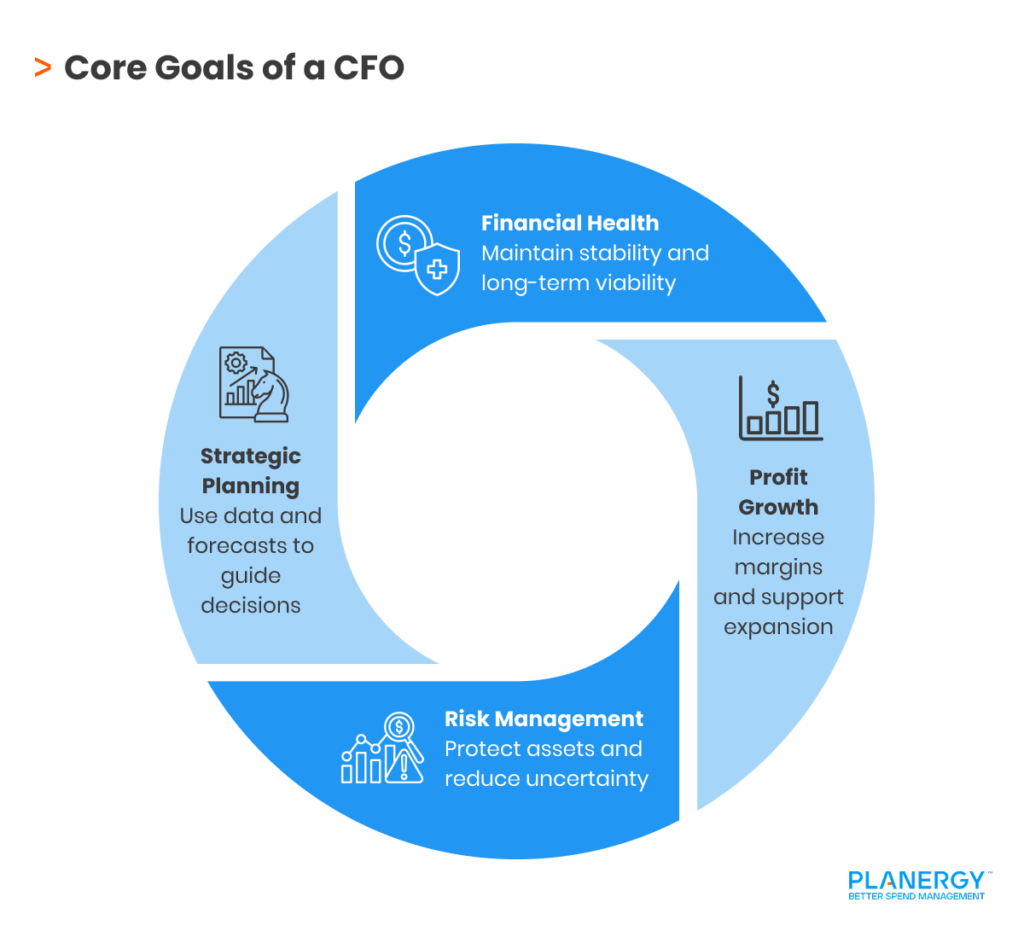
The main goal of the CFO is to facilitate long-term financial health, sustainability, and profitability. This is done by implementing revenue growth strategies that will increase profit margin and enable future expansion.

Core Goals of a CFO

The CFO also plays a key role in strategic planning by creating KPIs and other metrics, creating organizational budgets, and other forecasting models, and managing cash flow.

Finally, the CFO needs to properly manage risk to safeguard company assets while building trust with investors, the board of directors, regulatory agencies, and the general public.

Finally, the CFO needs to properly manage risk to safeguard company assets while building trust with investors, the board of directors, regulatory agencies, and the general public.

What are the Four Major Roles of a Chief Financial Officer?

While finance remains the main focus for a CFO, the position requires a specific skill set that rests on four major interacting roles.  

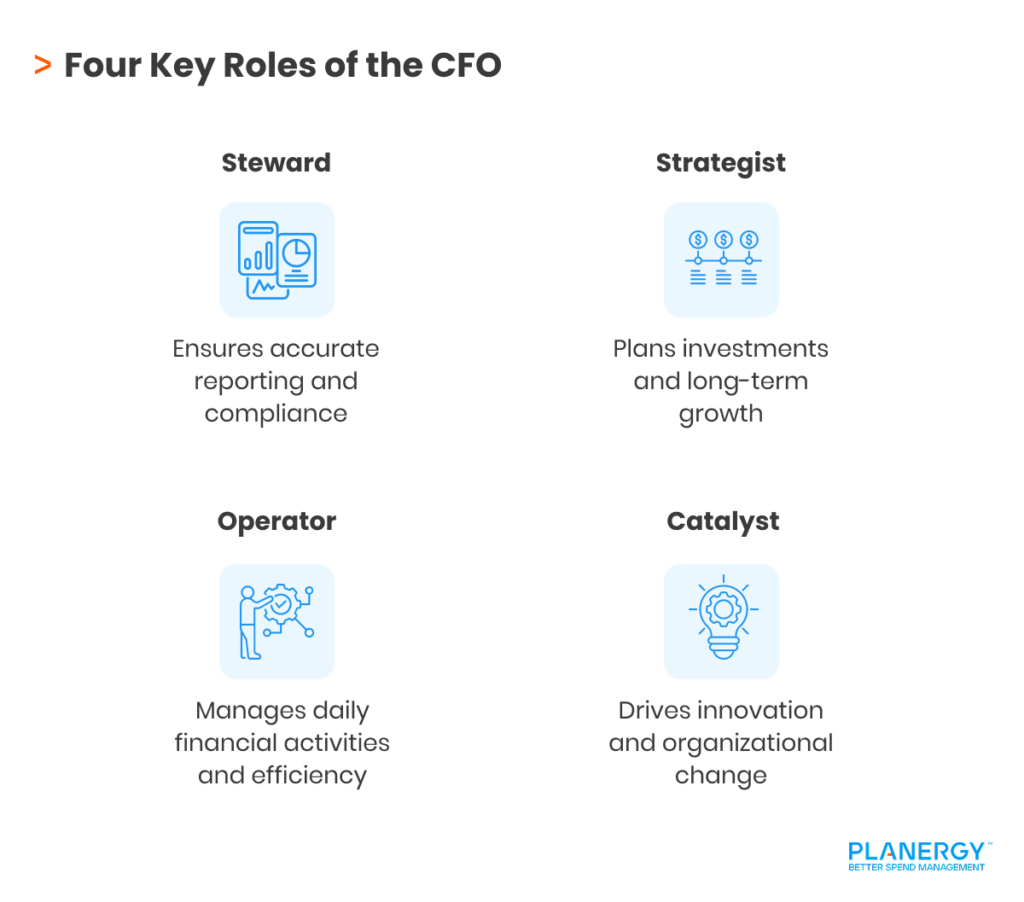
Four Key Roles of the CFO

1. Stewardship

Perhaps the most important role of a CFO is stewardship. A CFO oversees general finance functions, ensuring that financial reporting is accurate and that the financial health of the business is protected.

Key stewardship responsibilities include:

  • Accurate Financial Reporting
    CFOs are tasked with producing and maintaining clear, concise financial statements for investors, customers, regulatory agencies, and management.
  • Regulatory Compliance
    The CFO ensures companies, particularly publicly held ones, adhere to regulatory standards, such as Securities and Exchange Commission (SEC) reporting obligations, and to corporate governance standards and disclosure requirements.
  • Risk Management
    One of the most important roles that falls to the CFO is managing and mitigating financial risks. This includes performing due diligence on investments and assessing both credit risk and operational risk.

2. Strategist

While the CFO actively manages day-to-day financial activities, they’re also tasked with long-term financial planning, including.

  • Investment Planning
    CFOs are tasked with developing and deploying investment strategies that can balance healthy returns against corporate responsibility to better meet investor standards.
  • Capital Deployment Strategies
    Finding the right investment markets is always a challenge. It’s up to the CFO to identify areas for responsible investment while maintaining fiscal growth.
  • Future Planning
    Once the sole responsibility of the CEO, the CFO is now an active participant in creating long-term plans that factor in economic shifts, demographic changes, or increased competition.

3. Operator

The operator focuses more on day-to-day activities that have typically been part of the CFO’s responsibilities.

  • Improved Reporting
    CFOs report on key performance indicators (KPIs) and other metrics to review progress, locate trouble spots, and ensure that financial activities are in alignment with the company’s goals.
  • Optimizing Internal Processes
    Accuracy is key in finance, so part of the CFO’s job is to leverage the latest technology, such as automation and AI, to streamline financial operations and increase both speed and accuracy.
  • Managing Costs
    Keeping costs manageable and finding ways to reduce costs are part of the CFO’s responsibility.

4. Catalyst

The catalyst is perhaps the newest role taken on by the CFO, which includes driving progress, embracing change, and making sure that the organization is positioned for future success.

  • Digital Transformation
    Ensuring financial growth and success requires the latest technology. CFOs must lead the way in adopting AI, machine learning, and robotic process automation (RPA) to improve internal processes and customer offerings.
  • Regularly Assess Financial Products
    While things like cryptocurrency may not be a path your business is likely to take, it’s the role of the CFO to regularly assess all financial products to determine their usefulness in your organization
  • Promoting Technology Adoption and Usage
    People are often hesitant to embrace a new process. The CFO can create a culture that embraces the latest technology and encourages employees to do the same.

What Authority Does a CFO Have?

The Chief Executive Officer (CEO) and Chief Financial Officer (CFO) are the two highest-ranking officers in the C-Suite, each playing a role in company sustainability, growth, and expansion.

While each is important, their roles are different:

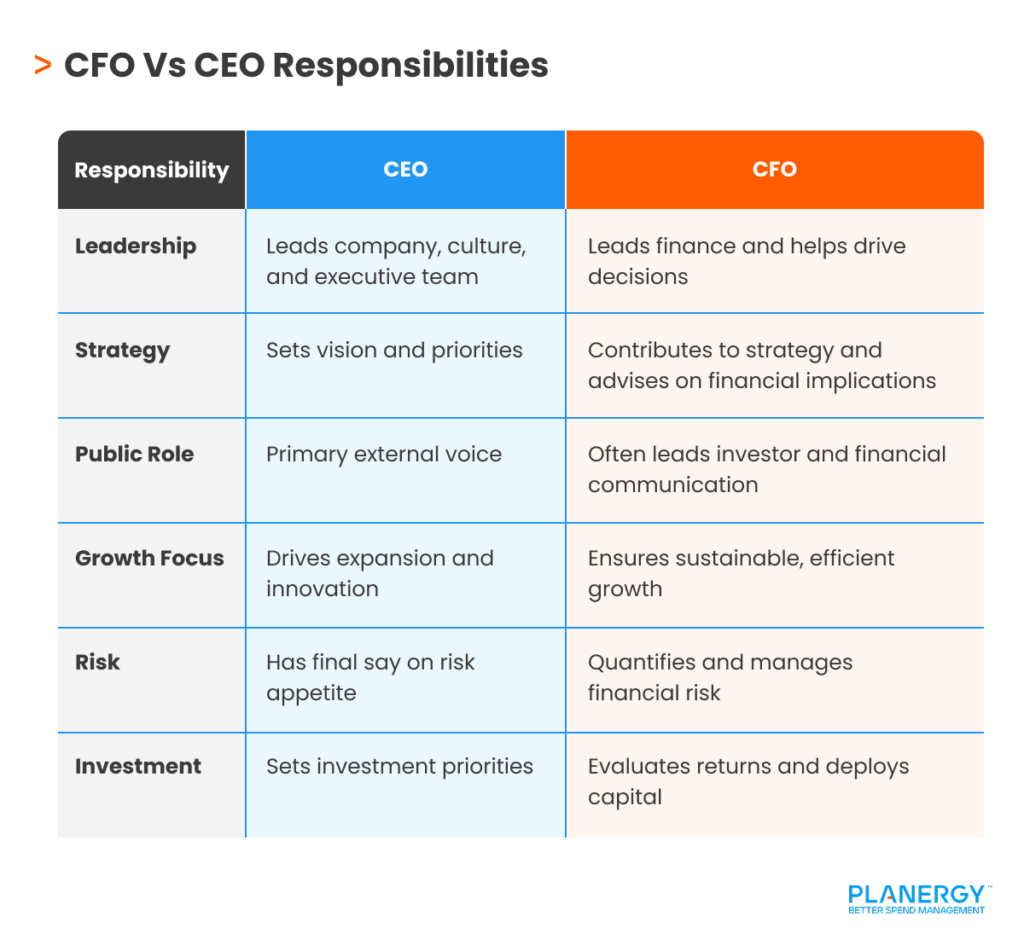
CFO Vs CEO Responsibilities

The CEO:

The CFO:

Leads the entire company

Manages all company finances

Drives strategy and innovation

Ensures that strategy and innovation is financially sustainable

Serves as the face of the company to the public and shareholders

Reports accurate, timely financial reports to the board, shareholders, and the public

Drives market expansion

Optimizes existing markets

Sets appropriate risk levels

Manages risk levels

Determines investment strategy

Manages investment strategy

Drives product development

Manages product profitability and expansion

What Can I Expect in a CFO Job Description?

The job description for a CFO varies depending on the company’s size and scope. For instance, the job description for a CFO for a private company will differ from that of a Fortune 500 company.

Here is an example list of common skills and experience required for the role of CFO:

  • A bachelor’s degree in accounting and finance
  • An MBA or CPA is highly desirable and likely required for larger, global organizations
  • A minimum of ten years of experience in finance and/or accounting
  • Strong understanding of financial planning and analysis, accounting principles, and risk management
  • Experience developing financial strategies that align with organizational goals
  • Strong leadership and financial management skills
  • Excellent communication skills
  • Ability to work with all levels of management
  • Experience in investor relations

These generic requirements can be easily customized to better suit your business.

For instance, if you’re a start-up, you may want a CFO with experience working with venture capital firms and private equity partners, while a software company would likely want to see an understanding of SaaS business models and revenue recognition.

What Soft Skills Do Finance Leaders Need?

Along with proven financial skills and experience, today’s CFOs should also have soft skills that enhance their current role.

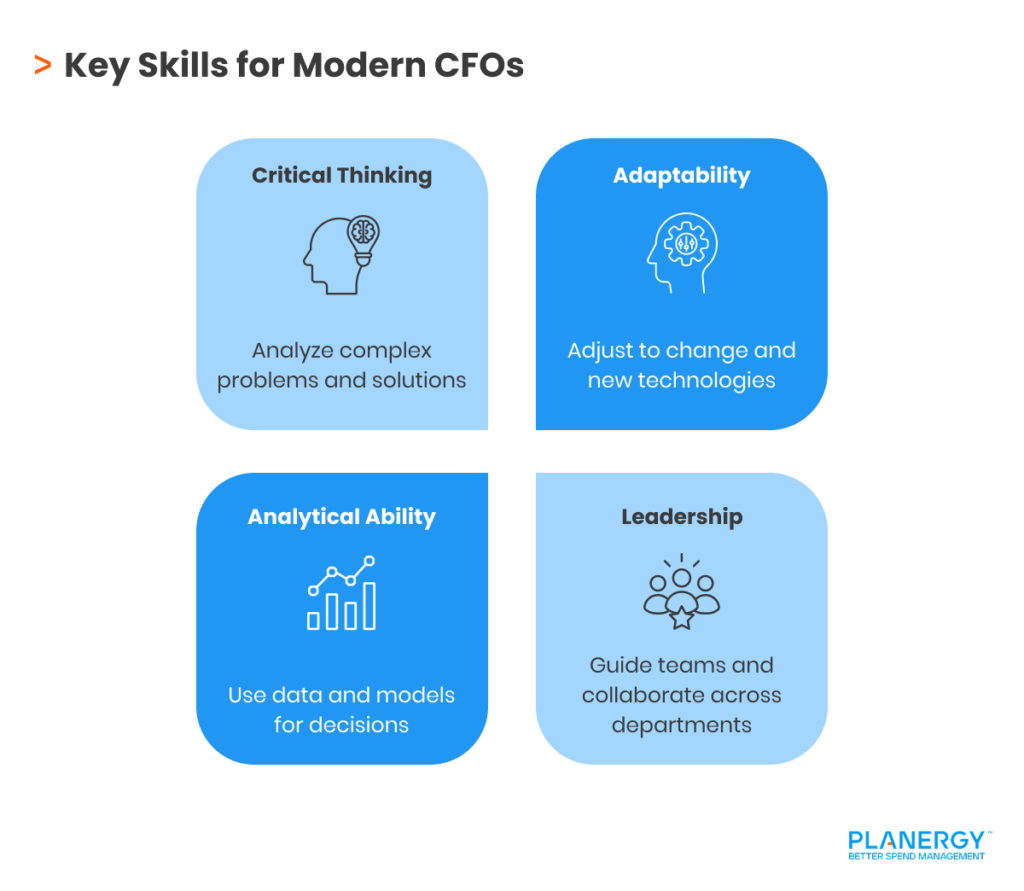
Key Skills for Modern CFOs

Critical Thinking Skills

All CFOs should be able to identify complex problems and analyze various solutions to those problems using thorough in-depth analysis and critical thinking skills.

Adaptability

As CFOs collaborate more with the CEO, the ability to adapt to a fast-paced environment is key, as is the ability to adapt to new and changing technologies and processes.

Analytical Skills

Experience in scenario modeling, risk assessment, and quantitative skills can help CFOs make complex decisions, while experience with financial software and Microsoft Excel helps drive the finance and accounting departments forward.

What Role Do CFOs Play in ESG Initiatives?

CFOs are a key part of Environmental, Social, and Governance (ESG) initiatives, playing an essential role in both financial strategy and resource allocation, while helping to identify and mitigate issues such as climate change, regulatory requirements, and social factors that may now or in the future impact the financial stability of a company.

CFOs can also help identify issues that may be of concern to investors or customers, and propose actions to address those concerns.

For instance, Microsoft and Intel focus on the environment, both pledging to reduce greenhouse gases, while Google focuses on social issues such as diversity, equity, and inclusion.

How Does a CFO Contribute to a Company’s Strategic Planning?

Strategic planning was once left to the CEO, but CFOs are now strategic partners shaping the direction of a company, managing risks, contributing to investment decisions, and aligning company goals with performance metrics and strategic direction.

In addition, CFOs handle:

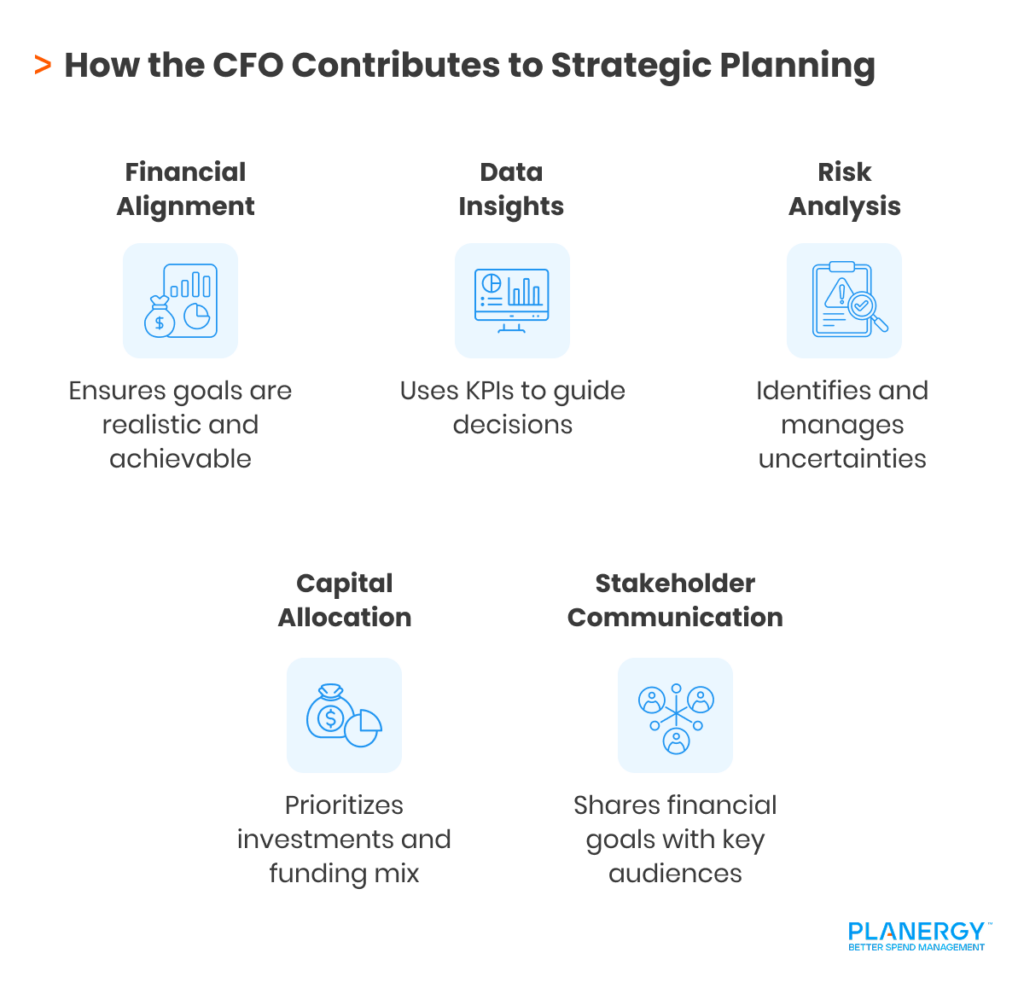
CFO Strategic Planning Contributions

  • Financial and Operational Alignment
    The CFO ensures that the strategic goals identified by the CEO are viable and attainable.
  • Data-Driven Decisions
    By using goals and KPIs, CFOs can turn key financial data into the insights needed to set and achieve goals.
  • Risk Management
    Every decision made carries risk. It’s the CFO’s job to identify and manage that risk.
  • Capital Management
    Successful businesses usually invest in multiple projects. The CFO helps identify which projects are likely to succeed while optimizing the mix of debt and equity a business carries to remain flexible.
  • Stakeholder Communication
    CFOs are the best people to communicate financial goals and objectives to a wide audience that includes customers, investors, board members, and regulatory agencies.

What Are Fractional CFOs and Are They Just Accountants and Bookkeepers?

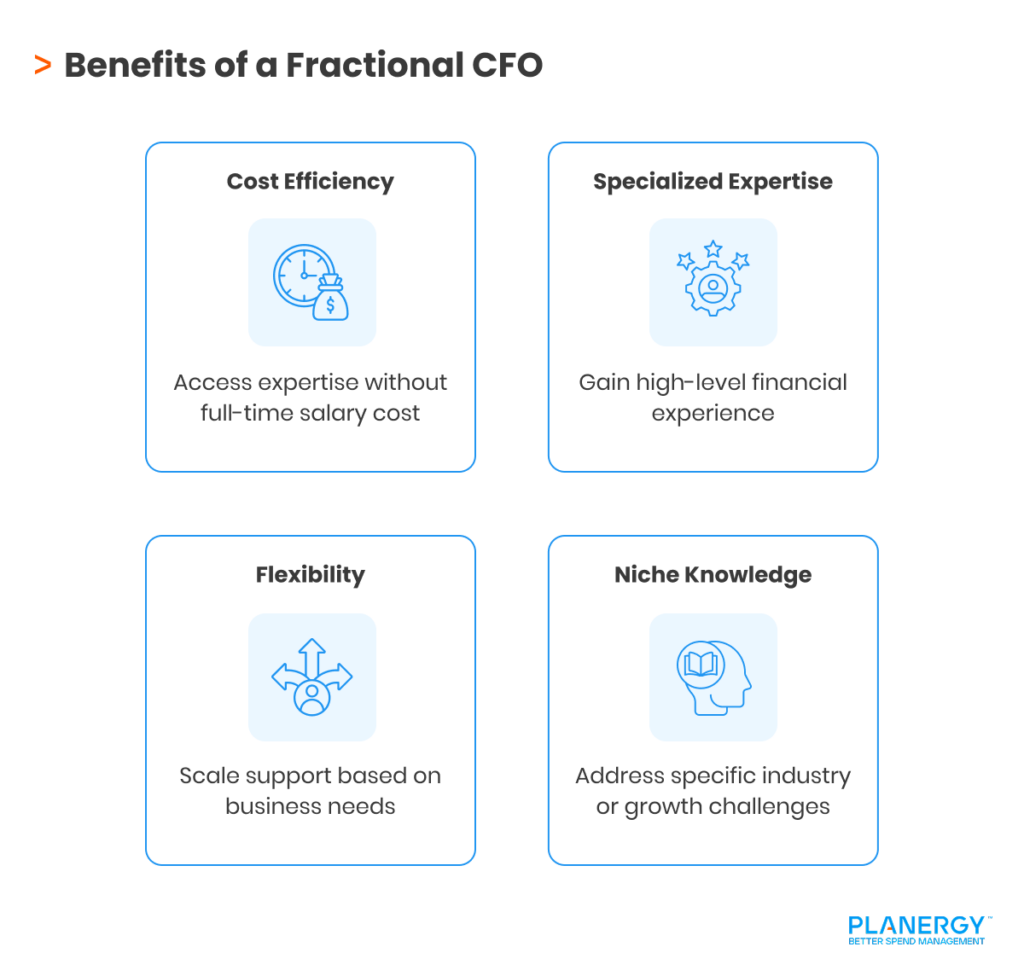
Just about any business, small or large, can benefit from the financial expertise of a CFO. However, many small businesses may not have the ability to hire a full-time financial professional in this role. That’s where the fractional CFO comes in.

Benefits of a Fractional CFO

A fractional CFO provides strategic financial planning, cash flow management, financial forecasting and modeling, and goal setting and KPI tracking on a part-time or contract basis.

A fractional CFO is not an accountant or a bookkeeper, but someone with the skills and experience needed to navigate complex financial issues.

Ideal for small businesses, start-ups, or companies that don’t need a full-time CFO, hiring a fractional CFO can help your business grow and evolve.

There are several advantages to hiring a fractional CFO, including:

  1. Cost Effectiveness
    While every business can benefit from having a CFO on staff, the truth is that many small businesses and SMBs are unable to afford the full-time salary of a financial expert, particularly when starting out.

Hiring a fractional CFO allows you to hire an experienced corporate finance professional whom you can turn to when needed.

  1. Specialized Experience:
    Even if you have an experienced accountant on staff, you’ll still benefit from the seasoned experience a CFO brings. While your accountant may be excellent at their job, they won’t have the knowledge that an experienced CFO brings.
  2. Flexibility:
    Finding the right person who shares your vision may be difficult. Hiring a fractional CFO provides the opportunity to find out what skills and experience are important for your company without the formal commitment that hiring a full-time CFO brings.
  3. Niche Expertise:
    Hiring a fractional CFO skilled in a particular area helps you address potential issues. For instance, a start-up could benefit from hiring a fractional CFO skilled in handling common startup issues like venture capital funding, while a nonprofit can benefit from a CFO skilled in raising funds.

The Future of The CFO Role

It’s likely that moving forward, the future CFO will be seen as an equal partner to the CEO.

This may involve more focus on creating new or improved business models, overseeing mergers and acquisitions, and helping to identify and drive future growth through a strategic decision-making process.

As the role of the CFO continues to evolve, many see the role shifting slightly from a traditional financial steward to a more strategic role within an organization that drives both financial sustainability and innovation.

While continuing to manage the financial well-being of a business through financial reporting, regulatory compliance, and cost-cutting, CFOs will also be expanding their current set of responsibilities to help enhance a company’s future financial performance.

In addition, CFOs will likely be the key drivers behind AI, automation and other new technology adoption, as a way to enhance decision-making and financial planning today and well into the future.

What’s your goal today?

1. Use PLANERGY to manage purchasing and accounts payable

We’ve helped save billions of dollars for our clients through better spend management, process automation in purchasing and finance, and reducing financial risks. To discover how we can help grow your business:

2. Download our guide “Preparing Your AP Department For The Future”

Download a free copy of our guide to future proofing your accounts payable department. You’ll also be subscribed to our email newsletter and notified about new articles or if have something interesting to share.

3. Learn best practices for purchasing, finance, and more

Browse hundreds of articles, containing an amazing number of useful tools, techniques, and best practices. Many readers tell us they would have paid consultants for the advice in these articles.

Business is Our Business

Stay up-to-date with news sent straight to your inbox

PLANERGY LOGO

Sign up with your email to receive updates from our blog