
What's PLANERGY?

Modern Spend Management and Accounts Payable software.

Helping organizations spend smarter and more efficiently by automating purchasing and invoice processing.

We saved more than $1 million on our spend in the first year and just recently identified an opportunity to save about $10,000 every month on recurring expenses with PLANERGY.

King Ocean Logo

Cristian Maradiaga

King Ocean

Download a free copy of "Preparing Your AP Department For The Future", to learn:

  • How to transition from paper and excel to eInvoicing.
  • How AP can improve relationships with your key suppliers.
  • How to capture early payment discounts and avoid late payment penalties.
  • How better management in AP can give you better flexibility for cash flow management.

Agentic AI in Accounts Payable: Use Cases, Risks, and Controls

KEY TAKEAWAYS

  • Agentic AI goes beyond traditional automation by independently reasoning, planning, and acting to manage complex Accounts Payable workflows with minimal human intervention.
  • In AP operations, agentic AI improves efficiency through automated invoice capture, intelligent approvals, three-way matching, fraud detection, and real-time cash flow management.
  • Unlike traditional RPA, which follows fixed rules, agentic AI continuously learns, adapts to exceptions, and can resolve issues without constant oversight.
  • Successful adoption of agentic AI depends on strong governance, audit transparency, security controls, and balancing automation with human oversight to reduce risk and build trust.


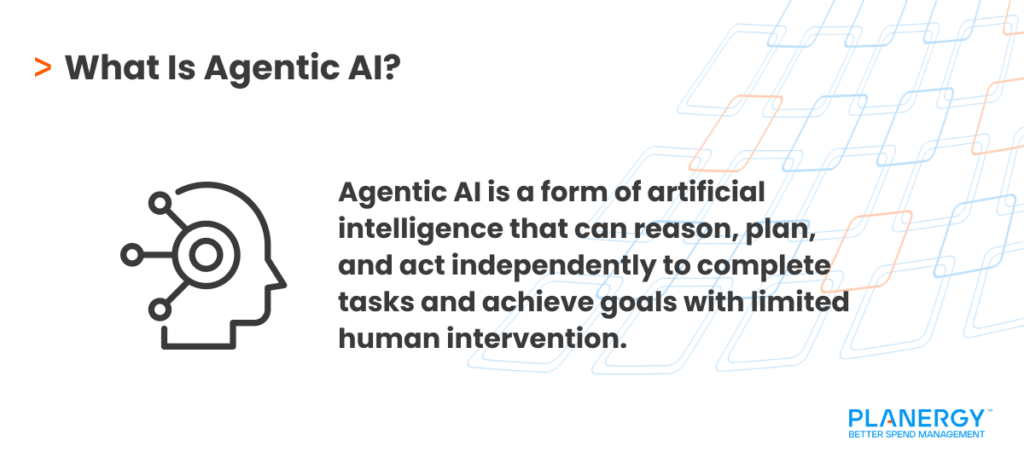
Agentic AI is designed to take artificial intelligence (AI) to the next level, moving beyond text prompts to run independently.

Instead of responding to a simple prompt like traditional AI, agentic AI is designed to operate with limited human interaction to meet stated goals and objectives.

What are AI agents?
What Is Agentic AI

AI agents are a type of software designed to work with automated applications or ERPs, responding to goals and rules set by human interaction.

Going beyond simple AI, AI agents can show reason, planning, and memory, using a level of autonomy to make decisions.
Traditional AI vs Agentic AI

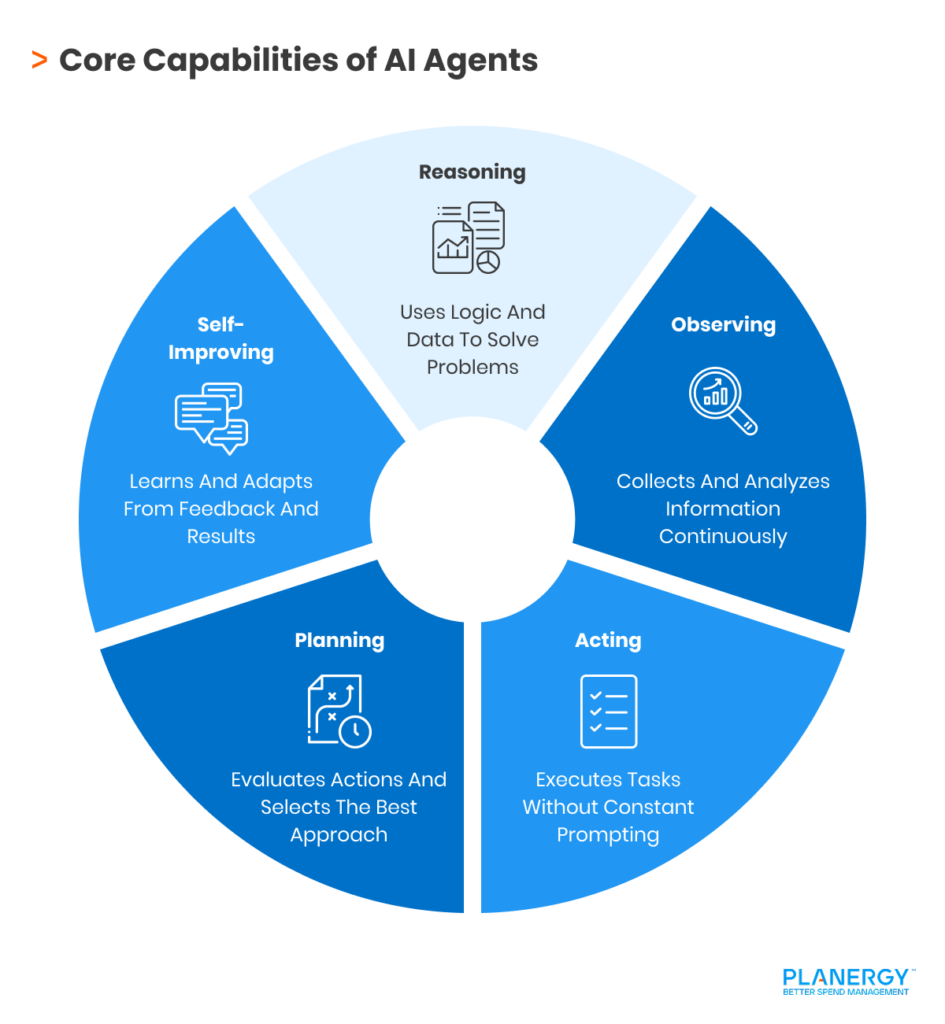
The key features of AI agents include:

  • Reasoning
    An AI agent uses logic and available data to draw conclusions and solve problems by analyzing available data, identifying patterns, and then making informed decisions.
  • Observing
    AI agents gather information through perception, natural language processing, and data analysis.
  • Acting
    AI agents take action without prompting, performing tasks based on decisions or external input, such as sending messages, and updating or processing data.
  • Planning
    AI agents can identify necessary steps, evaluate the results of those steps, and choose the best course of action, including identifying potential obstacles.
  • Self-Improving
    AI agents learn from experience and adjust their behavior based on feedback to enhance performance over time, usually involving machine learning and optimization algorithms.
Examples of Agentic AI

With most of us already familiar with some form of AI, it may be difficult to understand what agentic AI does that traditional AI doesn’t.

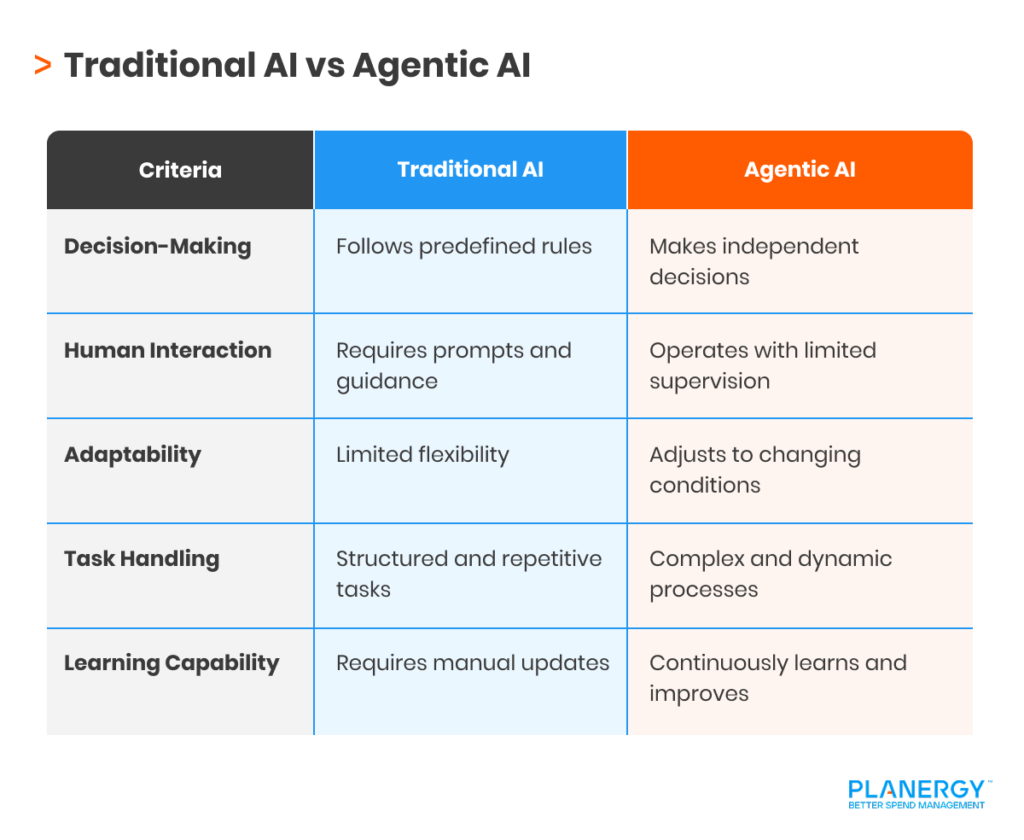
Traditional AI Systems

Agentic AI

Designed to follow traditional rules and established algorithms

Can make independent decisions using real-time data

Relies on human input for changes and improvements

Needs limited human interaction by adapting to the environment and interactions

Responds only to predefined prompts

Anticipates needs and acts without prompts

Well-suited for structured tasks

Suitable for complex processes that require flexibility


A good example of agentic AI is its use in marketing. Let’s say that you create a marketing campaign for your business and want to know how successful it is.

If you use traditional AI, it can give you the basics, but agentic AI will take it further by adjusting the marketing message based on user interaction. Agentic AI can also help identify repeat customers and engaged users and create a targeted message for that specific audience.

Finally, agentic AI is able to anticipate user action, identify risks such as declining audience engagement, and make proactive adjustments to the campaign without any human interaction necessary.

How is Agentic AI Used?

Most of us have used AI prompts for creating email or helping write a report. What we’ll explore next is how agentic AI can be used by finance teams.

Core Capabilities of AI Agents

Finance & Accounting

Agentic AI in finance and accounting offers the following uses:

  • Improved Fraud and Risk Management
    Agentic AI can be used to analyze patterns that can detect and investigate possible fraud
  • Analyzes Market Data
    Finance professionals can use agentic AI to analyze current market data, simulate multiple scenarios, and execute trades to improve investment portfolios
  • Automates Reconciliation and Reporting
    Reconciling accounts and running reports are two traditional tasks that agentic AI can improve by constantly reconciling accounts, conducting variance analysis, and creating accurate, real-time reports
  • Cash Management
    Agentic AI monitors cash flow daily and can predict cash flow shortages while managing payments

Banking

Banking is another area where agentic AI is helpful

  • Fraud Detection
    Agentic AI can continuously monitor transactions for possible fraud, with the ability to pause suspicious activity immediately
  • Loan Underwriting and Credit Approval
    Agentic AI can quickly assess loan risk and approve applications quickly
  • Compliance and Risk Management
    Agentic AI automates Know Your Customer (KYC), handles regulatory reporting, and helps manage liquidity and associated risks
  • Customer Service
    Agentic AI offers personalized financial advice around the clock and can manage routine customer tasks without the need for human interaction

Accounts Payable

Manual processes have traditionally been a part of the Accounts Payable department. By streamlining routine tasks, the Accounts Payable department can certainly benefit from an AI-driven ecosystem.

  • Processes Invoices From All Sources
    Regardless of whether an invoice is faxed, emailed, or received in the mail, agentic AI can extract, parse, and standardize the information easily
  • Faster Invoice Approvals
    Once invoice information has been parsed, it can automatically be sent to the appropriate approvers without interruption
  • Quicker Payment Cycle
    Faster approvals mean faster invoice processing, including the option to take advantage of early payment discounts
  • More Accurate Reporting
    Since every invoice, payment, and exception is available in real time, reports are more accurate and audit-ready

What are the Benefits and Drawbacks of Implementing Agentic AI in Accounts Payable?

While AP automation has certainly been beneficial to the AP department, agentic AI provides even more benefits.

Benefits

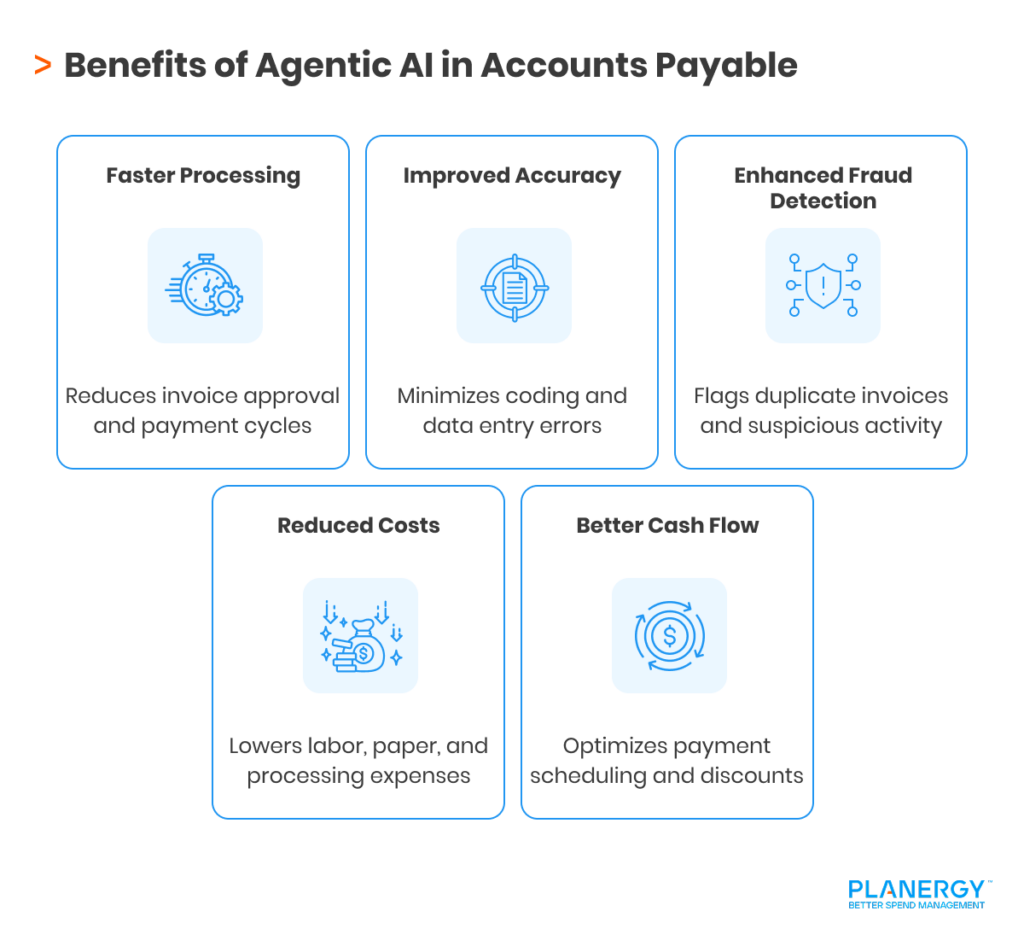
Benefits of Agentic AI in AP

Faster Invoice Processing
By converting manual processes to AI, you’ll be able to reduce invoice processing times, so you can process invoices and pay vendors and suppliers on time, improving supplier relationships.

Improved Accuracy
Agentic AI increases accuracy, eliminating errors typically found in manual data entry and expense coding, while providing complete three-way matching to identify exceptions

Enhanced Fraud Detection
Agentic AI can detect suspicious activity and several levels, looking for things such as change bank account numbers, duplicate invoices, and new vendor names and addresses

Reduced Costs
Manually processing AP costs money. Using agentic AI can save labor costs, paper costs, and postage

Improved Cash Management Capability
Agentic AI can analyze invoice payment terms and due dates, handle payment scheduling, assess cash availability, and identify early payment discount options

Drawbacks

While the benefits of agentic AI are significant, there are some drawbacks that you should be aware of.

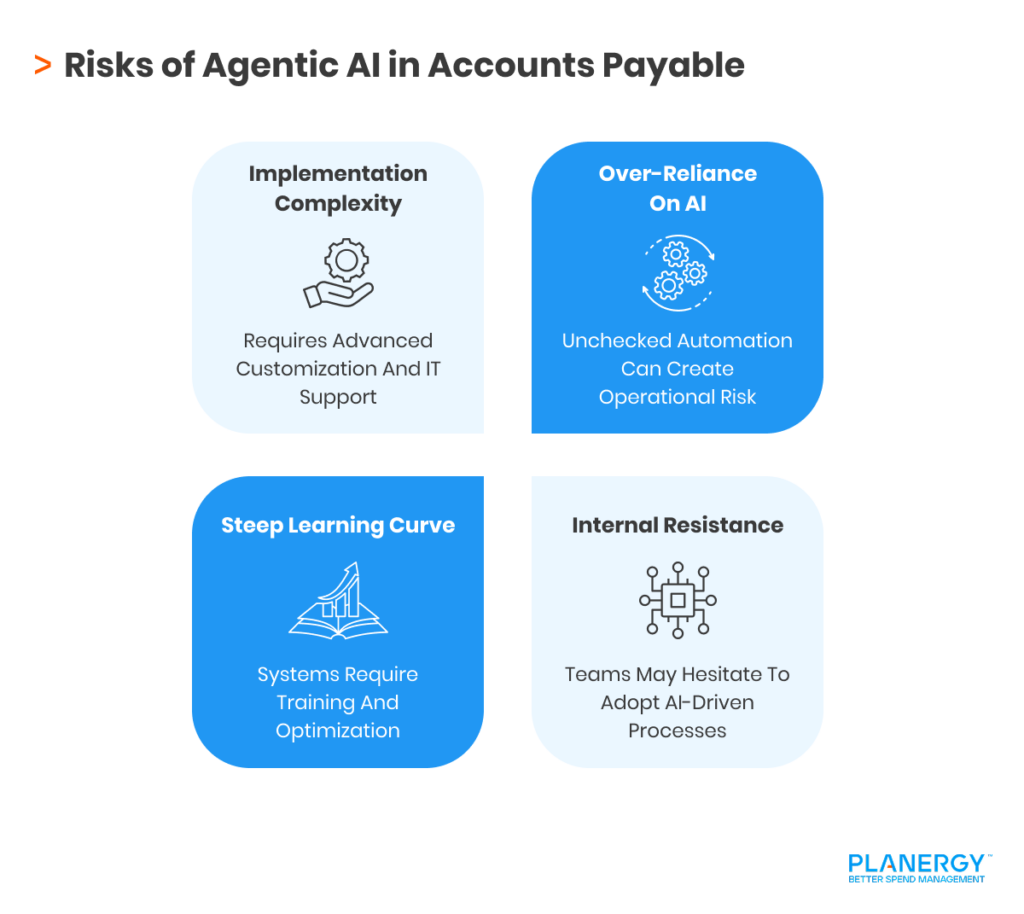
Risks of Agentic AI in AP

Implementation
Agentic AI requires a level of customization that requires advanced IT resources, which can be off-putting for small businesses with limited resources

Over-Reliance on AI
Using agentic AI may create a level of comfort that may be detrimental to your business if it’s left to run unchecked

Steep Learning Curve
Any type of AI implemented requires a specific training period to understand company patterns and business rules before it can be used without constant oversight

Internal Resistance
The AP team can be resistant to using AI for any number of reasons, which will need to be addressed

What is Robotic Process Automation’s (RPA) Role in Agentic AI?

Both robotic process automation and agentic AI automate workflows; it’s how they automate them that is the difference between the two.

RPA uses bots to automate predetermined, rule-based processes and is frequently used to streamline workflows or complete repetitive tasks.  

For agentic AI to work, it needs to rely on underlying systems such as machine learning and robotic process automation. If agentic AI is the brain, then RPA is the brawn, completing the repetitive tasks that AI has identified.

For instance, once AI has identified the necessary steps in the account reconciliation process, RPA is responsible for carrying those tasks out.  

How Does Agentic AI Differ from Traditional RPA in Accounts Payable?

Agentic AI requires little human intervention, offering both adaptability and exceptional data quality. Simply give it a goal and it will take complete the actions (and decision-making) necessary to complete that goal.

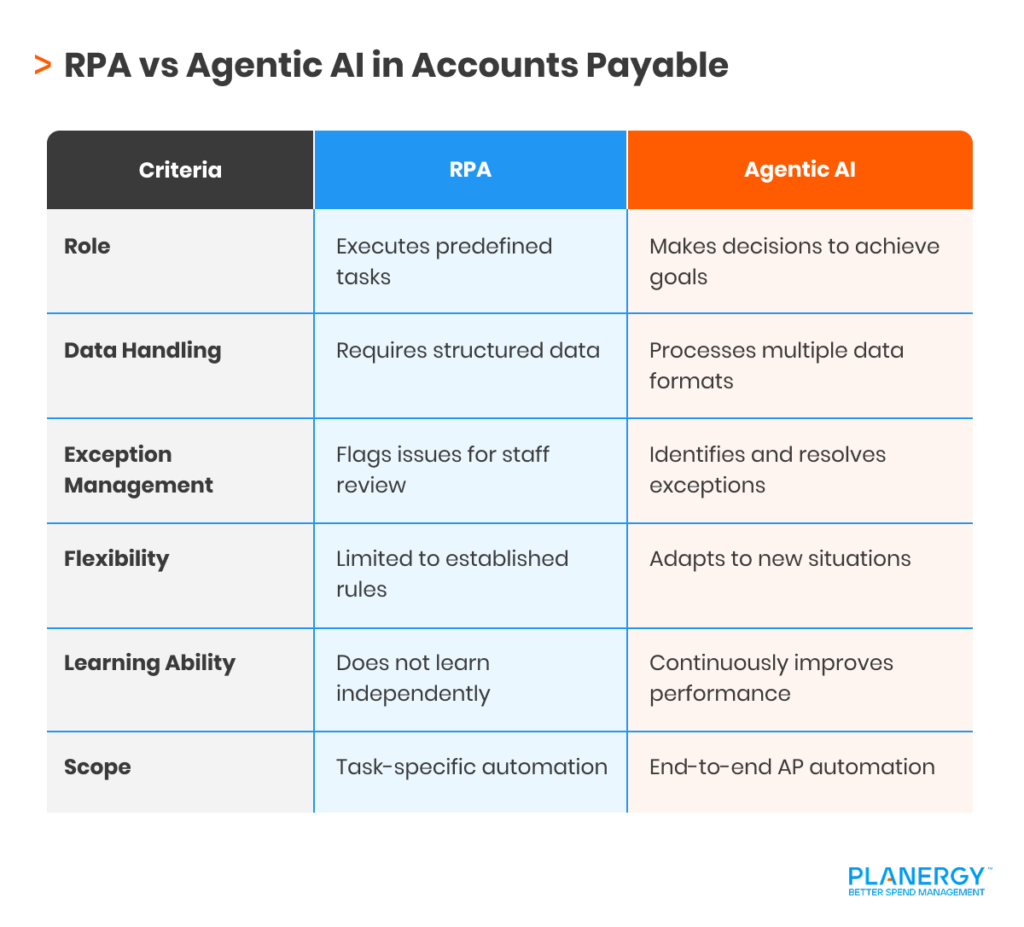
RPA vs Agentic AI in Accounts Payable

Since RPA requires established rules in order to work, those rules must be established before RPA can be useful.

For Accounts Payable, the two help automate the entire AP process, but in different ways.

Functionality

RPA

Agentic AI

Role

Uses established rules to execute tasks

Works from a set goal, making decisions without human interaction

Data

Requires a specific structure such as an invoice format

Processes data from all types of formats such as emailed, faxed, or PDF

Exceptions

Identifies exceptions and alerts staff

Identifies exceptions and discrepancies and resolves them

Flexibility

Since it’s rules-based, it is unable to be flexible should a rule be broken

Easily adapts to new scenarios and makes adjustments as needed

Learning

Does not learn without established rules

Continuously learns and adjusts

Scope

Simple, repetitive tasks

End-to-end accounts payable processing from procurement to payment

Because RPA handles rules-based tasks, it excels at eliminating simple, repetitive tasks. For some businesses, that is all they require. However, if you’re looking for end-to-end automation, agentic AI may be the best solution.

How Can Agentic AI Improve Efficiency in the Accounts Payable Process?

Accounts Payable automation software like PLANERGY uses a combination of intelligent automation, like RPA and optical character recognition (OCR) for data extraction, streamlining the entire AP process.

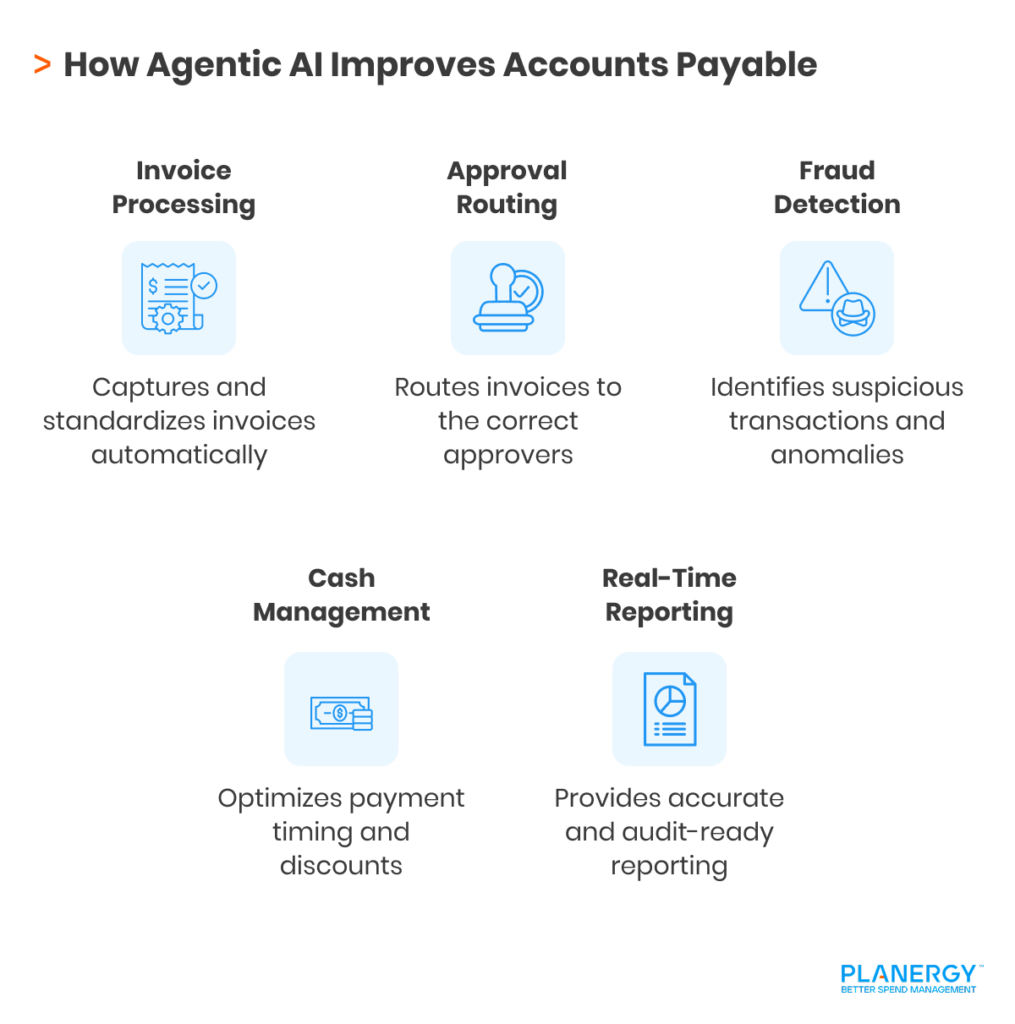
How Agentic AI Improves Accounts Payable

Automated Invoice Capture

Using OCR technology, invoice data can be immediately captured from email, a supplier portal, or an upload and automatically digitized for processing, eliminating time-consuming, error-prone manual data entry.

Automated Three-Way Matching

A core feature in AP automation is the matching of an invoice with a purchase order and shipping receipt. A time-consuming process when completed manually, when using AI, the process is completed for you, including exception handling.

Streamlined Approvals

If you’re still manually processing invoices, you know how time-consuming the approval process can be. Invoices get lost, misplaced, or end up sitting in an in-basket for days or weeks.

AP automation allows you to create a custom workflow process around the approvals process to ensure that invoices are routed to all the necessary parties.

Customizable Invoice Approvals

If your business requires a more customizable approach, an AI-powered application like PLANERGY provides extensive customization capability, including:

  • Role-based approvals
  • The ability to establish spending thresholds
  • Approval by GL code
  • The ability to establish department-specific rules and guidelines
  • Budget integration and forecasting

Invoice tracking

Ever wonder if an invoice is about to be paid? Using an automated system, you can easily see each stage of the invoice process, from invoice entry, approval, and payment, with real-time reporting available to assess spending levels even before the invoice has been paid.

Is AI in AP Automation Secure Enough for Finance Leaders to Trust?

For finance leaders and other stakeholders, the ability to trust AI is essential.

For many accounting professionals, secure computer systems, transparency, and oversight are part of their job and they’re hesitant to hand sensitive, confidential data over to a computer, no matter how advanced the system may be.

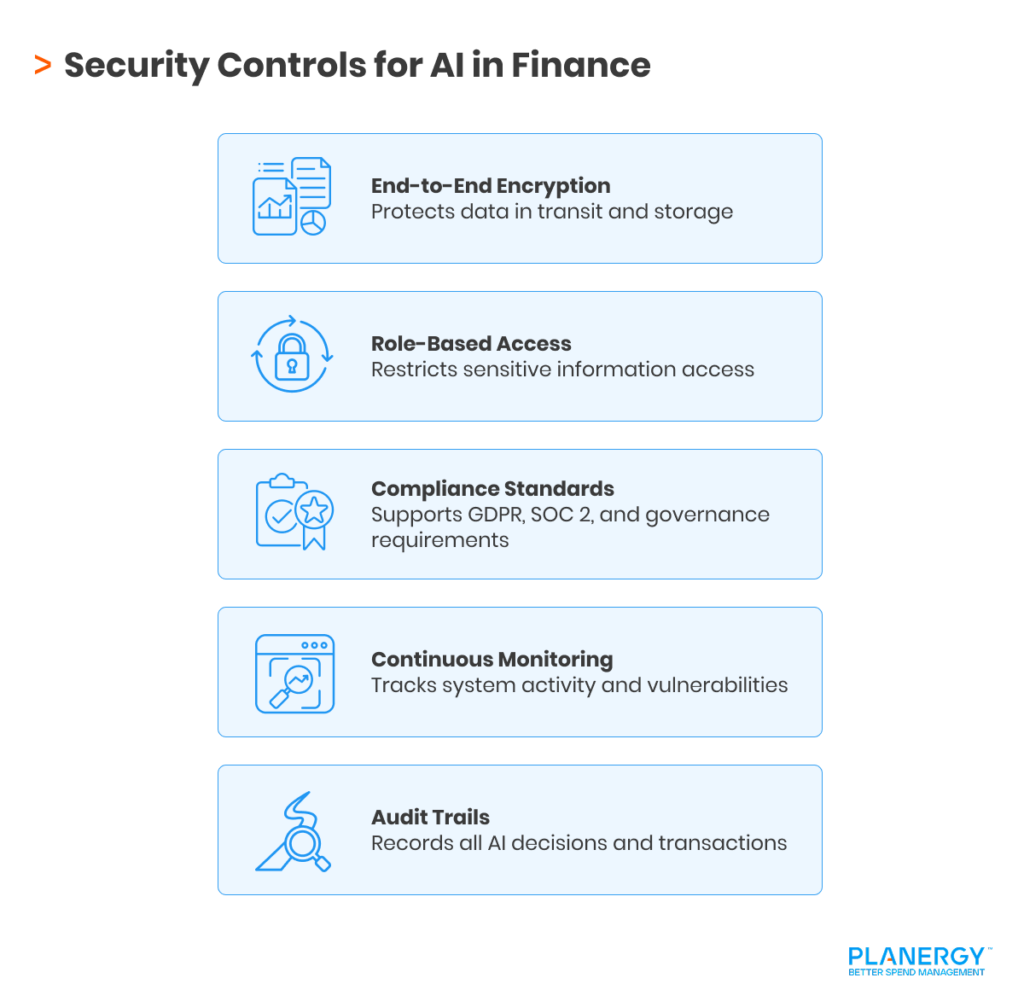
Security Controls for AI in Finance

Finance Labs surveyed CFOs and other financial leaders across the U.S. to determine how trustworthy they consider AI.

The results were interesting and help to point out what’s important to financial professionals.

  • 55% of respondents said that they considered AI-generated predictions trustworthy without human checks, while 27% considered it trustworthy only for low-risk transactions
  • 6% of respondents said that they require full audit capability for every decision and output made by AI, while 40% required basic reasoning for key outputs, such as coding expense choices
  • When assessing the success of AI in finance, 41.9% said that they used KPIs and other metrics, such as error reduction and time saved, when assessing success, while another 41.9% said that they determine success by team feedback and evaluations

Based on this survey, it’s clear that complete validation and transparency is non-negotiable for finance professionals who still require explanations and audit capability on any decision made by AI.

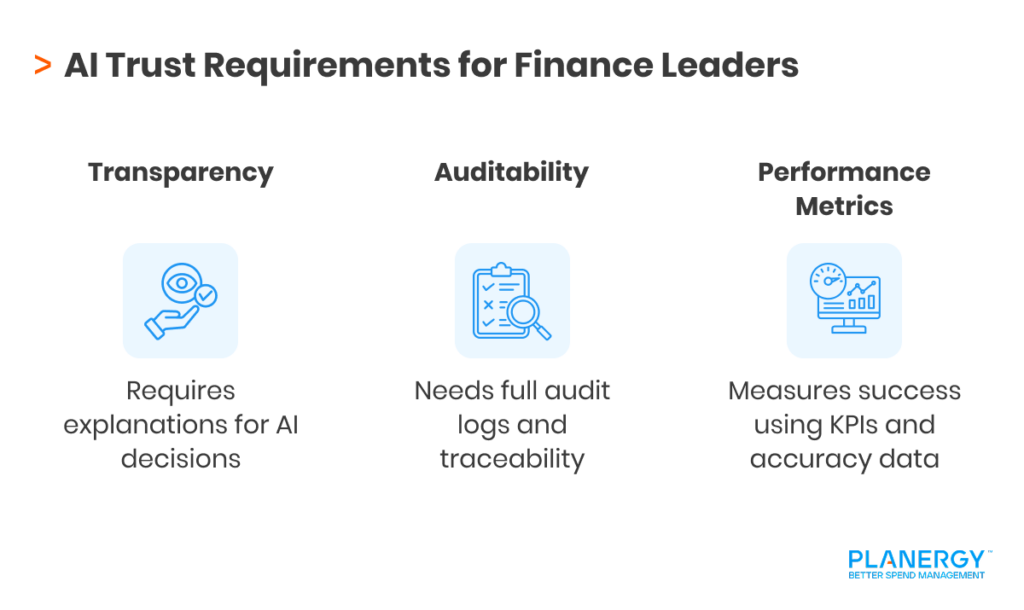
AI Trust Requirements for Finance Leaders

If you’re ready to move to an automated accounting software application, be sure that any product you’re considering offers the following features:

  • End-to-End Encryption

Be sure that any application you purchase offers data encryption at rest and in transit and uses industry-standard protocols.

  • Smart Access Controls
    Keeping finance data secure is important. Make sure that you can assign role-based permissions, which ensures that only authorized users can view, edit, or approve sensitive information.
  • Built-In Compliance
    Check to ensure that any product you’re purchasing offers the necessary compliance, which includes GDPR, SOC 2, and other relevant data privacy and financial governance standards.
  • Ongoing Security Monitoring
    Online systems should always conduct regular system audits and testing. Be sure the product you’re interested in does as well.
  • Audit Trails and Logs
    Access to audit logs is a must, ideally with every system transaction recorded.

AI isn’t going away anytime soon. Becoming comfortable with AI capabilities and agentic AI can be a beneficial addition to your financial operations.

What’s your goal today?

1. Use PLANERGY to manage purchasing and accounts payable

We’ve helped save billions of dollars for our clients through better spend management, process automation in purchasing and finance, and reducing financial risks. To discover how we can help grow your business:

2. Download our guide “Preparing Your AP Department For The Future”

Download a free copy of our guide to future proofing your accounts payable department. You’ll also be subscribed to our email newsletter and notified about new articles or if have something interesting to share.

3. Learn best practices for purchasing, finance, and more

Browse hundreds of articles, containing an amazing number of useful tools, techniques, and best practices. Many readers tell us they would have paid consultants for the advice in these articles.

Business is Our Business

Stay up-to-date with news sent straight to your inbox

PLANERGY LOGO

Sign up with your email to receive updates from our blog