

Achieving optimal performance, efficiency, and return on your procurement activities can be challenging.
Smart sourcing, proactive vendor management, and process improvement are essential to procurement, but how do you make these things happen?
To get there, you need a procurement management plan.
Having a plan combines project management with the procurement process to help you balance multiple projects, a large number of suppliers, or both.
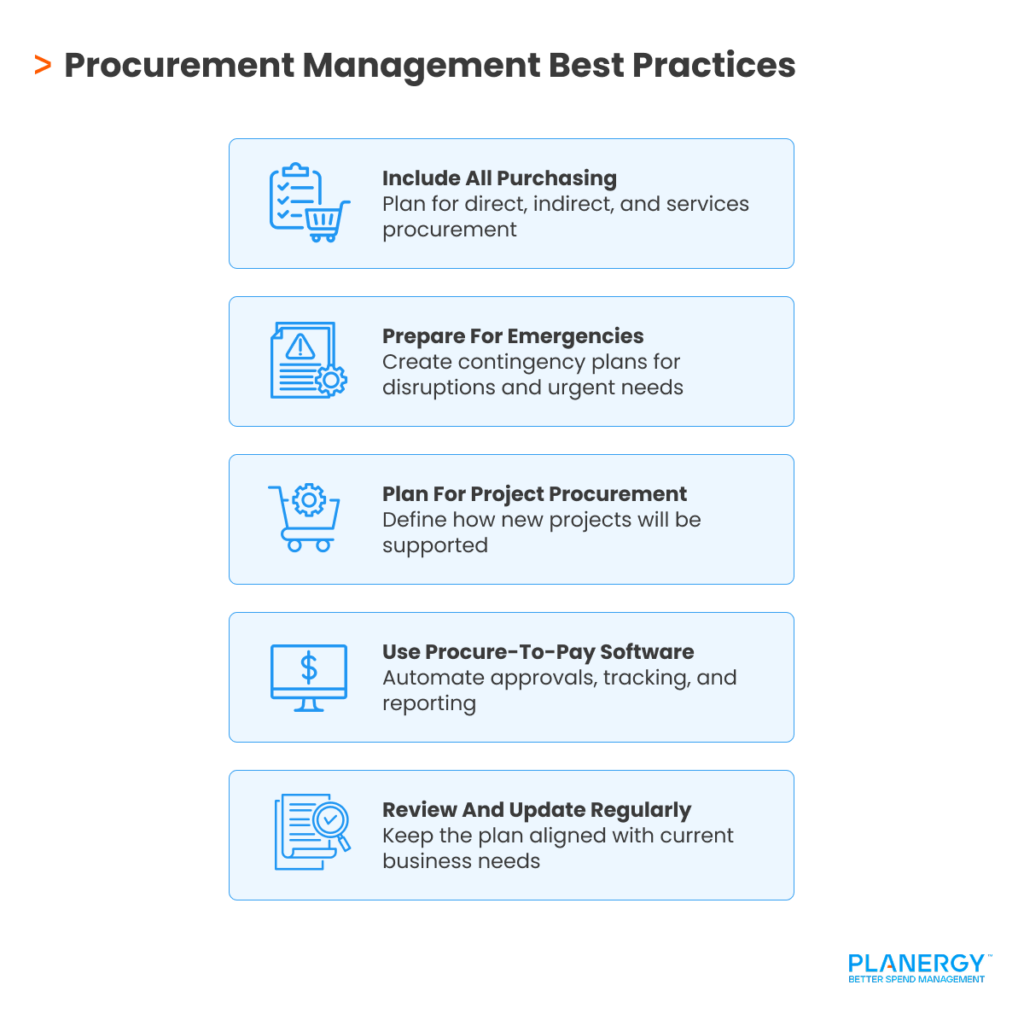
If you’re willing to create a plan and take advantage of the latest procurement tech tools, you create an effective procurement management process that leads to higher profits and a stronger supply chain.
What Is a Procurement Management Plan?
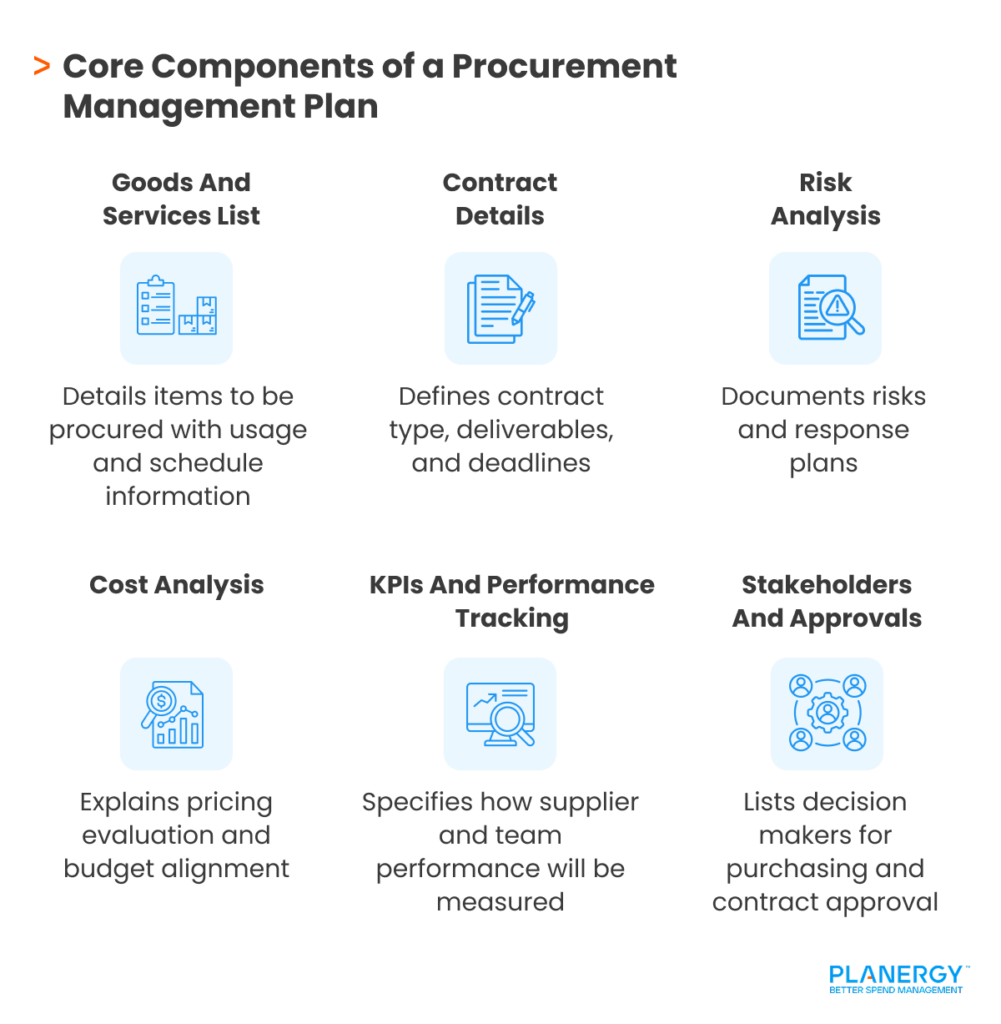
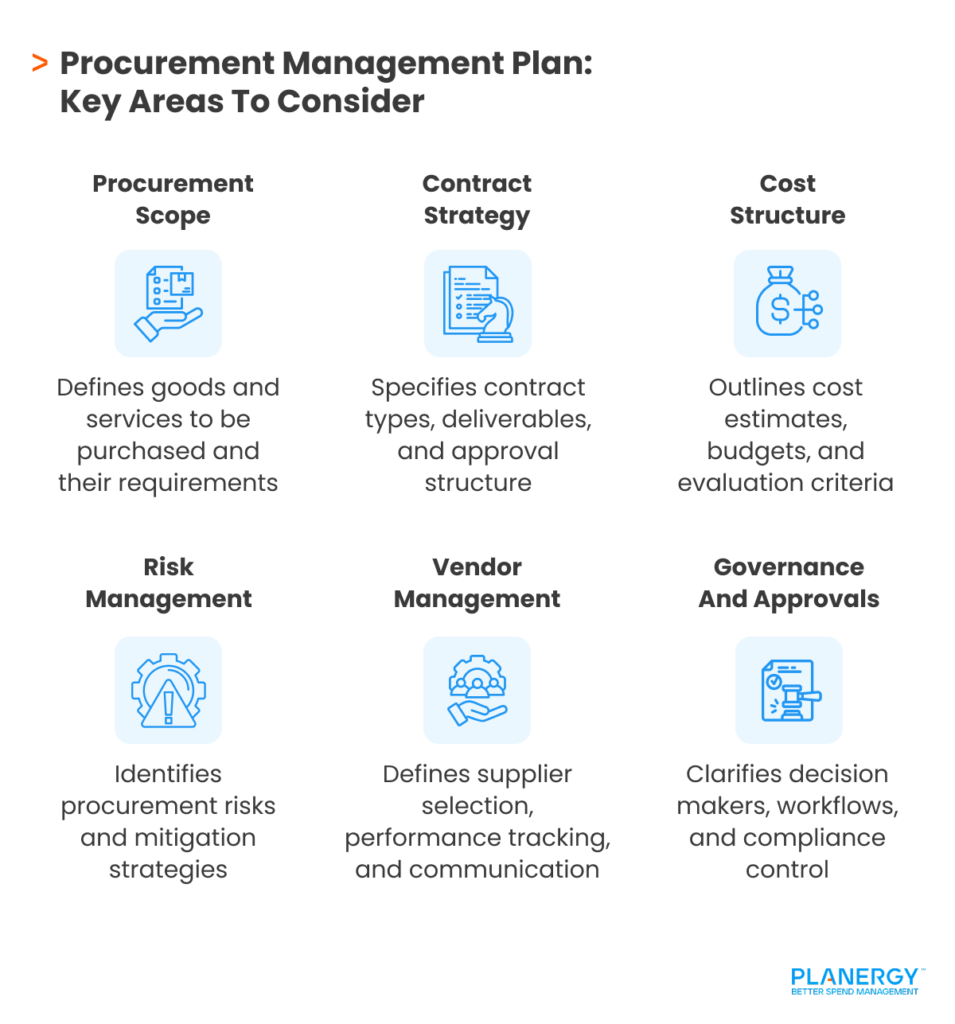
A procurement management plan establishes the procurement needs for a particular project (i.e. project procurement) or for an entire organization (i.e. general procurement).
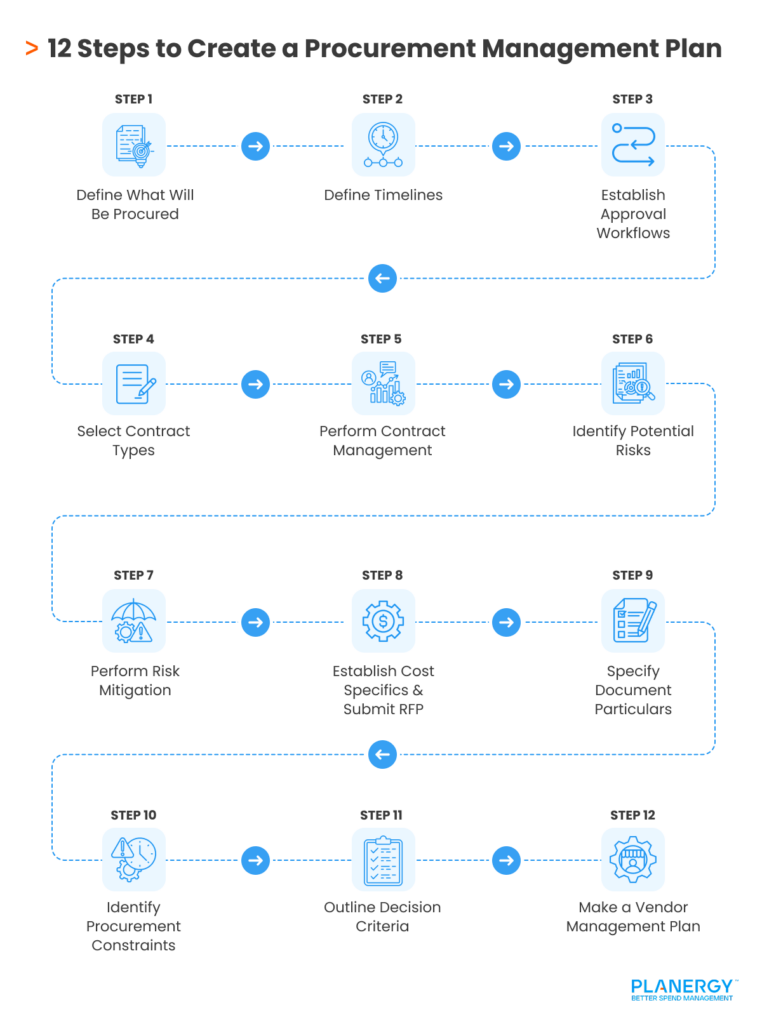
It outlines everything you need at all stages of the procurement process, from identifying needs to paying suppliers, and defines how procurement will operate across the life of the project.
The purpose of your procurement management plan is to define a framework for how your procurement life cycle will operate, either as part of a project management plan or for your entire organization.
Its goal is to ensure all deliverables are achieved with optimal efficiency and maximum value.
It’s important to build a plan that’s both robust and flexible, as procurement requirements can evolve with changing scopes, risks, and budgets.
The purpose of your procurement management plan is to define a framework for how your procurement function will operate. Its goal is to ensure all deliverables are achieved with optimal efficiency and maximum value.