We saved more than $1 million on our spend in the first year and just recently identified an opportunity to save about $10,000 every month on recurring expenses with PLANERGY.
But what exactly does a purchasing department do, and how can you structure an effective team? Let’s break it down.
The Importance of the Purchasing Department
The purchasing department, often part of a company’s larger procurement department, is vital for acquiring the goods and services needed to keep operations running smoothly.
From navigating bid opportunities to negotiating contracts, it ensures efficiency, cost-effectiveness, and quality in sourcing.
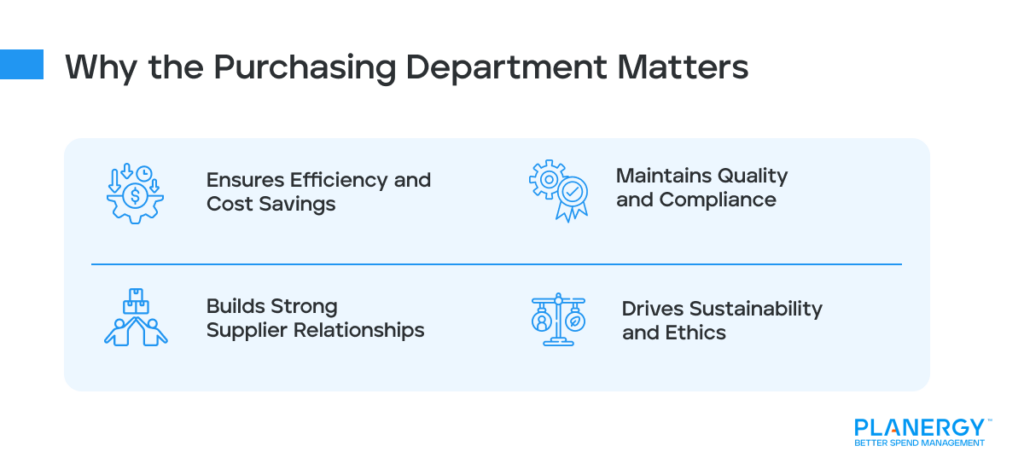
Why Does a Purchasing Department Matter?
A strong purchasing department reduces operational costs by leveraging competitive bidding while maintaining quality standards. This involves identifying and pursuing business opportunities with vendors who provide the best balance of price and value.
Building strong relationships with reliable suppliers ensures that your company maintains smooth operations while fostering long-term collaborations.
The department is also key to managing communications and responding efficiently to solicitations to stay competitive in the procurement space.
For compliance, the purchasing team enforces ethical standards in interactions with bidders and follows the company purchasing process and procurementpolicies, ensuring all processes align with regulations and legal requirements.
This focus on accountability is especially important when taxpayer money is involved in public projects or government contracts.
Without a well-functioning purchasing department, organizations risk overspending, inefficiencies, and supply chain issues—all of which hinder profitability and growth.
Breaking Down the Procurement Process
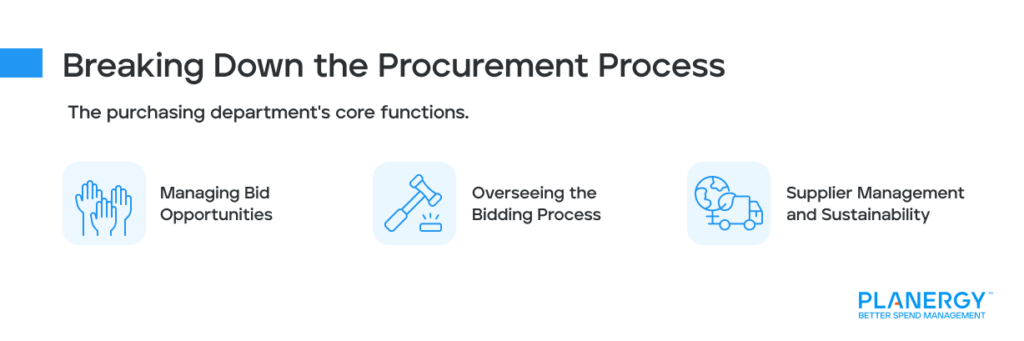
The procurement process encompasses a range of activities, from market research to fostering innovation through sustainable sourcing initiatives. Here’s a closer look at the purchasing department’s core functions and the tools that enhance them.
Bid Management and RFP Coordination
Before purchases are finalized, many organizations initiate a structured bidding or Request for Proposal (RFP) process. This is especially common for higher-value purchases.
The purchasing department coordinates these efforts by drafting solicitation documents, communicating requirements, and evaluating vendor proposals based on cost, quality, and compliance.
By managing this process transparently, the department ensures fairness, promotes competition, and helps secure the best value for the organization.
Budget Management and Financial Oversight
An effective purchasing process must align closely with the company’s financial planning.
Purchasing teams monitor available budgets, validate spending requests, and ensure procurement activities fall within approved financial limits.
This proactive oversight prevents overspending, maintains fiscal discipline, and strengthens collaboration between procurement and finance teams.
Process Automation and Control
While not a core procurement function, process automation plays a crucial role in improving accuracy and efficiency.
Modern procurement platforms like PLANERGY streamline purchasing requests, approvals, and purchase order creation within a centralized system.
This ensures every transaction follows defined policies, helping organizations reduce errors, prevent maverick spending, and maintain full audit trails for compliance.
Automation also shortens cycle times and improves interdepartmental collaboration, ensuring that purchasing decisions are faster, more consistent, and strategically aligned.
Spend Visibility and Analytics
A major advantage of procurement automation is real-time spend visibility. PLANERGY, for example, consolidates all purchasing and payment data into clear, actionable insights, allowing organizations to track spend by category, department, or supplier.
With robust analytics, procurement teams can identify cost-saving opportunities and optimize supplier choice.
Accounts Payable (AP) automation is a vital part of a modern procurement process. PLANERGY connects procurement with AP to ensure invoices match purchase orders and goods receipts automatically.
This three-way matching reduces manual data entry, prevents overpayments or duplicate invoices, and accelerates approval cycles.
By integrating AP automation with spend management, organizations gain end-to-end visibility — from purchase requisition to final payment — improving accuracy and cash flow control.
Supplier Management and Sustainability
The purchasing division goes beyond initial transactions to form mutually beneficial supplier relationships.
This involves evaluating vendor performance, maintaining open communication, and ensuring that suppliers meet the company’s ethical standards while doing business.
Building strong relationships with ethical and sustainable suppliers boosts efficiency and strengthens the organization’s reputation, particularly in markets where social responsibility is valued.
An efficient purchasing department focuses on procurement and plays a crucial role in the overall inventory management process flow, ensuring that the right products are available at the right time to meet demand.
By monitoring internal and external supply markets, purchasing agents prevent a shortage of vital materials, over-purchasing, and waste. They also ensure quality goods and services at the best possible value to keep cash flow and profit positive.
Key Roles in the Purchasing Division
A high-performing procurement department is composed of individuals with specific expertise. These roles ensure the seamless execution of purchasing tasks across the board.
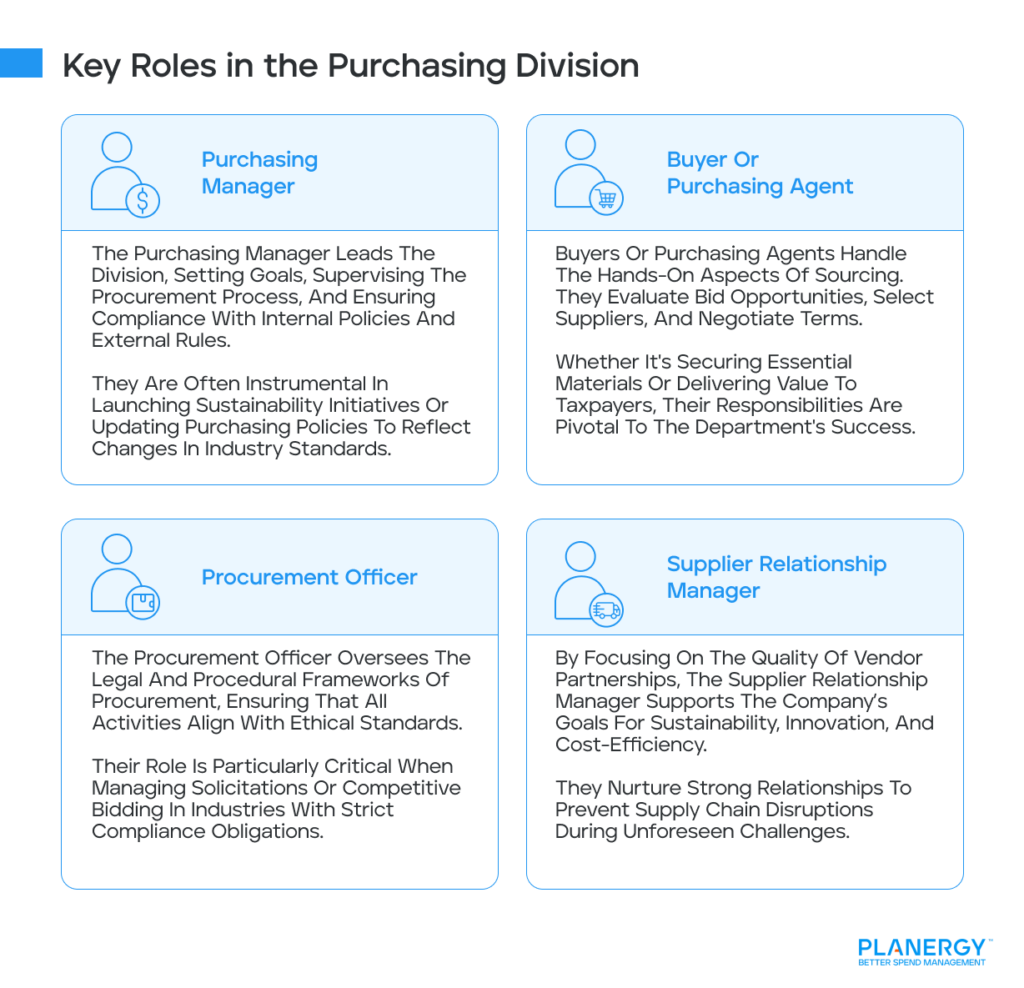
Purchasing Manager
The purchasing manager leads the division, setting goals, supervising the procurement process, and ensuring compliance with internal policies and external rules.
They are often instrumental in launching sustainability initiatives or updating purchasing policies to reflect changes in industry standards.
Buyer or Purchasing Agent
Buyers or purchasing agents handle the hands-on aspects of sourcing. They evaluate bid opportunities, select suppliers, and negotiate terms.
Whether it’s securing essential materials or delivering value to taxpayers, their responsibilities are pivotal to the department’s success.
Procurement Officer
The procurement officer oversees the legal and procedural frameworks of procurement, ensuring that all activities align with ethical standards.
This role is particularly critical when managing solicitations or competitive bidding in industries with strict compliance rules.
Supplier Relationship Manager
By focusing on the quality of vendor partnerships, the supplier relationship manager supports the company’s goals for sustainability, innovation, and cost-efficiency.
They nurture strong relationships to prevent supply chain disruptions during unforeseen challenges.
Each role within the purchasing department contributes uniquely to a cohesive, results-driven operation.
Essential Duties in the Procurement Process
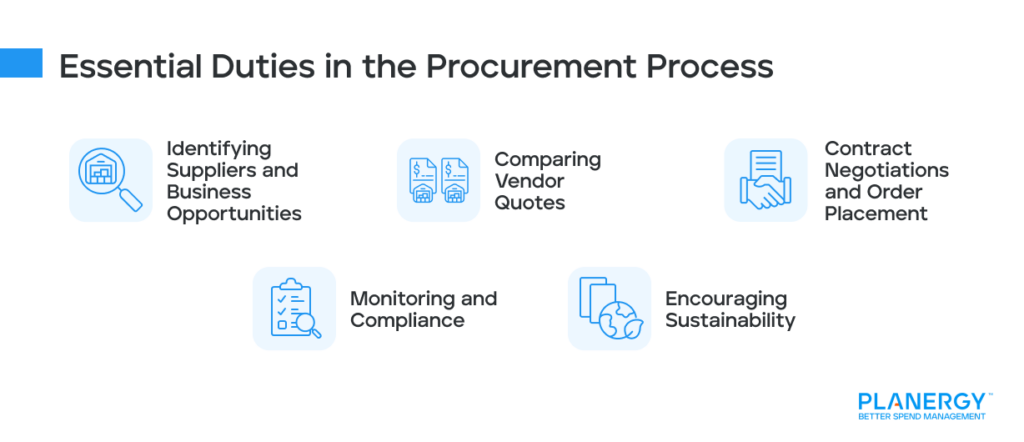
The duties of the purchasing department are diverse but interconnected. Here’s an expanded look at some key activities.
Identifying Suppliers and Business Opportunities
The team proactively researches and identifies suppliers that meet the company’s criteria. They evaluate business opportunities in terms of value, sustainability, and long-term potential, setting the stage for impactful partnerships.
Comparing Vendor Quotes
Reviewing and comparing supplier quotes gives the team insight into pricing trends and service standards. This stage often coincides with bid opportunities, where multiple vendors may compete for a contract through proposals or quotes.
By analyzing these options thoroughly, the team ensures optimal allocation of resources for cost savings and efficiency.
Contract Negotiations and Order Placement
Finalizing contracts through effective negotiation is critical. The purchasing team—alongside the procurement officer—ensures agreements address key aspects like costs, schedules, and compliance with purchasing policies.
Once terms are agreed upon, orders are placed, and progress is closely tracked to ensure vendors deliver as promised.
Monitoring and Compliance
Compliance with legal and company regulations falls squarely within the responsibilities of the department. This attention to compliance protects the business from legal risks, aligning every decision with the company’s goals and values.
Encouraging Sustainability
Modern purchasing initiatives often emphasize sustainable practices. By embedding principles of sustainability into the procurement process, companies can align their sourcing with environmental and social priorities—a strategic advantage in today’s marketplace.
The Role of Technology in Modern Procurement
Technology has transformed the procurement landscape, injecting efficiency, speed, and accuracy into every stage of the process.
Streamlining Bid Notifications
Procurement software enables seamless management of bid notifications and automated tracking of opportunities.
These tools save valuable time for purchasing teams and improve decision-making speed.
Enhancing Collaboration
Digital solutions enable better collaboration between departments and suppliers, particularly during the bidding process.
These platforms facilitate better communication and reduce errors in order placement or milestone tracking.
Promoting Data-Driven Decisions
From tracking spending patterns to analyzing supplier reliability, analytics tools empower procurement departments to make better-informed choices.
This focus on data improves forecasting and readiness for market trends.
By adopting the right technology tools, organizations can achieve new levels of effectiveness in their purchasing operations.
Challenges and Solutions in Purchasing
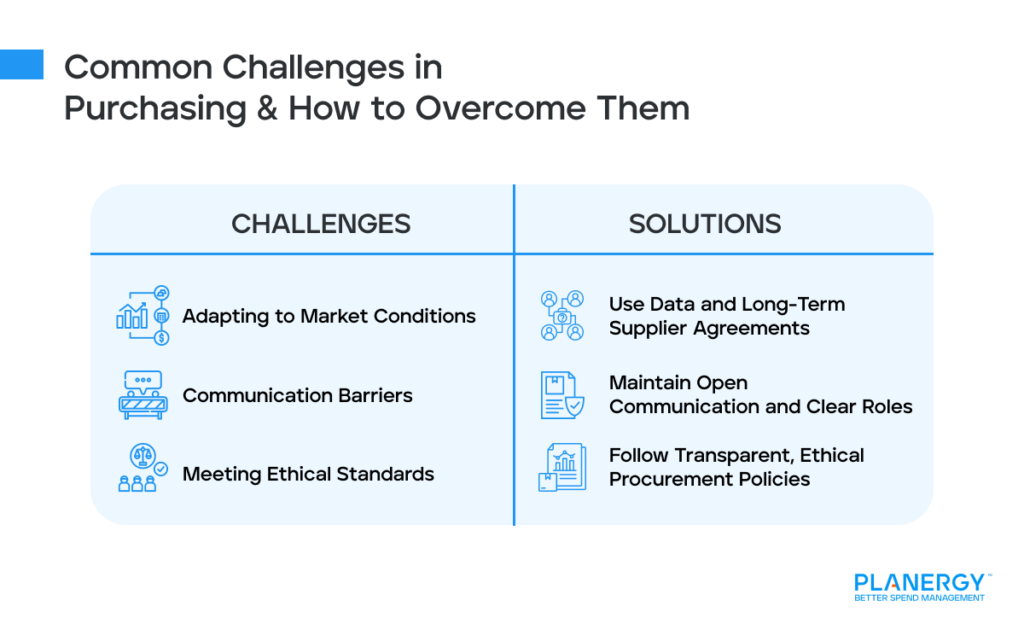
Every purchasing division faces hurdles, but proactive strategies minimize these risks.
Adapting to Market Conditions
Fluctuating prices or supply shortages can badly dent operation schedules. Regular market analysis and long-term supplier agreements help address these challenges.
Communication Barriers
Misunderstandings between teams can derail projects. Clear roles, consistent updates, and open dialogue between the purchasing division and other departments prevent such issues.
Meeting Ethical Standards
Maintaining ethical standards in procurement ensures accountability to stakeholders, whether they are customers, employees, or the general public.
Tackling these common challenges keeps operations smooth while aligning with strategic business objectives.
The Bigger Picture
A successful purchasing department improves day-to-day operations and defines the company’s ability to achieve broader goals, particularly in sustainability and profitability.
Aligning purchases with ethical practices adds value that extends beyond immediate gains while showcasing the business’s commitment to social responsibility.
Take action now: Build an efficient purchasing department that leads with ethical standards, thoughtful policies, and innovative initiatives to drive success in your organization.
What’s your goal today?
1. Use PLANERGY to manage purchasing and accounts payable
We’ve helped save billions of dollars for our clients through better spend management, process automation in purchasing and finance, and reducing financial risks. To discover how we can help grow your business:
Download a free copy of our guide to better manage and make savings on your indirect spend. You’ll also be subscribed to our email newsletter and notified about new articles or if have something interesting to share.
3. Learn best practices for purchasing, finance, and more
Browse hundreds of articles, containing an amazing number of useful tools, techniques, and best practices. Many readers tell us they would have paid consultants for the advice in these articles.
What’s your goal today?
1. Use PLANERGY to manage purchasing and accounts payable
We’ve helped save billions of dollars for our clients through better spend management, process automation in purchasing and finance, and reducing financial risks. To discover how we can help grow your business:
Download a free copy of our guide to better manage and make savings on your indirect spend. You’ll also be subscribed to our email newsletter and notified about new articles or if have something interesting to share.
3. Learn best practices for purchasing, finance, and more
Browse hundreds of articles, containing an amazing number of useful tools, techniques, and best practices. Many readers tell us they would have paid consultants for the advice in these articles.
We use cookies to personalise content and ads, to provide social media features and to analyse our traffic. We also share information about your use of our site with our social media, advertising and analytics partners who may combine it with other information that you’ve provided to them or that they’ve collected from your use of their services.
The technical storage or access is strictly necessary for the legitimate purpose of enabling the use of a specific service explicitly requested by the subscriber or user, or for the sole purpose of carrying out the transmission of a communication over an electronic communications network.
Preferences
The technical storage or access is necessary for the legitimate purpose of storing preferences that are not requested by the subscriber or user.
Statistics
The technical storage or access that is used exclusively for statistical purposes.The technical storage or access that is used exclusively for anonymous statistical purposes. Without a subpoena, voluntary compliance on the part of your Internet Service Provider, or additional records from a third party, information stored or retrieved for this purpose alone cannot usually be used to identify you.
Marketing
The technical storage or access is required to create user profiles to send advertising, or to track the user on a website or across several websites for similar marketing purposes.