

What's PLANERGY?

Modern Spend Management and Accounts Payable software.

Helping organizations spend smarter and more efficiently by automating purchasing and invoice processing.

We saved more than $1 million on our spend in the first year and just recently identified an opportunity to save about $10,000 every month on recurring expenses with PLANERGY.

King Ocean Logo

Cristian Maradiaga

King Ocean

Download a free copy of "Indirect Spend Guide", to learn:

  • Where the best opportunities for savings are in indirect spend.
  • How to gain visibility and control of your indirect spend.
  • How to report and analyze indirect spend to identify savings opportunities.
  • How strategic sourcing, cost management, and cost avoidance strategies can be applied to indirect spend.

Download a free copy of "Indirect Spend Guide", to learn:

  • Where the best opportunities for savings are in indirect spend.
  • How to gain visibility and control of your indirect spend.
  • How to report and analyze indirect spend to identify savings opportunities.
  • How strategic sourcing, cost management, and cost avoidance strategies can be applied to indirect spend.

What is Contract Management?

KEY TAKEAWAYS

  • Strong contract management builds better business relationships, reduces risk, and improves operational performance.

  • Address common challenges by using clear processes, defined ownership, and consistent compliance practices.

  • Technology such as automation and AI improves visibility, speeds up workflows, and reduces manual errors.

  • A proactive, structured approach to contracts helps drive growth, collaboration, and long-term success.

Contract management is the backbone of smooth business operations, ensuring that clear terms and expectations govern every partnership, vendor agreement, and client relationship.

Contract management involves the creation, execution, and oversight of agreements to ensure they deliver on their intended outcomes.

It’s about more than paperwork; it’s a strategic process designed to maximize the contract value while minimizing potential risks.

Effective contract management is integral for businesses of all sizes. It helps protect organizations from compliance issues, missed deadlines, and financial waste.

Well-organized contracts ensure smoother relationships with vendors and clients while providing clarity and measurable outcomes.

Through a structured approach, companies can improve efficiency, uncover cost-saving opportunities, and strengthen their long-term operational resilience.

What Is Contract Management and Why Does It Matter?

Contract management is the process of overseeing and administering agreements between parties to ensure they align with agreed-upon terms, deliver expected outcomes, and provide value.

This involves several key activities, including drafting, negotiating, executing, and monitoring contracts to ensure compliance and performance.

Contract management is a vital strategy that enables you to keep track of obligations, deadlines, and opportunities associated with your agreements.
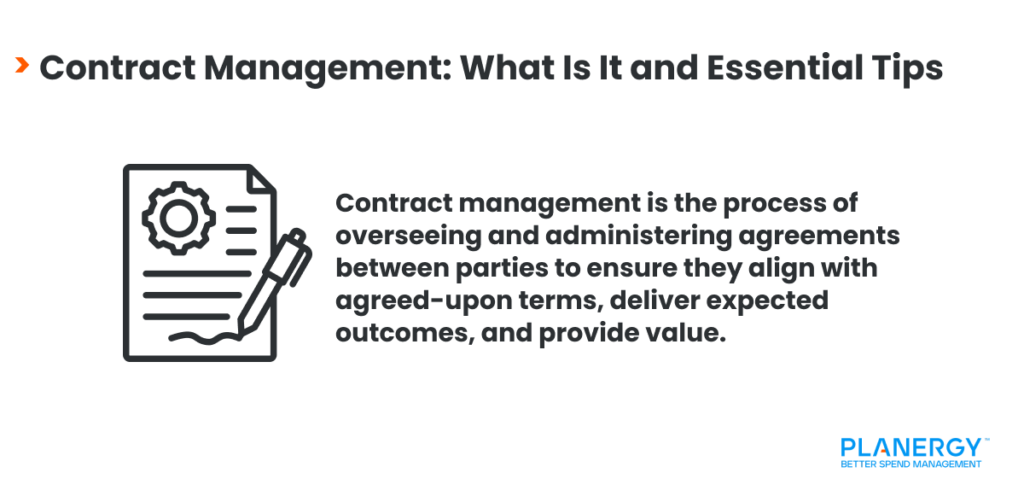
Contract Management Definition

For example, a well-managed contract with a supplier can ensure timely deliveries, preventing costly production delays.  Also, managing a lease agreement effectively may help avoid penalties for overlooked renewal deadlines.

Why is contract management so important? It helps businesses reduce risks. You can avoid penalties, lawsuits, or damaged reputations by closely monitoring obligations and ensuring compliance with regulations.

Proper contract management strengthens business relationships. Transparent and well-defined agreements foster trust between parties, leading to better collaboration over time.

It helps maximize value from agreements. Whether capitalizing on early payment discounts or renegotiating terms based on performance metrics, contract management ensures you get the most out of your contracts.

For instance, consider negotiating bulk purchasing rates with a vendor. Through effective contract management, you can secure better pricing, compare performance to agreed benchmarks, and re-evaluate the terms proactively if conditions shift.

Without these kinds of measures, missed opportunities or inefficiencies could erode the potential benefits of the deal.
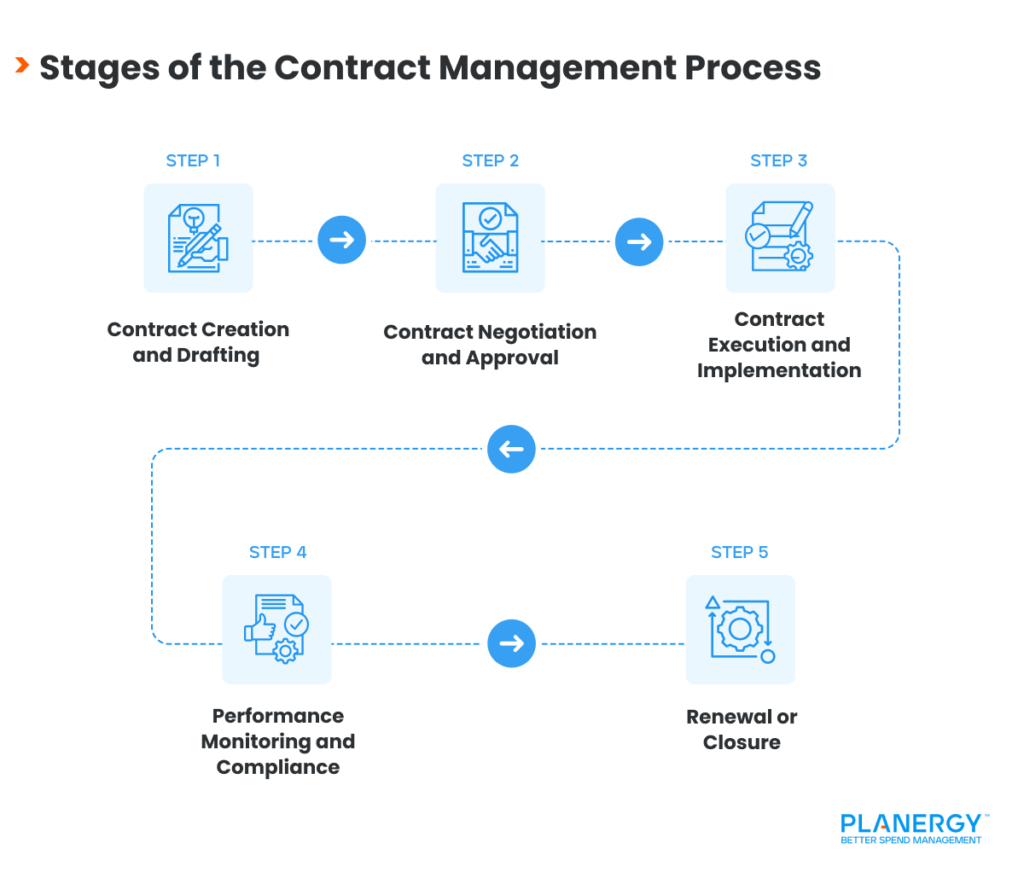
The Stages of Contract Management Process

The contract lifecycle represents the series of stages a contract undergoes, from its initial conception to conclusion. Proper contract lifecycle management (CLM) ensures contracts deliver value and avoid surprises.

The Stages of Contract Management Process

1. Contract Creation and Drafting

The process starts with crafting the agreement. This involves defining clear terms, outlining expectations, and incorporating necessary legal and business requirements.

The goal is to author a document that captures all obligations, deliverables, and timelines while leaving no room for ambiguity.

A well-drafted contract lays the foundation for effective management, reducing the risk of misinterpretation or disputes later.

2. Contract Negotiation and Approval

Once the draft is prepared, the parties involved collaborate to finalize the terms. Negotiation ensures that the agreement is fair and mutually beneficial.

This stage often involves stakeholders from various departments, including your legal teams, procurement team, and the finance team. After agreeing on terms, appropriate personnel review and approve the contract.

This step is critical for addressing concerns early and ensuring all sides are on board before moving forward.

3. Contract Execution and Implementation

With negotiations complete, the contract moves to the execution stage. Both parties sign the agreement, making it legally binding. Modern tools, such as electronic signature platforms, can expedite this step.

Following execution, the contract is implemented, meaning any agreed-upon actions, like services or product delivery, begin. Proper communication during this stage ensures a smooth transition from planning to action.

4. Performance Monitoring and Compliance

This stage is the heart of effective contract management. Regularly tracking obligations, deadlines, and performance metrics ensures all parties comply with the agreed terms.

For instance, if you’re outsourcing IT services, you may monitor deliverables against service-level agreements (SLAs) to evaluate vendor performance.

By identifying gaps or issues with contract performance early, you can take corrective action to prevent larger disruptions.

5. Renewal or Closure

Contracts eventually reach their conclusion, but this stage varies depending on the nature of the agreement. Some may be renewed, others closed, and a few amended for new terms.

Renewal requires timely preparation to renegotiate terms, while closure involves fulfilling any final obligations and archiving the contract for records.

Managing this step proactively avoids missed opportunities, like failing to capitalize on renewal discounts or losing a key vendor relationship due to poor communication.

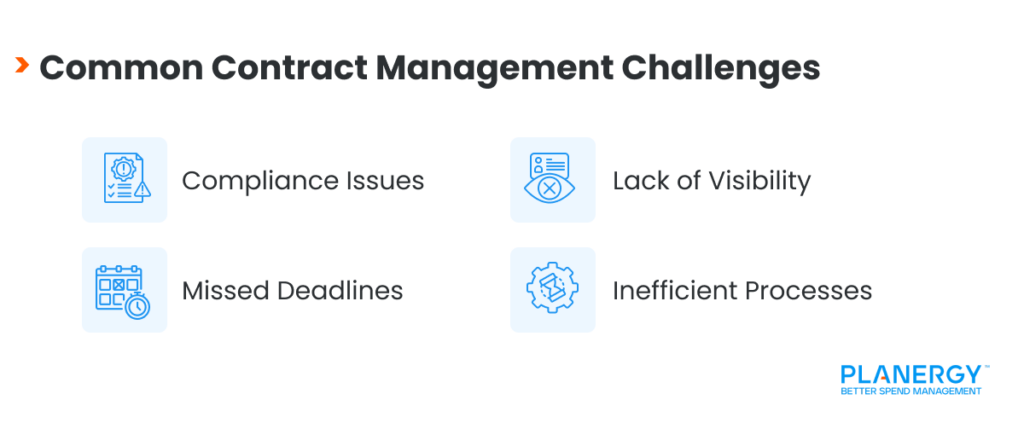
Common Contract Management Challenges

While contract management can streamline operations and build valuable relationships, it also comes with its share of challenges. Failing to address these issues can lead to inefficiencies, financial losses, and even reputational damage.

Common Contract Management Challenges

Compliance Issues

Compliance issues can stem from poorly defined obligations, lack of oversight, or evolving regulations. For instance, failing to comply with data protection laws in a vendor agreement could result in hefty fines and legal exposure.

Effective contract management relies on regular monitoring and updates to avoid compliance gaps and protect your business from unnecessary risks.

Missed Deadlines

Contracts are often filled with key dates, such as payment schedules, delivery milestones, and renewal timelines. Missing these deadlines can lead to penalties, disrupted operations, or the loss of critical opportunities.

For example, failing to renew a lease on time could jeopardize your physical location, while neglecting performance deadlines in a supply chain contract may halt production altogether.

Implementing reminders and automated alerts with a contract management system can help you stay ahead of these crucial dates.

Lack of Visibility

A common pain point is the inability to access or track contracts efficiently. Organizations may have contracts scattered across departments or stored in outdated systems, making it hard to retrieve critical information.

For example, not knowing which contracts are up for renewal could lead to missed opportunities for negotiation or renegotiation.

Keeping everything in a central repository with contract management software can help increase visibility, enabling you to make informed decisions quickly.

Inefficient Processes

Without streamlined processes, contract management can be slow and prone to errors. Each stage of the contract, from drafting and negotiation to execution and performance monitoring, may involve manual tasks that are time-consuming and error-prone.

For instance, relying on email chains for negotiations can lead to miscommunication or version control issues, leading to parties operating off different contract data.

Such inefficiencies waste time and increase the likelihood of mistakes that could harm your business. Automating workflows with contract management tools can simplify these processes and reduce errors.

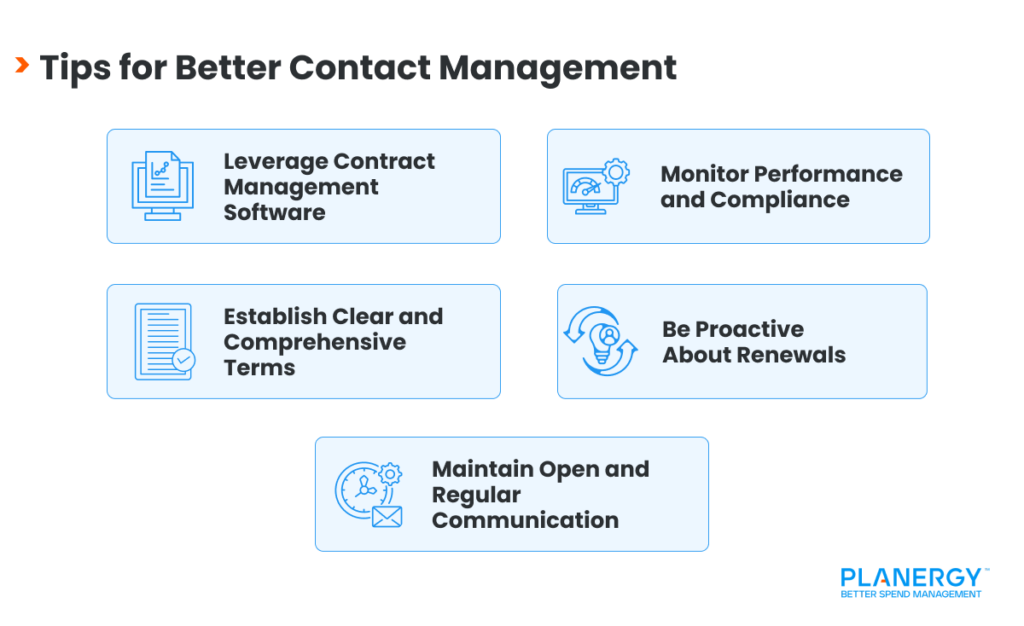
Tips for Better Contact Management

Optimizing contract management requires a mix of strategy, tools, and proactive efforts. Use these tips to streamline processes and get more value from your agreements.

Tips for Better Contact Management

Leverage Contract Management Software

Investing in purpose-built contract management software can transform how agreements are organized, tracked, and executed.

These platforms centralize documents, automate alerts for key dates, and provide analytics for better decision-making.

For example, instead of manually tracking renewal deadlines, software can send you reminders in real time, reducing the risk of missed opportunities. This automation minimizes errors and ensures contracts are always managed efficiently.

Establish Clear and Comprehensive Terms

A well-drafted contract is the foundation of good management. Ensure that every agreement includes clear, detailed terms covering obligations, deliverables, timelines, and penalties for non-compliance.

Ambiguity often leads to disputes, so leave no room for misinterpretation. For instance, rather than stating “deliverables should be provided regularly,” specify exact timelines such as “reports to be submitted every Friday by 5 PM.”

Maintain Open and Regular Communication

Keeping communication open with all parties involved is key to ensuring a healthy contract lifecycle. Regularly touch base to discuss progress, clarify expectations, or address emerging issues.

For example, holding monthly review meetings with a vendor allows both sides to identify and resolve concerns before they escalate. Clear communication fosters trust and ensures everyone remains aligned toward common goals.

Monitor Performance and Compliance

Continuously tracking performance ensures all parties meet their obligations. Use performance metrics and KPIs to evaluate outcomes, such as delivery times or service quality, against the terms of the agreement.

For instance, monitoring whether a supplier consistently meets deadlines can help uncover reliability issues before they impact operations. Regular compliance checks ensure no obligations are overlooked, protecting your business from unnecessary risks.

Be Proactive About Renewals

Contracts approaching their expiration date require careful attention. Whether renegotiating terms or deciding to move on, being proactive gives you the upper hand in strategy and preparation.

For instance, start discussing contract renewal terms before the deadline to secure better conditions or explore alternative vendors. This approach avoids rushed decisions that could lead to unfavorable terms or missed opportunities.

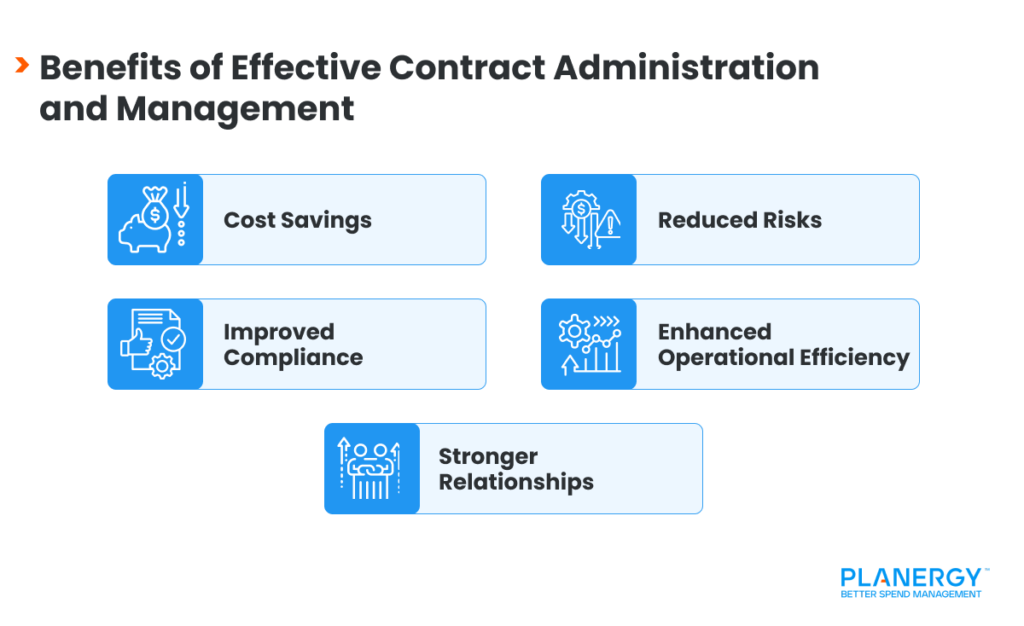
Benefits of Effective Contract Administration and Management

Implementing efficient contract management practices offers many advantages that can significantly enhance business success. If you prioritize this critical process reap the rewards of better organization, stronger partnerships, and optimized resources.

Benefits of Effective Contract Administration and Management

Cost Savings

Effective contract management helps you reduce costs by ensuring you capitalize on favorable terms, avoid penalties, and uncover cost-saving opportunities.

For example, tracking supplier contracts might reveal areas for bulk order discounts or the potential for renegotiating terms. Automated tools can flag duplicate agreements or overpayments, ensuring financial leaks are plugged.

Improved Compliance

Staying compliant with contractual obligations and regulations is crucial for avoiding legal trouble and maintaining credibility.

Proactive contract monitoring ensures all parties meet their commitments and remain current with changing regulatory requirements.

For instance, a well-managed service provider contract ensures compliance with data privacy laws, protecting you from fines and reputational harm.

Stronger Relationships

Clear, consistent communication and adherence to agreed terms foster trust and strengthen relationships with all parties involved, whether vendors, customers, or partners.

For example, delivering on agreed payment schedules and maintaining open communication with a supplier demonstrates reliability, paving the way for a collaborative and mutually beneficial partnership in the long term.

Reduced Risks

With effective contract management, you can better identify and mitigate risks. Regular compliance checks, performance monitoring, and clear documentation ensure that obligations are fulfilled, minimizing liabilities.

For instance, reviewing supplier performance may highlight gaps that could disrupt supply chains, giving you the chance to address challenges before they escalate.

Enhanced Operational Efficiency

Streamlining contract processes reduces manual work, improves accuracy, and saves time. Automated approval workflows, centralized storage, and clear terms eliminate wasted effort, allowing teams to focus on high-priority tasks.

For example, using contract management software to automate the approval process accelerates execution times, ensuring agreements move forward without bottlenecks.

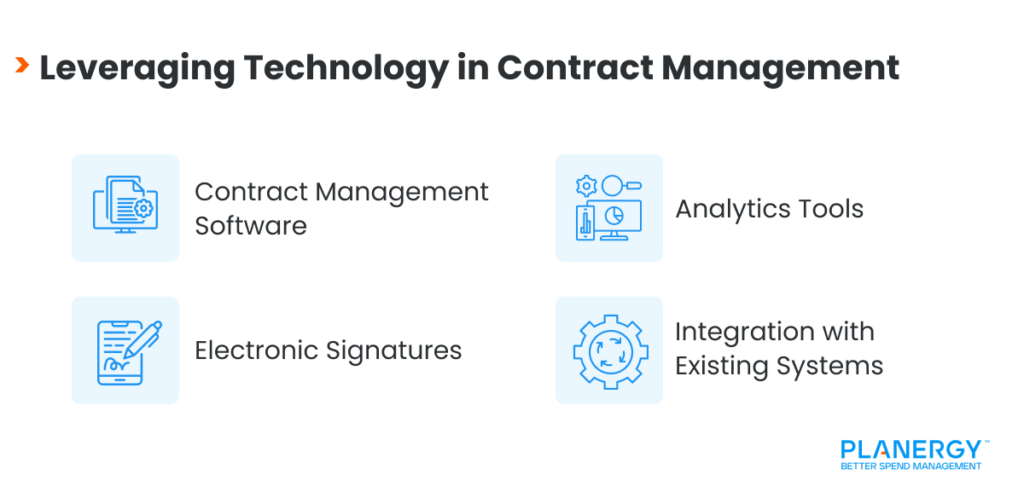
Leveraging Technology in Contract Management

Technology has become a game-changer in contract management, offering businesses the tools they need to streamline processes, minimize errors, and stay compliant.

Leveraging Technology in Contract Management

Contract Management Software

Contract management software centralizes all your agreements in one secure, searchable location. This makes accessing, updating, or tracking contracts easier and eliminates the chaos of sifting through paper files or scattered digital folders.

Plus, the contract repository makes it easy to manage everything throughout the entire contract lifecycle.

Electronic Signatures

E-signature tools allow parties to sign contracts digitally, speeding up the approval process and ensuring secure, authenticated agreements. These platforms also create a clear signature trail for legal purposes.

Analytics Tools

They help you identify key trends, measure performance metrics, and uncover risks or opportunities within agreements. Advanced platforms powered by artificial intelligence (AI) can even predict outcomes based on past data.

Integration with Existing Systems

When contract software communicates with platforms like customer relationship management (CRM), enterprise resource planning (ERP), or accounting systems, processes flow effortlessly across departments.

Best Practices for Contract Risk Mitigation

Managing contracts effectively requires a proactive approach to identifying and minimizing risks. Implementing best practices like risk identification techniques, standardized processes, regular audits, and contingency planning can help you avoid costly pitfalls and protect your interests.

Use Various Risk Identification Techniques

Identifying risks early is essential to mitigating their impact, and using a variety of techniques ensures a more comprehensive approach. Conduct thorough reviews of contract terms to spot unfavorable clauses or ambiguities that could lead to disputes.

Engage subject-matter experts, like your legal department or financial advisors, to evaluate potential risks related to compliance, liability, or partnership terms.

Standardize Templates and Processes

Having standardized contract templates and processes in place can significantly reduce risk by promoting consistency and compliance across all contracts.

Pre-approved templates ensure that essential legal and regulatory terms are always included, minimizing the chances of drafting errors or compliance oversights.

Audit and Monitor Contracts

Regular audits and ongoing monitoring are critical for mitigating risks that may emerge after contracts are signed.

Periodic reviews can uncover potential non-compliance, missed obligations, or expiring agreements that could lead to penalties or business disruptions.

Build Contingency Plans

Even with the best risk mitigation practices, unforeseen issues can arise, making contingency planning a must.

A contingency plan outlines steps to take in case of contract disputes, non-performance, or unexpected changes in circumstances. These plans ensure that you can respond quickly and minimize damage.

How Contract Management Streamlines Spend and Improves Efficiency

Effective contract management is essential for controlling costs, streamlining operations, and reducing waste. By addressing common inefficiencies and optimizing processes, businesses can unlock significant financial and operational benefits

Reducing Financial Leakage

Financial leakage occurs when you lose money due to overlooked contract terms, missed deadlines, or unnecessary spending.

Strong contract management prevents this by ensuring all agreements are closely monitored and executed as intended.

Automation tools and alerts can flag upcoming payment deadlines and renewal dates, review missed billing opportunities, or identify penalties outlined in agreements.

Improved Vendor Relationships

A structured approach to contract management enhances vendor confidence and collaboration.

Clear, transparent agreements backed by consistent execution foster trust and long-term partnerships.

This can lead to better service, preferential terms, and easier renegotiations.

Maximizing Cost Savings

Contracts often hold cost savings opportunities, such as volume discounts, early payment terms, or bundled services, but these benefits can remain untapped without proper oversight. Contract management platforms help identify and fully leverage these savings opportunities by centralizing agreement data for easy access and analysis.

Risk Management and Mitigation

Unmanaged risks, such as contract compliance violations or unclear terms, can lead to unnecessary expenses, operational disruptions, or legal penalties.

Effective contract management minimizes these risks by providing a standardized process for drafting, monitoring, and adjusting agreements.

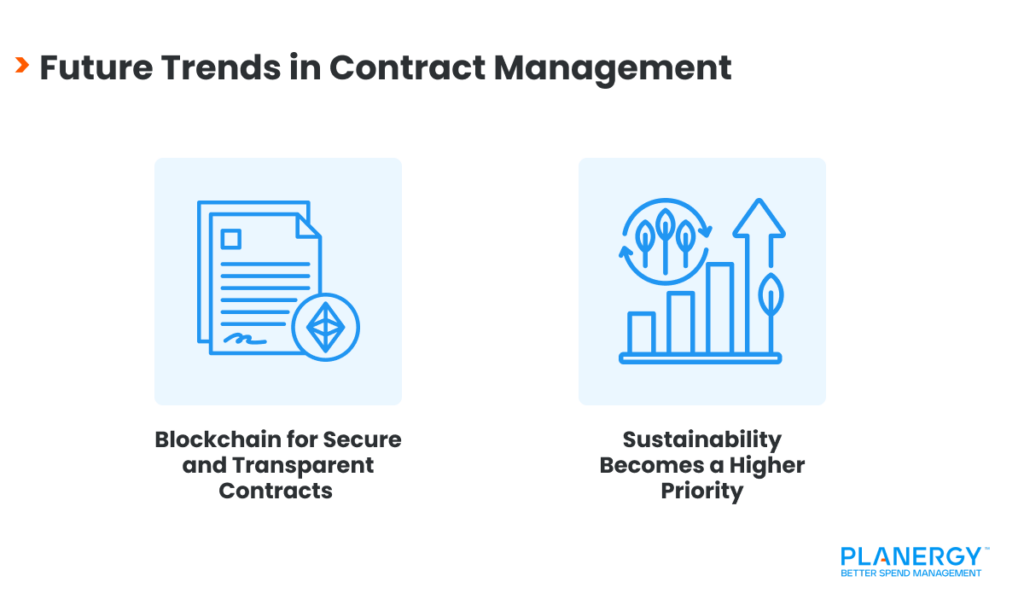
Future Trends in Contract Management

Contract management is evolving rapidly, driven by innovations and a growing emphasis on sustainability and transparency. Emerging trends are reshaping how to approach agreements and laying the foundation for a more efficient and ethical future.

Future Trends in Contract Management

Blockchain for Secure and Transparent Contracts

By providing an immutable, decentralized ledger, blockchain ensures that all parties have access to a single source of truth. This eliminates discrepancies and fosters trust, especially in high-stakes agreements.

Smart contracts, powered by blockchain, can automate terms and execute actions only when specified conditions are met, while also providing audit trails for accountability.

Sustainability Becomes a Higher Priority

Companies are increasingly embedding sustainability terms into their contracts, focusing on environmental, social, and governance (ESG) principles.

For example, procurement contracts might include clauses requiring suppliers to use eco-friendly materials or reduce carbon emissions.

These measures align with organizational values and cater to consumer demand for ethical practices. Over time, contracts emphasizing sustainability will become standard practice, driving industries toward greener and more responsible operations.

Take Control of Your Contacts Today

Effective contract management is the backbone of building strong business relationships and ensuring operational success.

By understanding the key challenges, implementing actionable tips, and leveraging technology, your business can transform its approach to contracts.

The future promises exciting advancements like AI, blockchain, and sustainability-focused practices, making it essential to stay ahead of the curve.

Start by adopting tools to automate processes, ensure compliance, and improve visibility into your agreements.

Apply the strategies shared in this article to new contracts to simplify workflows, manage risks, and foster collaboration.

With a proactive approach, you can unlock the full potential of your contracts, driving growth and long-term success. Now’s the time to take control of your contracts and elevate your business to the next level.

What’s your goal today?

1. Use PLANERGY to manage purchasing and accounts payable

We’ve helped save billions of dollars for our clients through better spend management, process automation in purchasing and finance, and reducing financial risks. To discover how we can help grow your business:

2. Download our guide “Indirect Spend Guide”

Download a free copy of our guide to better manage and make savings on your indirect spend. You’ll also be subscribed to our email newsletter and notified about new articles or if have something interesting to share.

3. Learn best practices for purchasing, finance, and more

Browse hundreds of articles, containing an amazing number of useful tools, techniques, and best practices. Many readers tell us they would have paid consultants for the advice in these articles.

Business is Our Business

Stay up-to-date with news sent straight to your inbox

PLANERGY LOGO

Sign up with your email to receive updates from our blog